
Species
New Guinea Moray
Echidna xanthospilosAlso known as Yellow-spotted Moray, Skeletor Moray
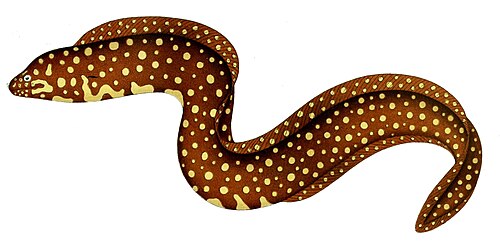
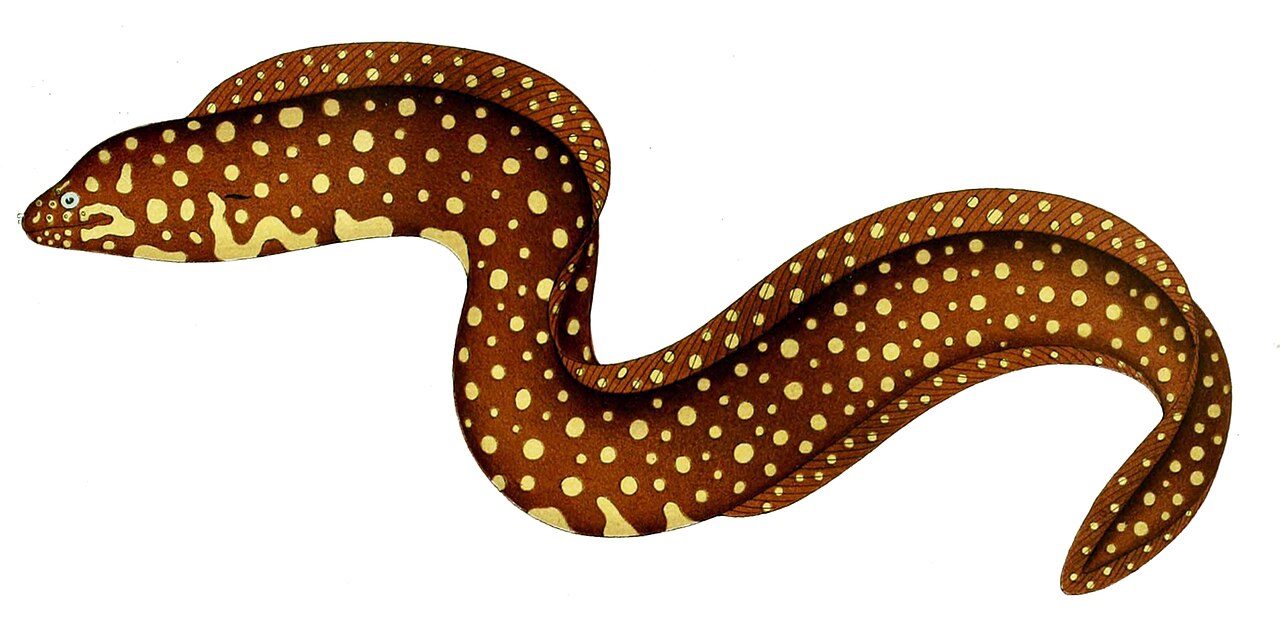
New Guinea morays are secretive reef dwellers characterized by a striking pattern of bright yellow spots and blotches set against a dark, mottled body. Like other members of their genus, they possess blunt, pebble-like teeth specialized for crushing the hard shells of crabs and other benthic invertebrates. They spend daylight hours coiled deep within coral crevices or limestone cavities, protruding only their heads to pump water through their gills while scenting the current for passing prey.
MarineReef DwellerNocturnal
—observations
—countries
—peak records
Data DeficientConservation statusIUCN Red List categoriesLCNTVUENCREWEXData Deficient — not placed on the risk ladderRed List categories, explained →
Diet & preyCrabs, Shrimp, Small Reef Fishes
Predators
- Reef Sharks
- Large Groupers
- Banded Sea Kraits
ThreatsCoral reef degradation, warming ocean waters, and incidental aquarium trade harvesting
HabitatsTropical coral reefs, shallow rubble zones, and rocky crevices
Life span10–25 years
Classification
- FamilyMuraenidae
- SpeciesEchidna xanthospilos
Range data is not available yet.
Interaction riskLow
- Low
- Moderate
- High
- Very high
- Why interaction risk is low
- May deliver a painful defensive bite if cornered or handled; observe from a respectful distance.
- Why it is dangerous
- Possesses strong jaws backed by crushing teeth capable of causing deep puncture wounds and severe tissue lacerations if provoked.
- How to recognize a risky encounter
- Look for a dark, elongated body covered in bright yellow speckles or blotches, typically seen peering from rocky reef recesses.
- What to do
- Never thrust bare hands into reef crevices or attempt to feed wild morays; back away slowly if the eel opens its jaws wide in a defensive posture.
Responsible observation
- Flashlight Etiquette: Avoid shining high-powered dive lights directly into coral crevices, which stresses sheltering eels.
- Hand Placement: Never reach into blind recesses or touch coral formations where morays may be resting.
- Respectful Distance: Keep your hands tucked in and maintain neutral buoyancy at least one meter back when observing.
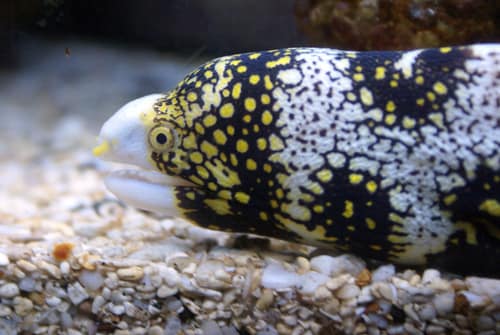
Close Relative "Waikiki Aquarium--Snowflake Moray Eel 2" by Makuahine Pa'i Ki'i is licensed under CC BY 2.0. To view a copy of this license, visit https://creativecommons.org/licenses/by/2.0/. · cc-by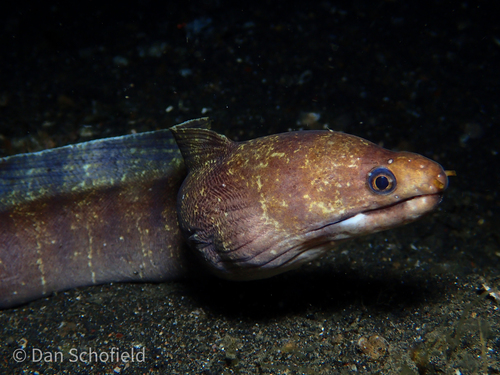
Close Relative (c) Dan Schofield, some rights reserved (CC BY), uploaded by Dan Schofield · cc-by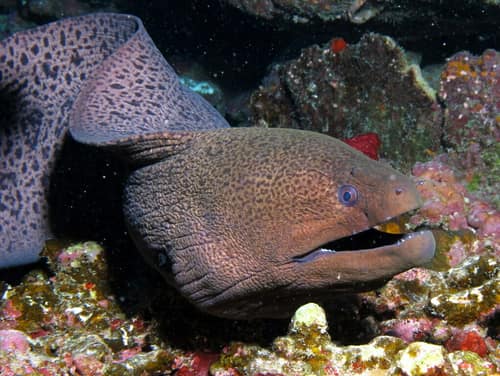
Same Family (c) Derek Keats, some rights reserved (CC BY) · cc-by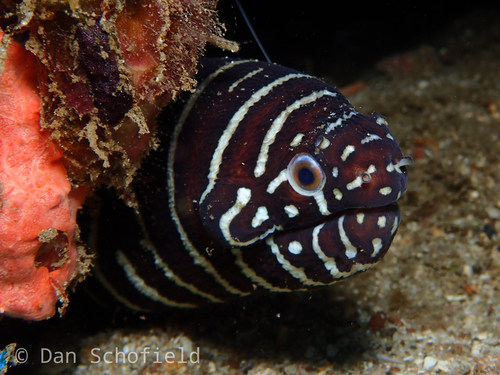
Same Family (c) Dan Schofield, some rights reserved (CC BY), uploaded by Dan Schofield · cc-by
Help improve the field guideSomething wrong?
Checking your Fauna account…Report a name, category, or profile issue for review.