
Species · GBIF taxon 5212118
Sebae Clownfish
Amphiprion sebaeAlso known as Yellowtail Clownfish, Sebae Anemonefish, Brown Clownfish
Sebae clownfish navigate the warm waters of the northern Indian Ocean, instantly recognizable by their dark brown to black bodies, two bold white bars, and a yellow-orange tail. These active reef dwellers form lifelong partnerships with saddle anemones, finding refuge among the stinging tentacles that deter larger predators. Within each anemone, a strict social hierarchy governs the group, where a single dominant female rules over her smaller male partner and several non-breeding helpers.
MarineSymbioticReef Dweller
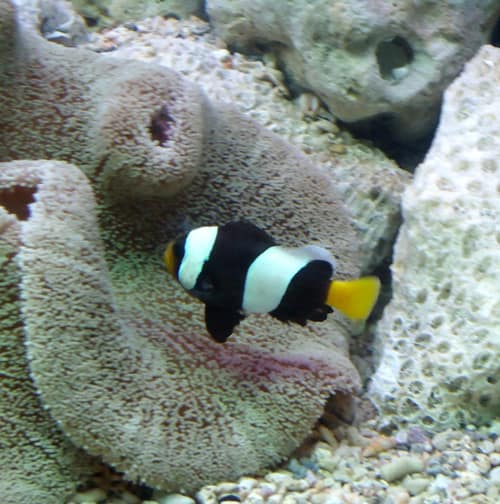
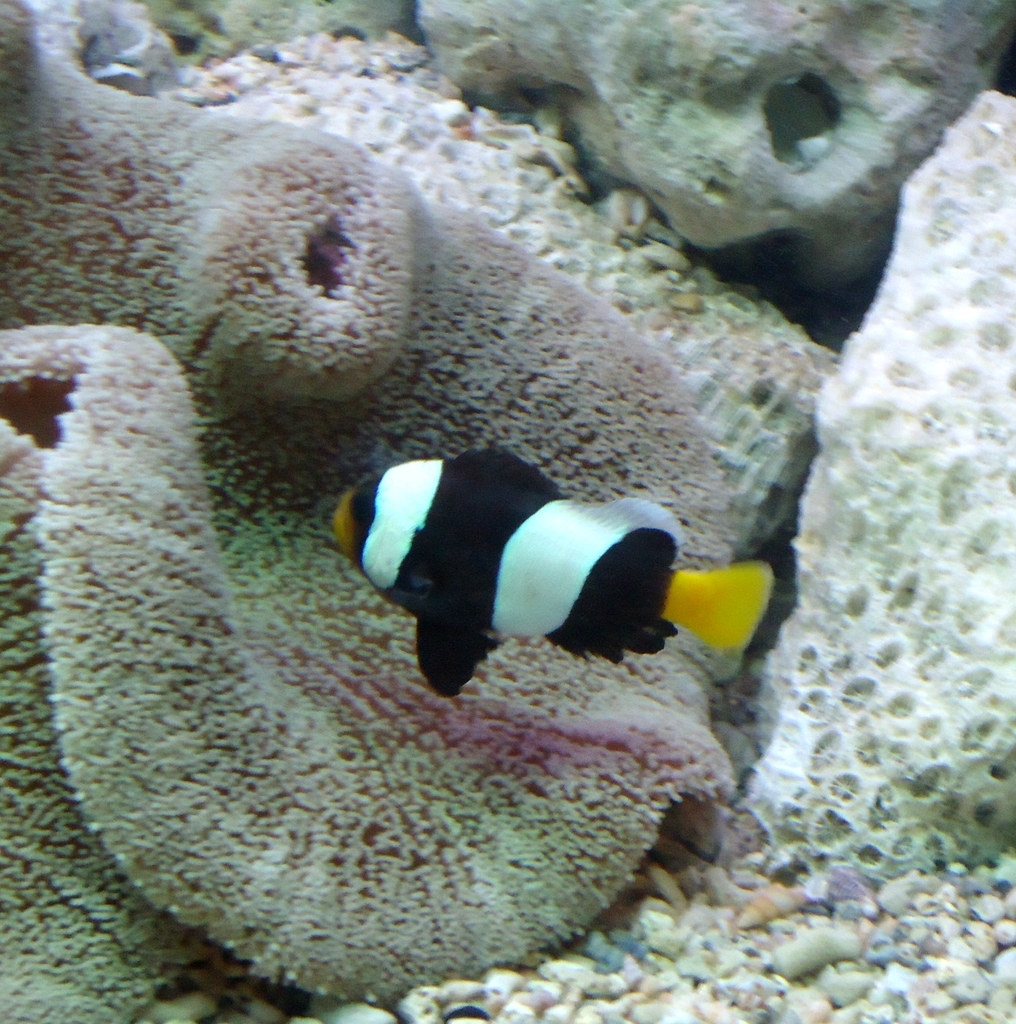
Licensed reference(c) Ranjithsiji, some rights reserved (CC BY-SA) · cc-by-sa
—observations
—countries
—peak records
Not EvaluatedConservation statusIUCN Red List categoriesLCNTVUENCREWEXNot Evaluated — not placed on the risk ladderRed List categories, explained →
Diet & prey
- Zooplankton
- Copepods
- Filamentous Algae
Predators
- Groupers
- Moray Eels
- Snappers
ThreatsHabitat destruction, coral bleaching, and overcollection for the aquarium trade
HabitatsCoral reefs, shallow lagoons, and sandy slopes hosting anemones
Life span6 to 10 years
Size / weightNot available
Classification
- FamilyPomacentridae
- SpeciesAmphiprion sebae
Range data is not available yet.
Interaction riskLow
- Low
- Moderate
- High
- Very high
- Why interaction risk is low
- Boldly defends its host anemone and may nip at fingers or hands that approach too closely.
- What to notice
- Look for a dark body with two thick white bands and a bright yellow to orange tail nestled in a saddle anemone.
- Support conservation
- Avoid touching the host anemone or disturbing the surrounding reef substrate while snorkeling or diving.
Responsible observation
- Look for the Host: Scan sandy reef patches for the distinctive folded disc of the saddle anemone to locate these fish.
- Keep Your Distance: Observe their playful hovering from a respectful distance to avoid triggering defensive, territorial nipping.
- Watch the Hierarchy: Notice how the largest, most aggressive fish dominates the center of the anemone while smaller ones hover at the edges.
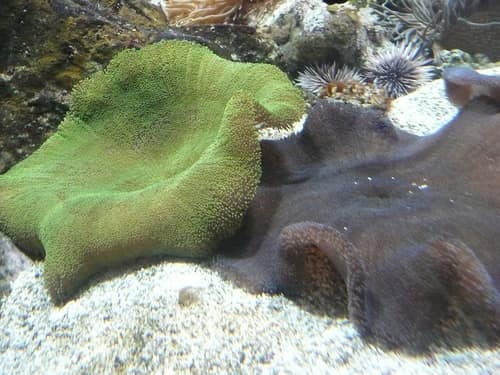
Host Anemone Liné1 / CC BY-SA 3.0 · cc-by-sa Image unavailable
Namesake Anemone 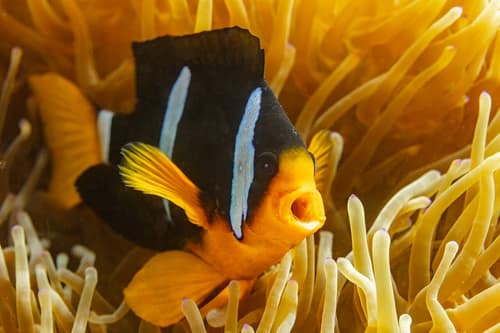
Close Relative Diego Delso / CC BY-SA 4.0 · cc-by-sa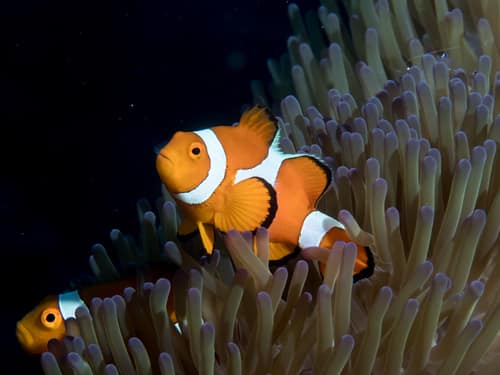
Close Relative "Ocellaris clownfish (Amphiprion ocellaris)" by krokodiver is licensed under CC BY 2.0. To view a copy of this license, visit https://creativecommons.org/licenses/by/2.0/. · cc-by
Help improve the field guideSomething wrong?
Checking your Fauna account…Report a name, category, or profile issue for review.