
Species
Achilles Tang
Acanthurus achillesAlso known as Redtail Surgeonfish, Redspot Surgeonfish
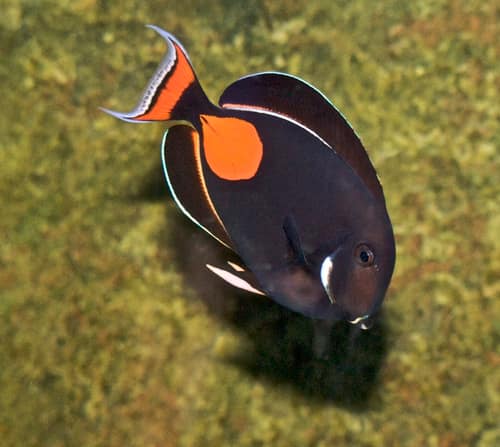
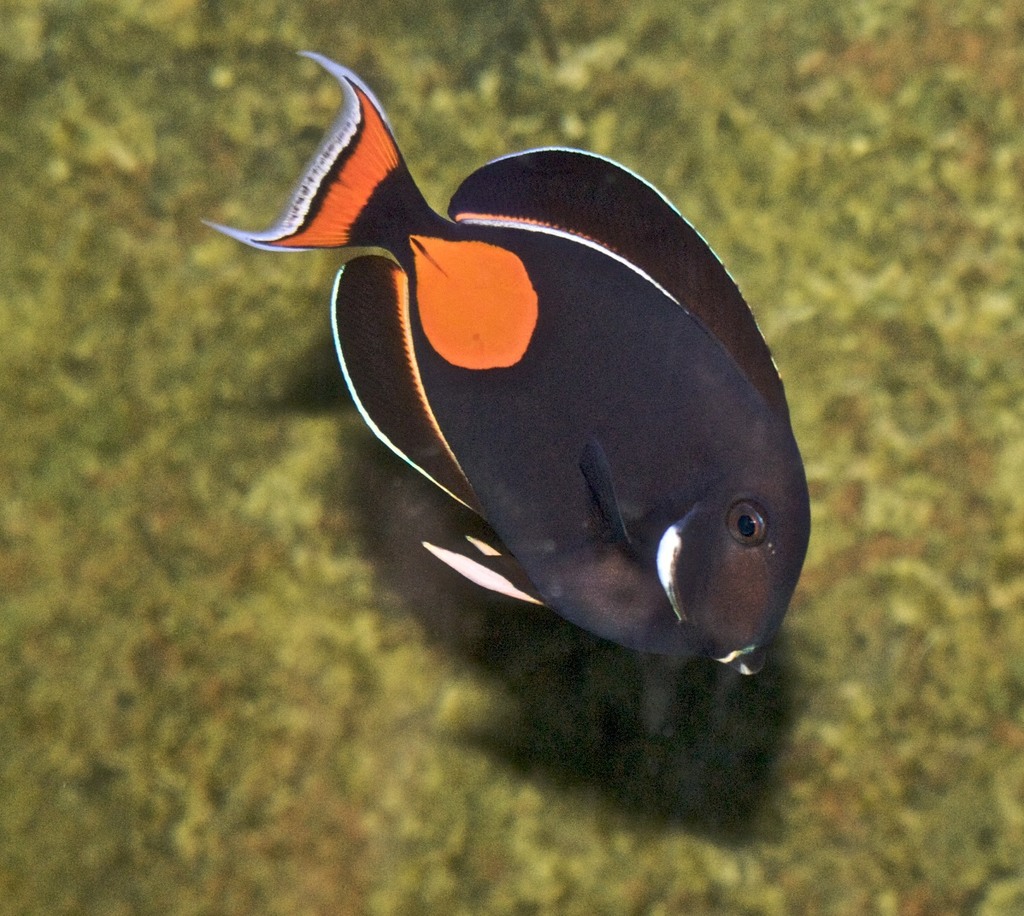
Achilles tangs patrol high-energy surge zones of coral reefs, grazing constantly on filamentous algae with their specialized teeth. Their striking black bodies are punctuated by a brilliant orange teardrop patch near the tail, which highlights the razor-sharp caudal spine used for defense. These highly territorial fish actively defend their feeding territories from other herbivores to secure their food supply.
MarineReef-dwellingTerritorial
—observations
—countries
—peak records
Least ConcernConservation statusIUCN Red List categoriesLCNTVUENCREWEXLeast ConcernRed List categories, explained →
Diet & preyFilamentous Algae, Macroalgae, Detritus
Predators
- Reef Sharks
- Groupers
- Moray Eels
ThreatsHabitat degradation, coral bleaching, and overcollection for the aquarium trade
HabitatsShallow, high-energy surge zones of coral reefs
Life span30 to 45 years
Classification
- FamilyAcanthuridae
- SpeciesAcanthurus achilles
Range data is not available yet.
Interaction riskLow
- Low
- Moderate
- High
- Very high
- Why interaction risk is low
- Equipped with sharp caudal spines that can inflict deep cuts; avoid handling.
- Why it is dangerous
- Possesses modified, razor-sharp scales called caudal spines on either side of the tail base that can slice skin deeply when the fish thrashes.
- How to recognize a risky encounter
- Recognized by the jet-black body, white-edged fins, and a large, vibrant orange teardrop patch surrounding the tail spine.
- What to do
- Never corner or attempt to handle this fish; admire its swift swimming from a safe distance.
Responsible observation
- Surge Zone Spotting: Look for them in shallow, turbulent waters where waves crash over the reef crest.
- Keep Distance: Give them space while snorkeling, as they can be highly territorial and protective of their grazing patches.
- Watch the Tail: Observe the bright orange spot near the tail, which signals the location of their defensive spine.
Competitor brian.gratwicke / CC BY 2.0 · cc-by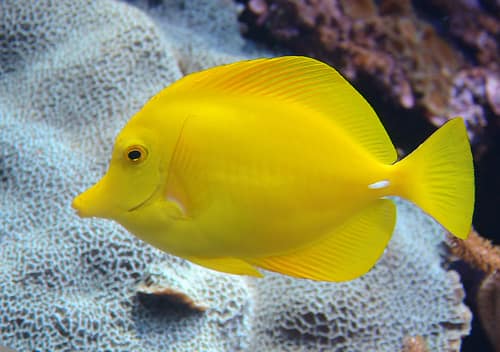
Reef Companion (c) User:Amada44, some rights reserved (CC BY) · cc-by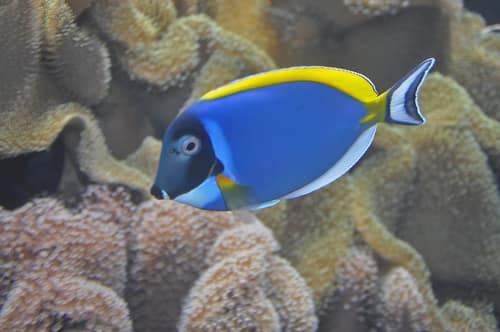
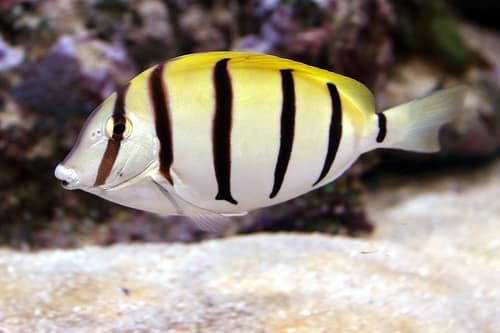
Close Relative (c) Juergen goevert, some rights reserved (CC BY-SA) · cc-by-sa
Help improve the field guideSomething wrong?
Checking your Fauna account…Report a name, category, or profile issue for review.