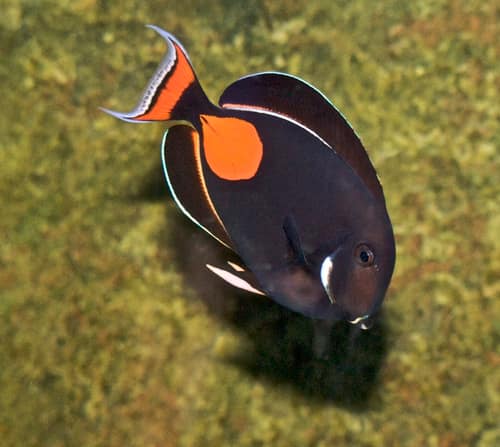
Also known as Orangespine Unicornfish, Clown Unicornfish, Blackfinned Unicornfish, Stripefaced Unicornfish
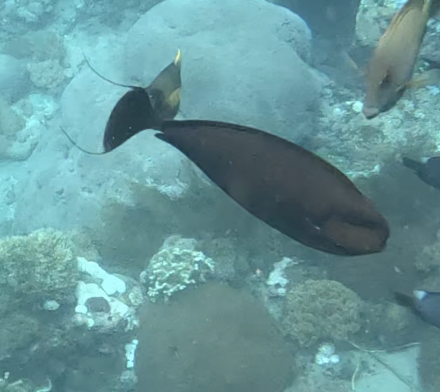
Orangespined unicornfish glide gracefully over shallow coral reefs, using their specialized teeth to graze on leafy brown macroalgae. While they lack the prominent forehead horn of some close relatives, their striking facial markings and bright orange caudal spines make them unmistakable underwater. These social fish often forage in pairs or small groups, playing a vital role in keeping algae growth from smothering the reef.
ThreatsHabitat degradation, coral bleaching, and overcollecting for the aquarium trade
HabitatsCoral reefs, rocky lagoons, and seaward reefs
Life span30 to 45 years
Classification
FamilyAcanthuridae
SpeciesNaso lituratus
Range & activity
Range data is not available yet.
Safe observation
Interaction riskLow
Low
Moderate
High
Very high
Why interaction risk is low
Sharp caudal spines on the tail base can inflict painful cuts if the fish is handled.
Why it is dangerous
Possesses two fixed, razor-sharp caudal spines on each side of the tail base that can inflict deep, painful lacerations if the fish is cornered or handled.
How to recognize a risky encounter
Look for the bright orange patches on the tail base highlighting the sharp defensive scalpels.
What to do
Never attempt to touch or catch this fish; admire its vibrant colors and active swimming from a safe distance.
Responsible observation
Keep your distance: Observe these active swimmers from a respectful distance to avoid startling them into deep reef crevices.
Watch the tail: Look for the bright orange spots near the tail, which house their razor-sharp defensive spines.
Look for pairs: Scan the reef flats for pairs or small groups foraging together on leafy brown algae.

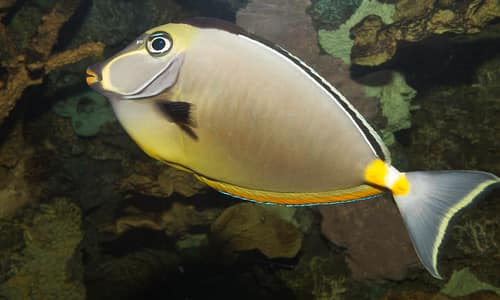
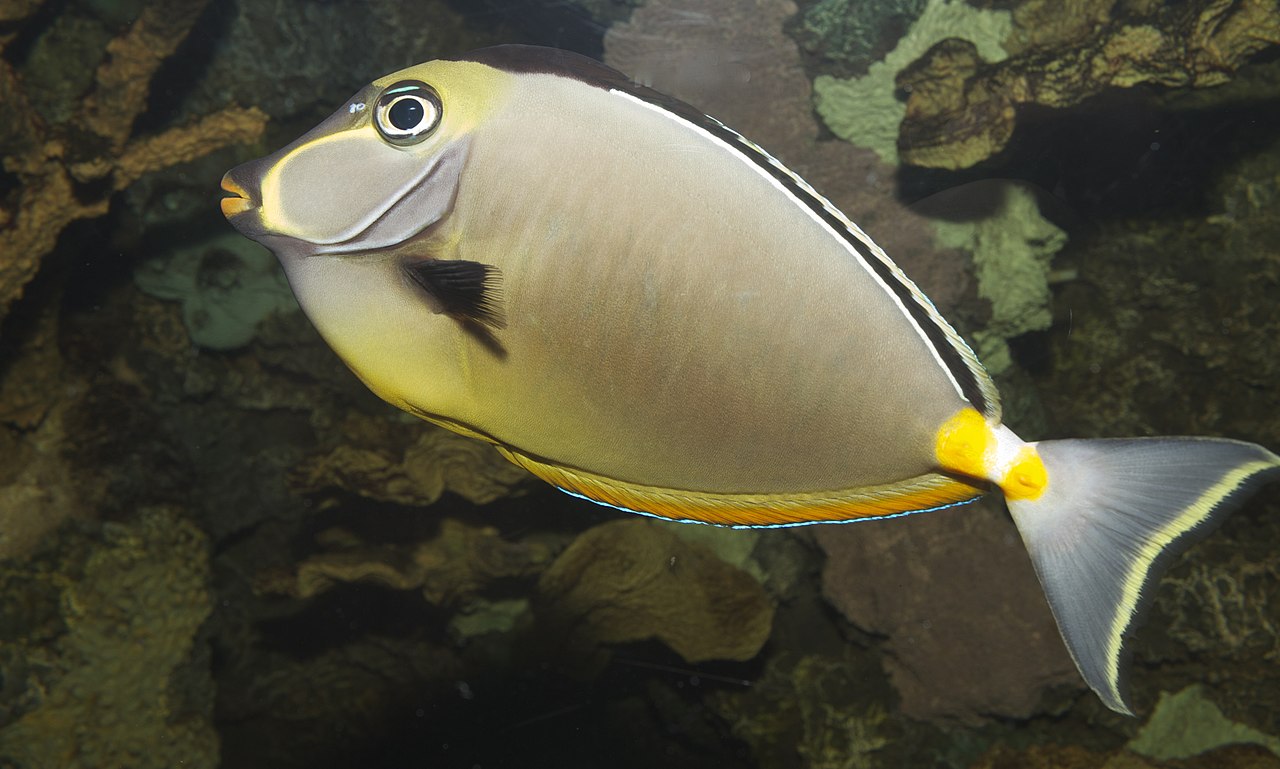
 Image unavailable