
Invertebrate · GBIF taxon 5179388
Amazonian Giant Centipede
Scolopendra giganteaAlso known as Peruvian Giant Yellow-Leg Centipede, Peruvian Giant Centipede
Amazonian giant centipedes are formidable nocturnal predators capable of overpowering vertebrates much larger than typical arthropod prey. They frequently hang from cave ceilings by their hind legs to snatch bats right out of the air. With specialized venom-injecting front legs called forcipules, they deliver a swift paralytic strike before consuming their catch in darkness.
PredatoryNocturnalVenomous
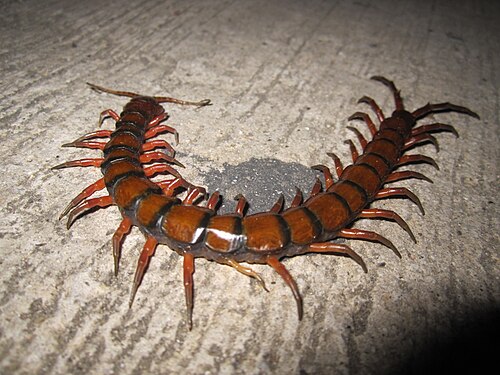
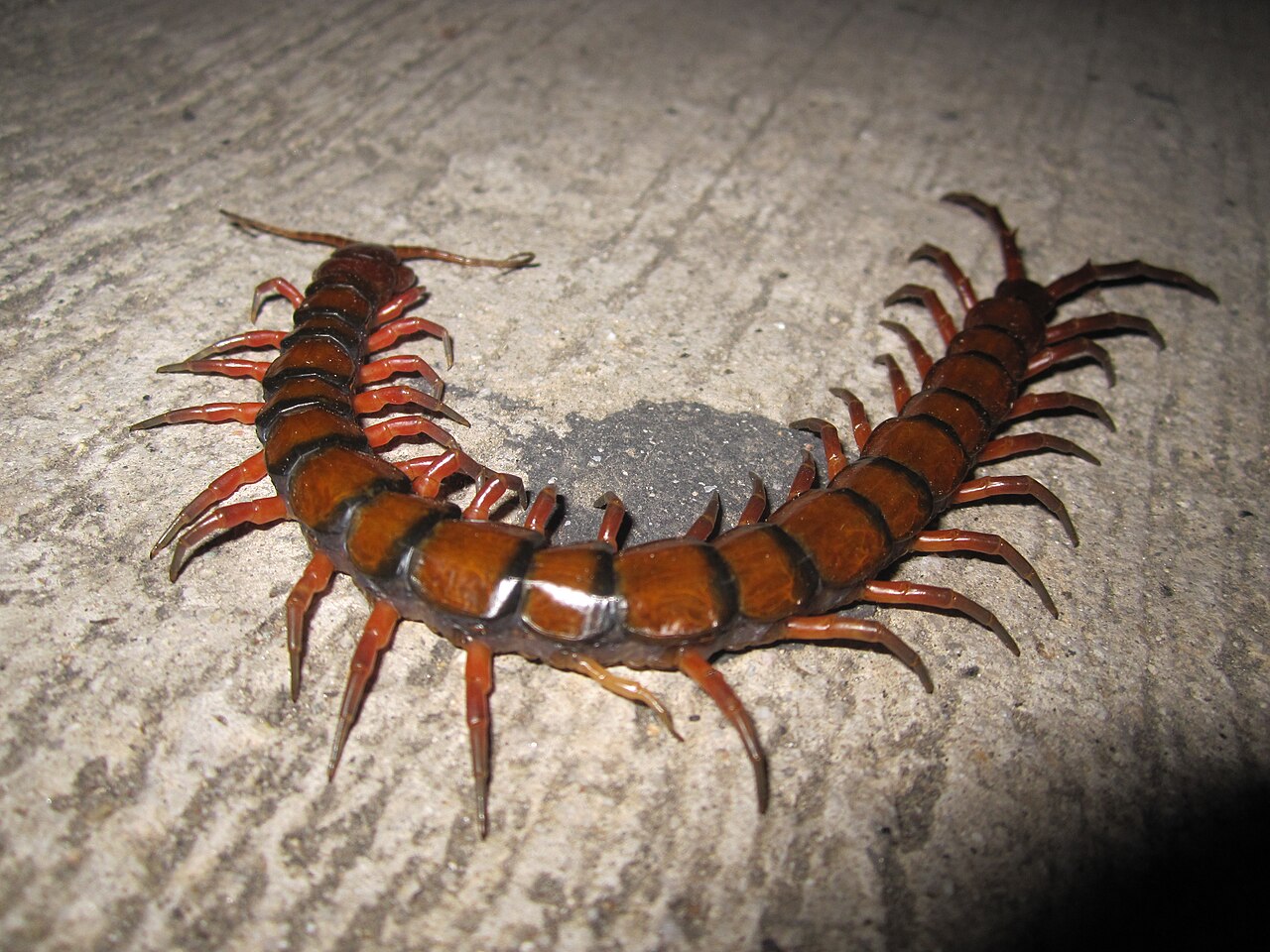
Licensed referenceKatka Nemčoková / CC BY-SA 3.0 · cc-by-sa
—observations
—countries
—peak records
Not EvaluatedConservation statusIUCN Red List categoriesLCNTVUENCREWEXNot Evaluated — not placed on the risk ladderRed List categories, explained →
Diet & prey
- Bats
- Lizards
- Small rodents
Predators
- Coatis
- Large owls
- Snakes
ThreatsHabitat loss and poaching for the exotic pet trade
HabitatsTropical rainforests, tropical dry forests, caves, leaf litter
Life span10–15 years
Classification
- FamilyScolopendridae
- SpeciesScolopendra gigantea
Range data is not available yet.
Interaction riskVery high
- Low
- Moderate
- High
- Very high
- Why interaction risk is very high
- Delivers a highly painful venomous bite with powerful modified legs; keep a safe distance and never handle.
- Why it is dangerous
- Injects potent venom containing histamine, serotonin, and cardiotoxins that cause extreme pain, localized tissue swelling, fever, and severe weakness.
- How to recognize a risky encounter
- Look for a heavy dark red or brown body exceeding 30 cm with 21 to 23 body segments and contrasting yellow legs.
- What to do
- Never touch or corner this invertebrate; back away slowly if encountered on forest paths or cave walls.
Responsible observation
- Maintain distance: Observe from several meters away as these centipedes strike with remarkable speed.
- Watch your step: Avoid reaching blindly into hollow logs, rock crevices, or thick leaf litter in tropical forests.
- Use torchlight: Night walks with a flash-light reveal their active hunting hours without disturbing their paths.
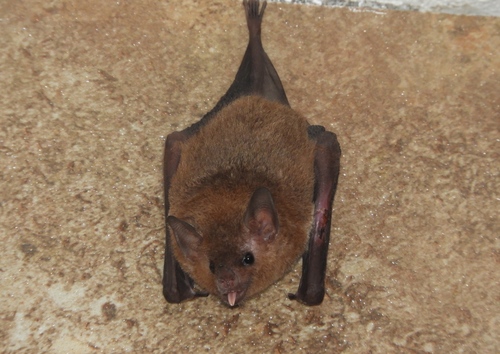
Prey (c) Francisco Farriols Sarabia, some rights reserved (CC BY), uploaded by Francisco Farriols Sarabia · cc-by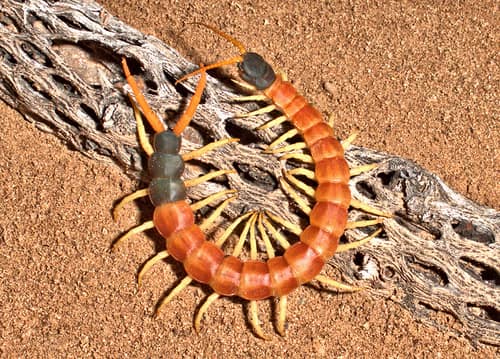
Close Relative (c) gilaman, some rights reserved (CC BY) · cc-by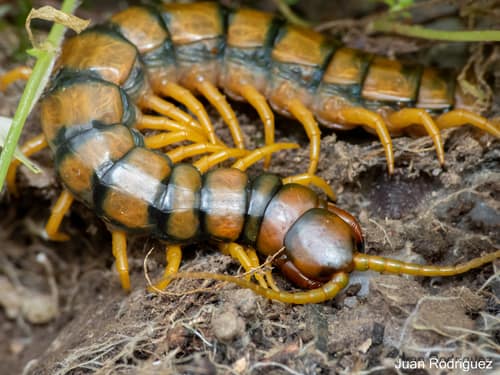
Close Relative (c) Juan Rodríguez, some rights reserved (CC BY), uploaded by Juan Rodríguez · cc-by
Help improve the field guideSomething wrong?
Checking your Fauna account…Report a name, category, or profile issue for review.