
Insect
Common Crow
Euploea coreAlso known as Common Indian Crow, Australian Crow, Oleander Butterfly
Common crows display velvety deep brown wings lined with crisp white marginal spots and flutter with a slow, unhurried flight pattern. Their bodies sequester plant toxins during the caterpillar stage, rendering adults unpalatable to birds and allowing them to glide openly in bright sunlight. Females lay ribbed eggs on poisonous host plants like oleander and milkweeds, ensuring the next generation inherits the same chemical defenses.
PollinatorPoisonousMigratory
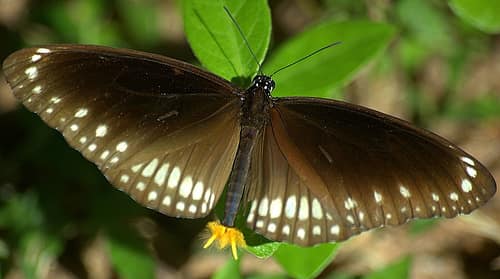
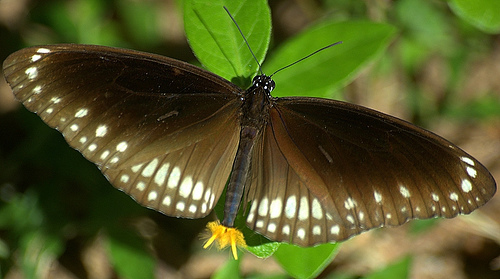
—observations
—countries
—peak records
Least ConcernConservation statusIUCN Red List categoriesLCNTVUENCREWEXLeast ConcernRed List categories, explained →
Diet & preyFlower Nectar, Plant Sap, Mineral Salts
Predators
- Praying Mantises
- Spiders
- Lizards
ThreatsInsecticide application, urban development, and loss of native host plants.
HabitatsGardens, forest edges, parks, and coastal scrub zones.
Life span4–6 weeks as adults
Classification
- OrderLepidoptera
- FamilyNymphalidae
- GenusEuploea
- SpeciesEuploea core
Range data is not available yet.
Interaction riskLow
- Low
- Moderate
- High
- Very high
- Why interaction risk is low
- Safe to observe at a normal distance.
Responsible observation
- Observing: Look for adults gliding lazily around flowering gardens or perching on shrub leaves.
- Gardening: Plant milkweed, oleander, or fig species to attract egg-laying females.
- Handling: Avoid touching adult wings as rubbing off scales can impair their flight.
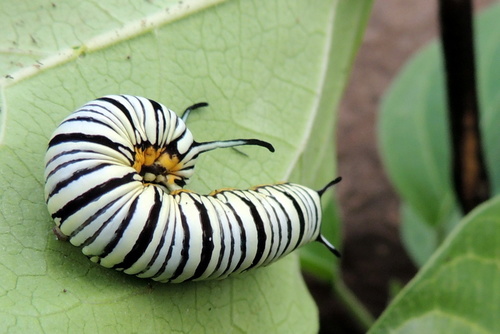
Frequent Companion no rights reserved, uploaded by Vijay Barve · cc0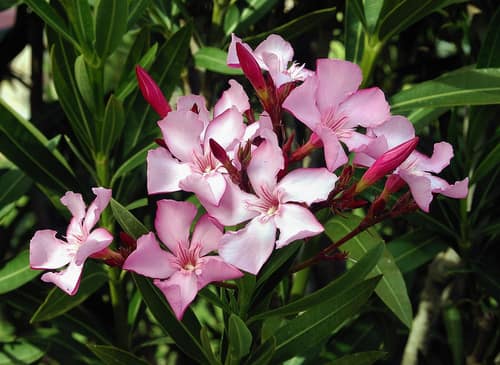
Host Plant Alvesgaspar / CC BY 2.5 · cc-by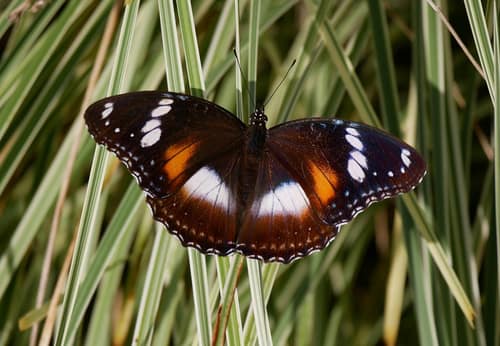
Mimic (c) Tom, some rights reserved (CC BY), uploaded by Tom · cc-by Image unavailable
Close Relative 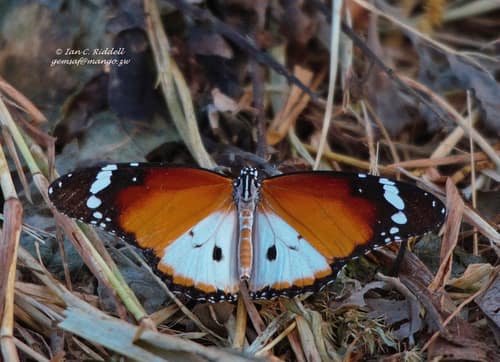
Close Relative (c) i_c_riddell, some rights reserved (CC BY), uploaded by i_c_riddell · cc-by
Keep collecting in Fauna
Found in Collections
Ecosystem chain Pro
Mystic Meadows
Common Crow is found in this collection. Identify it in Fauna to fill this slot and continue your progress.
Unlock to track progress
Help improve the field guideSomething wrong?
Checking your Fauna account…Report a name, category, or profile issue for review.