
Insect · GBIF taxon 5123983
Banded Sphinx
Eumorpha fasciatusAlso known as Banded Sphinx Moth
Banded sphinx moths are robust nocturnal flyers with striking geometric patterns across their forewings, featuring a prominent creamy-white stripe. Adults hover like hummingbirds in front of evening blossoms to drink nectar through their long proboscides. Their caterpillars feed on water primrose and other wetland plants, often changing color from bright green to pinkish-yellow before pupating in the soil.
NocturnalPollinatorStriking Pattern
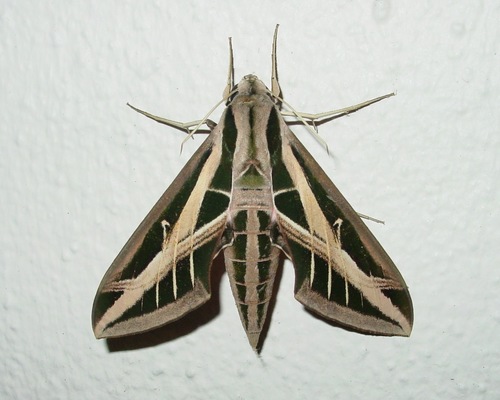
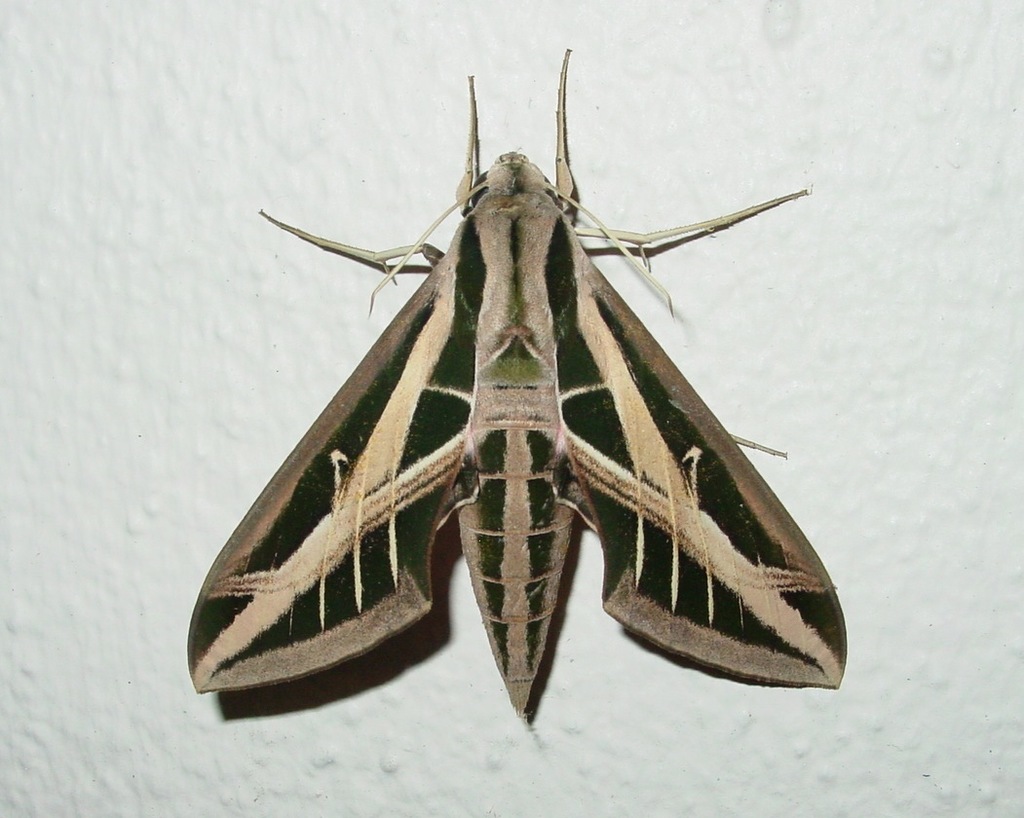
—observations
—countries
—peak records
Not EvaluatedConservation statusIUCN Red List categoriesLCNTVUENCREWEXNot Evaluated — not placed on the risk ladderRed List categories, explained →
Diet & prey
- Flower Nectar
- Water Primrose Leaves
- Evening Primrose Leaves
Predators
- Bats
- Insectivorous Birds
- Spiders
ThreatsArtificial light pollution, pesticide use, and loss of wetland habitats.
HabitatsSubtropical forests, wetlands, coastal plains, gardens, and agricultural edges.
Life span1 to 3 months as adults
Classification
- OrderLepidoptera
- FamilySphingidae
- GenusEumorpha
- SpeciesEumorpha fasciatus
Range data is not available yet.
Interaction riskLow
- Low
- Moderate
- High
- Very high
- Why interaction risk is low
- Safe to observe at a normal distance.
Responsible observation
- Evening Watching: Search near night-blooming flowers like petunias or deep-tubed blossoms at dusk.
- Light Attraction: Look near outdoor lights and porch lamps after dark where night-flying moths rest.
- Caterpillar Spotting: Inspect water primrose along pond edges to find feeding larvae.
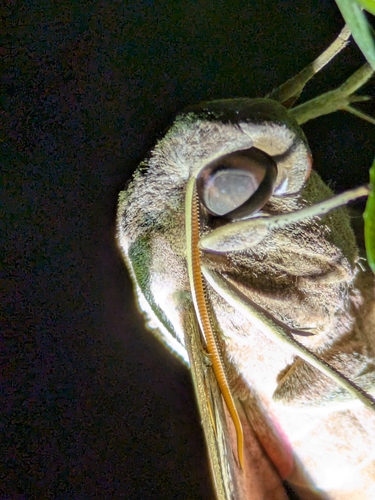
Close Relative (c) Edward Hurme, some rights reserved (CC BY) · cc-by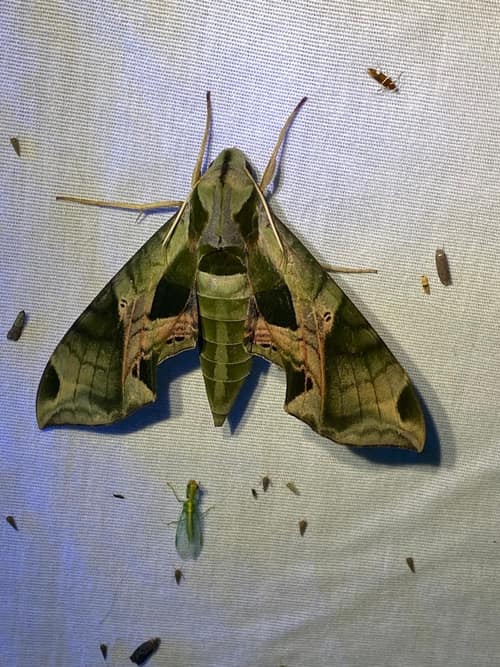
Close Relative (c) David George, some rights reserved (CC BY), uploaded by David George · cc-by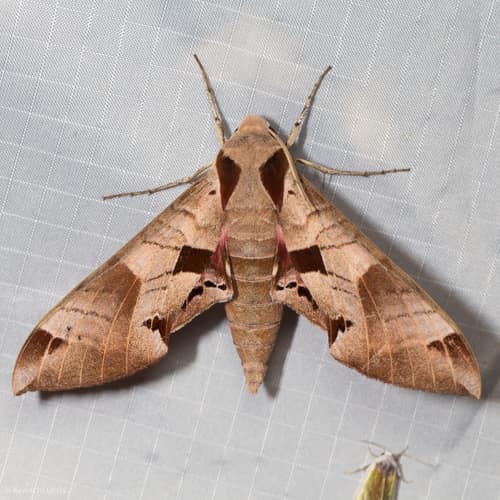
Close Relative (c) Ken-ichi Ueda, some rights reserved (CC BY), uploaded by Ken-ichi Ueda · cc-by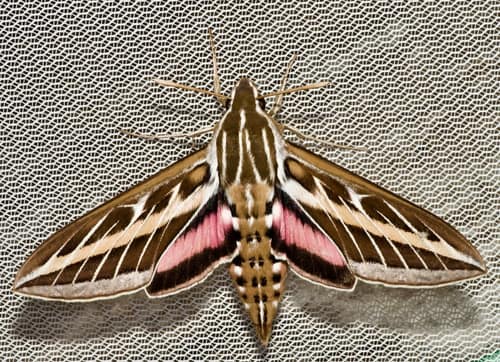
Family Relative (c) Michelle W. (鍾偉瑋), some rights reserved (CC BY), uploaded by Michelle W. (鍾偉瑋) · cc-by
Keep collecting in Fauna
Found in Collections
Species set
Moonlight Marvels
Banded Sphinx is found in this collection. Identify it in Fauna to fill this slot and continue your progress.
—/7
Help improve the field guideSomething wrong?
Checking your Fauna account…Report a name, category, or profile issue for review.