
Insect
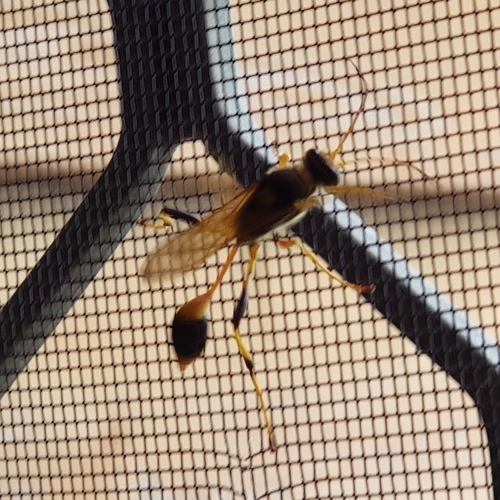
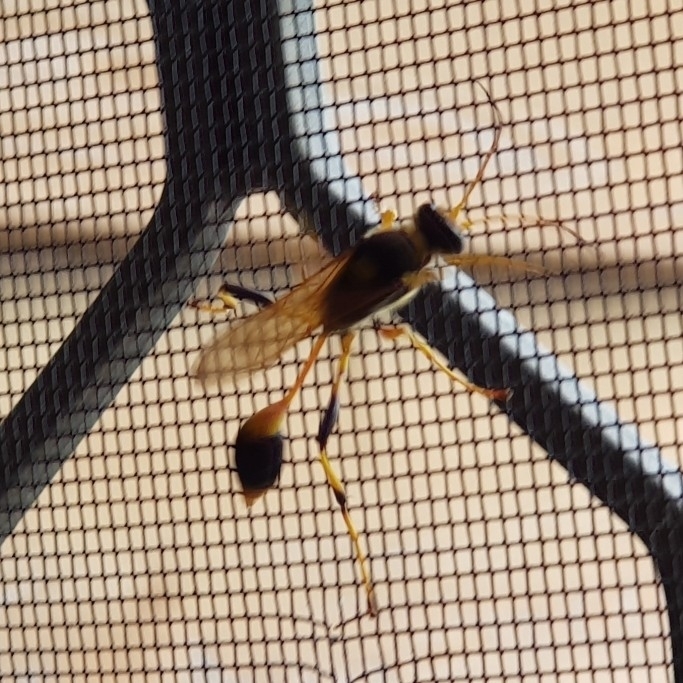
Sceliphron laetum
Sceliphron laetumAlso known as Australian Mud Dauber, Yellow-faced Mud Dauber
Yellow-faced mud-daubers sculpt distinctive, multi-chambered earthen cylinders along sheltered rock faces, tree hollows, and under the eaves of buildings. Females tirelessly gather damp mud, rolling it into neat pellets with their mandibles before smoothing it into place to form nursery tubes. Each finished cell is stocked with an abundance of paralyzed spiders, providing fresh food for a solitary larva before the entrance is cemented shut.
SolitaryNest BuilderDiurnal
—observations
—countries
—peak records
Not EvaluatedConservation statusIUCN Red List categoriesLCNTVUENCREWEXNot Evaluated — not placed on the risk ladderRed List categories, explained →
Diet & preyOrb-weaving spiders, Crab spiders, Flower nectar
Predators
- Cuckoo wasps
- Parasitic flies
- Insectivorous birds
ThreatsInsecticide spraying, removal of nests on buildings
HabitatsOpen woodlands, urban gardens, coastal scrub, forest margins
Life spanUp to 1 year (including larval diapause)
Classification
- FamilySphecidae
- SpeciesSceliphron laetum
Range data is not available yet.
Interaction riskLow
- Low
- Moderate
- High
- Very high
- Why interaction risk is low
- Docile and safe to observe; solitary wasps do not defend nests and sting only if crushed.
Responsible observation
- Observation: Watch near muddy puddles or wet garden soil where females gather building pellets.
- Coexistence: Leave nests under eaves untouched to enjoy natural garden pest management without fear of aggression.
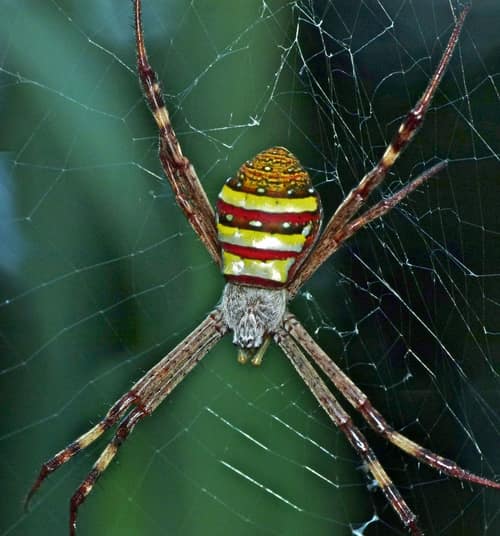
Prey (c) Steve Kerr, some rights reserved (CC BY), uploaded by Steve Kerr · cc-by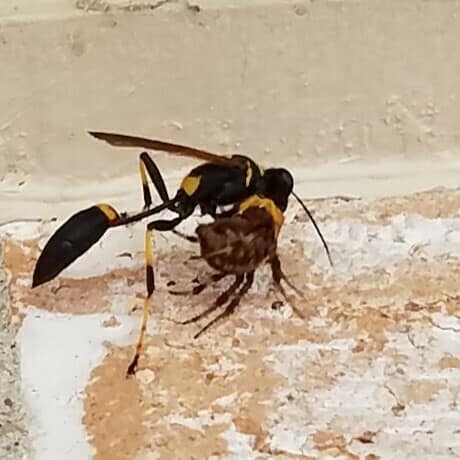
Close Relative (c) dhasdf, some rights reserved (CC BY) · cc-by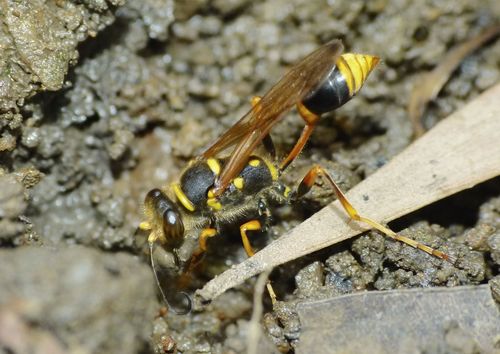
Close Relative (c) Steve Kerr, some rights reserved (CC BY), uploaded by Steve Kerr · cc-by
Help improve the field guideSomething wrong?
Checking your Fauna account…Report a name, category, or profile issue for review.