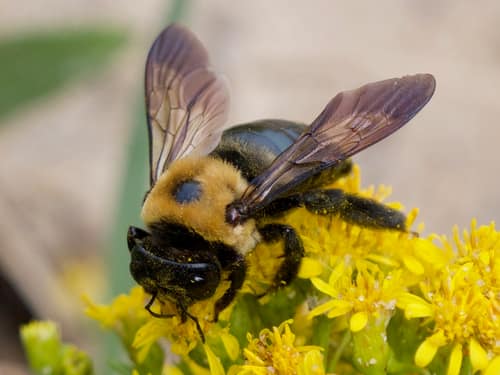
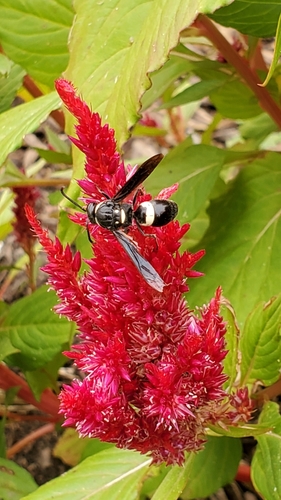
Pitted mason wasps are solitary cavity-nesters that frequently seal paralyzed caterpillars inside hollow stems, beetle borings, and artificial bee hotels. Females construct internal mud partitions to protect each developing offspring, provisioning every cell before sealing the entrance. They are widely studied in evolutionary biology due to a rare genetic phenomenon where inbred lineages can produce fertile diploid males.
ThreatsBroad-spectrum pesticide exposure, habitat clearance, and nest parasitism
HabitatsWoodland edges, old fields, hedgerows, gardens, and residential yards
Life spanAdults live 1–2 months; total life cycle spans roughly 1 year
Classification
OrderHymenoptera
FamilyEumenidae
GenusEuodynerus
SpeciesEuodynerus foraminatus
Range & activity
Range data is not available yet.
Safe observation
Interaction riskVery high
Low
Moderate
High
Very high
Why interaction risk is very high
Females possess a defensive sting; observe peacefully without attempting to catch or touch.
Why it is dangerous
Females inject a localized venom via an unbarbed stinger if trapped against the skin, causing acute burning pain, swelling, and potential allergic reactions in sensitive individuals.
How to recognize a risky encounter
Look for a compact black body marked with pale yellow abdominal bands and distinct, deep pitting across the head and thorax.
What to do
Allow the wasp to forage undisturbed, and check garden gloves and clothing before putting them on if working near active nesting crevices.
Responsible observation
Nest blocks: Install small bamboo canes or drilled wood blocks in sunny spots to attract nesting females.
Flower watches: Scan late summer goldenrod, mint, and sumac flowers to watch adults take nectar.
Gentle watching: Observe quietly from a meter away as females carry mud pellets and paralyzed caterpillars.