
Insect
Four-toothed Mason Wasp
Monobia quadridensAlso known as Four-Toothed Potter Wasp
Four-toothed mason wasps are striking solitary insects easily identified by their solid black body marked by a single bold white-to-cream band across the abdomen. Females hunt leaf-rolling caterpillars, paralyzing them with a precise sting before caching them inside hollow plant stems, wooden crevices, or abandoned carpenter bee galleries as food for their larvae. Despite possessing a potent defensive sting, these calm wasps are non-aggressive toward humans and serve as helpful natural garden pest controls.
SolitaryPredatoryPollinator
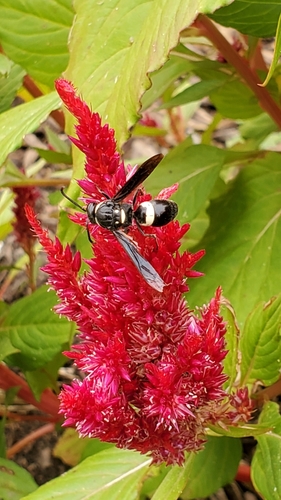
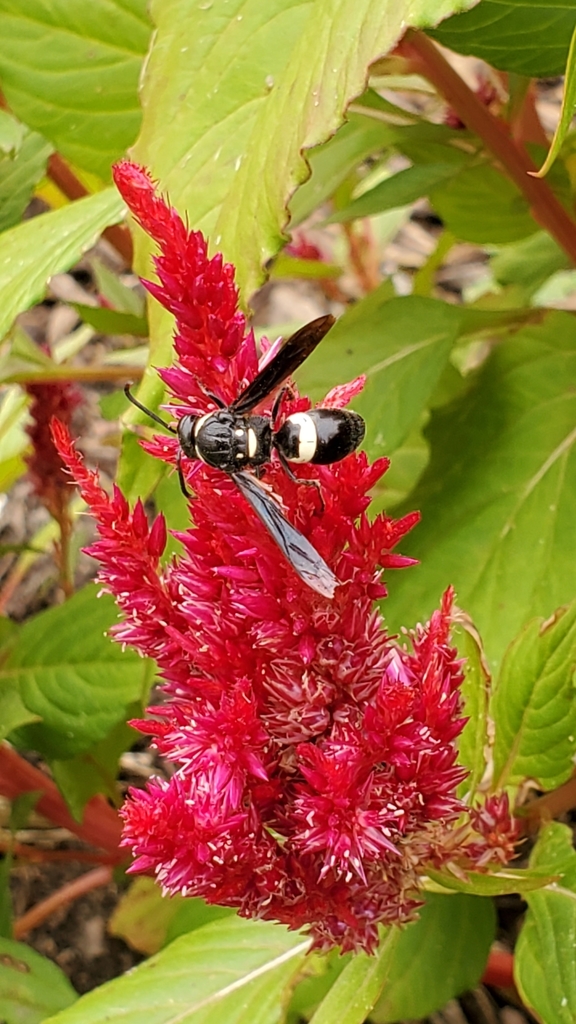
—observations
—countries
—peak records
Not EvaluatedConservation statusIUCN Red List categoriesLCNTVUENCREWEXNot Evaluated — not placed on the risk ladderRed List categories, explained →
Diet & preyCaterpillars, Nectar, Pollen
Predators
- Birds
- Spiders
- Parasitic wasps
ThreatsBroad-spectrum pesticide use and habitat destruction
HabitatsWoodlands, meadows, gardens, and forest edges
Life span1–2 months as adults; up to 1 year overall
Classification
- OrderHymenoptera
- FamilyEumenidae
- GenusMonobia
- SpeciesMonobia quadridens
Range data is not available yet.
Interaction riskVery high
- Low
- Moderate
- High
- Very high
- Why interaction risk is very high
- Females can deliver a painful sting if squeezed or cornered; observe quietly from a safe distance.
- Why it is dangerous
- Injects venom through a sting that causes localized pain and swelling, posing severe risk to allergic individuals.
- How to recognize a risky encounter
- Recognizable by a stout black body, dark smoky wings, and a single wide white band across the abdomen.
- What to do
- Never handle adults or block active nest cavities; observe from a respectful distance.
Responsible observation
- Observing Nests: Watch females carrying paralyzed caterpillars into hollow stems during summer.
- Garden Habitat: Planting native flowering perennials provides essential nectar for adult wasps.
- Safe Distance: Maintain a comfortable distance of a few feet to avoid disturbing nesting females.
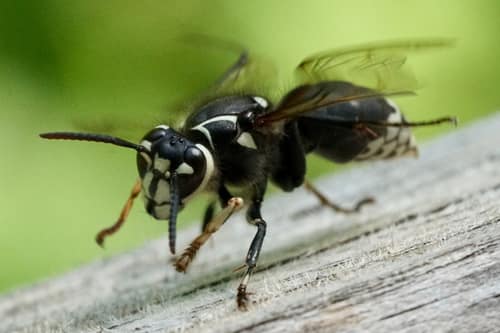
Visual Look-Alike (c) Amy Schnebelin, some rights reserved (CC BY), uploaded by Amy Schnebelin · cc-by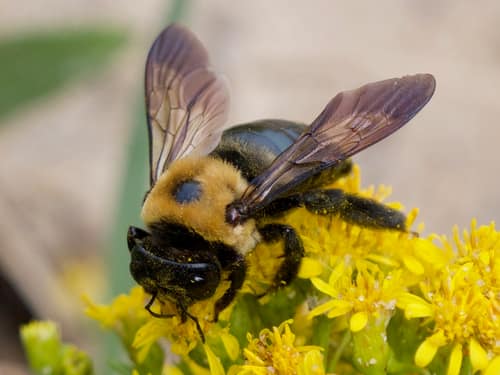
Nest Source (c) Christopher Eliot, some rights reserved (CC BY), uploaded by Christopher Eliot · cc-by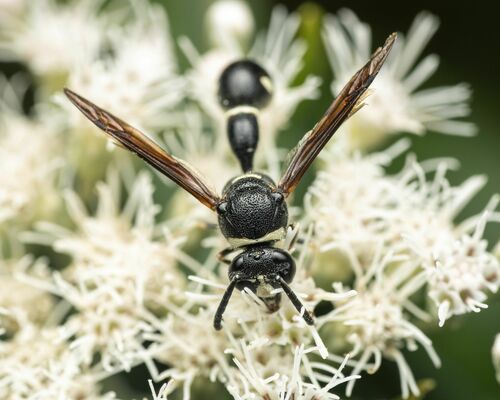
Close Relative (c) Zachary Dankowicz, some rights reserved (CC BY), uploaded by Zachary Dankowicz · cc-by
Help improve the field guideSomething wrong?
Checking your Fauna account…Report a name, category, or profile issue for review.