
Mammal · GBIF taxon 4970768
Bison antiquus
Bison antiquusAlso known as Ancient Bison, Antique Bison
Ancient bison roamed late Pleistocene North America in expansive herds, shaping grassland ecology much like their modern descendants. Adults stood significantly taller and heavier than living American bison, bearing longer and straighter horns suited for defense against formidable ice age predators. Excavations at Paleo-Indian kill sites reveal that these massive grazers were central to the diet, hunting toolkits, and cultures of early human societies.
HerbivorePleistocene
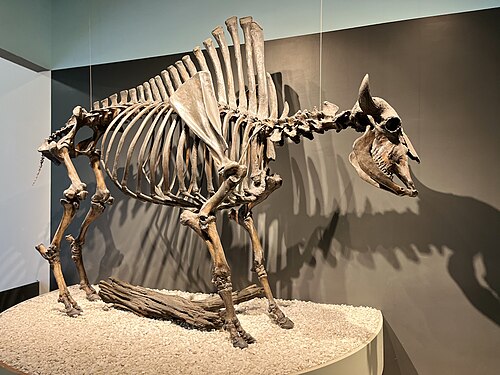
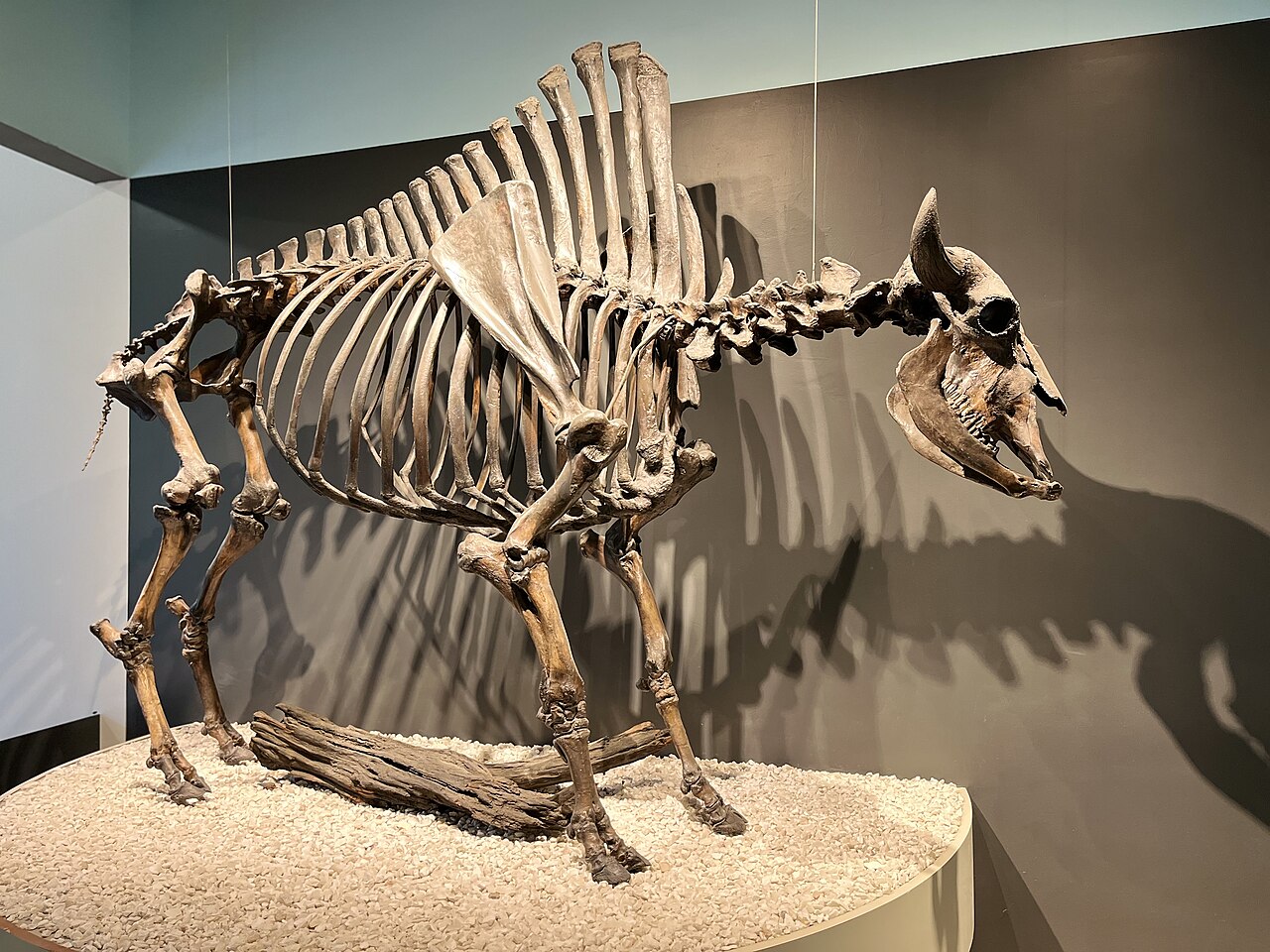
Licensed referenceNikhil Iyengar / CC BY-SA 4.0 · cc-by-sa
—observations
—countries
—peak records
ExtinctConservation statusIUCN Red List categoriesLCNTVUENCREWEXExtinctRed List categories, explained →
Diet & prey
- Grasses
- Sedges
- Forbs
Predators
- Dire Wolf
- Sabertooth Cat
- American Lion
ThreatsAbrupt post-glacial warming, ecological shifts, and human predation
HabitatsGrasslands, open savannas, steppes, and mixed woodlands
Life spanEstimated 15–20 years
Classification
- OrderArtiodactyla
- FamilyBovidae
- GenusBison
- SpeciesBison antiquus
Range data is not available yet.
Interaction riskHigh
- Low
- Moderate
- High
- Very high
- Why interaction risk is high
- Extinct species; preserved only as fossils and skeletal mounts in museum collections.
Responsible observation
- Fossil Exploration: Look for preserved skeletal remains and distinct horn cores in Pleistocene asphalt seeps and river gravel beds.
- Museum Viewing: Study articulated fossil skeletons in natural history institutions to observe their immense shoulder humps and skull structure.
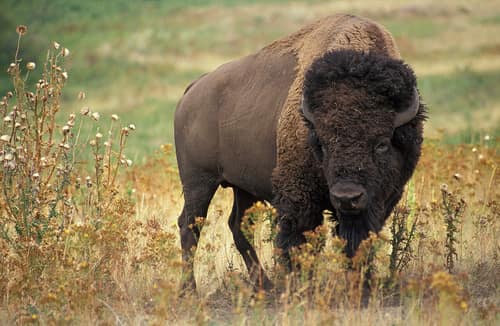
Descendant Jack Dykinga / Public domain · cc0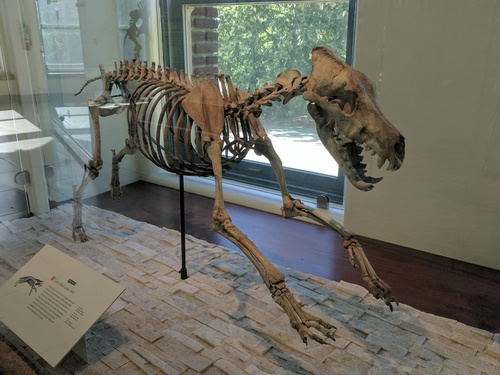
Predator (c) Dawn Pedersen, some rights reserved (CC BY) · cc-by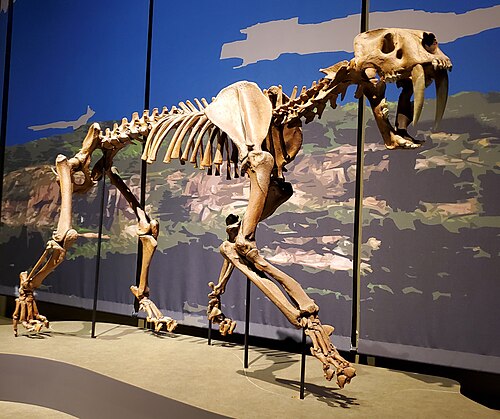
Predator JJonahJackalope / CC BY-SA 4.0 · cc-by-sa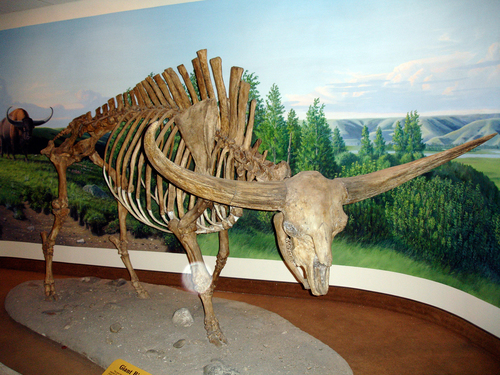
Close Relative (c) daryl_mitchell, some rights reserved (CC BY-SA) · cc-by-sa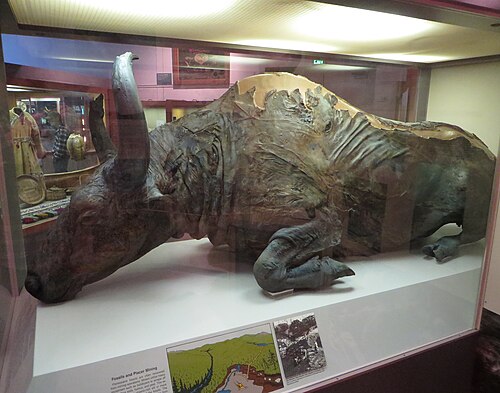
Close Relative Bernt Rostad from Oslo, Norway / CC BY 2.0 · cc-by
Keep collecting in Fauna
Found in Collections
Ecosystem chain Pro
Prairie Plains
Bison antiquus is found in this collection. Identify it in Fauna to fill this slot and continue your progress.
Unlock to track progress
Help improve the field guideSomething wrong?
Checking your Fauna account…Report a name, category, or profile issue for review.