
Bird · GBIF taxon 4847293
White-capped Albatross
Thalassarche steadiAlso known as Auckland Islands Mollymawk, White-capped Mollymawk
White-capped albatrosses are majestic oceanic wanderers that spend years at sea gliding effortlessly across cold southern waters via dynamic soaring. Adults return to wind-swept subantarctic islands off New Zealand to nest on rocky plateaus and tussock slopes, raising a single chick over a lengthy breeding season. They frequently congregate behind commercial fishing trawlers, scavenging discarded offal alongside other pelagic seabirds.
PelagicSeabirdSubantarctic
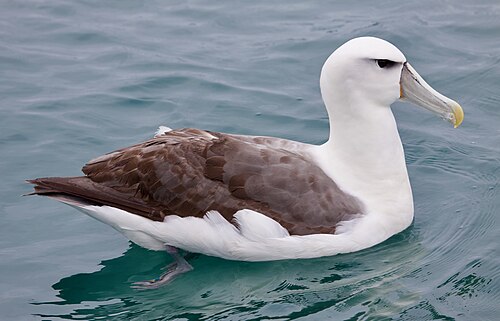
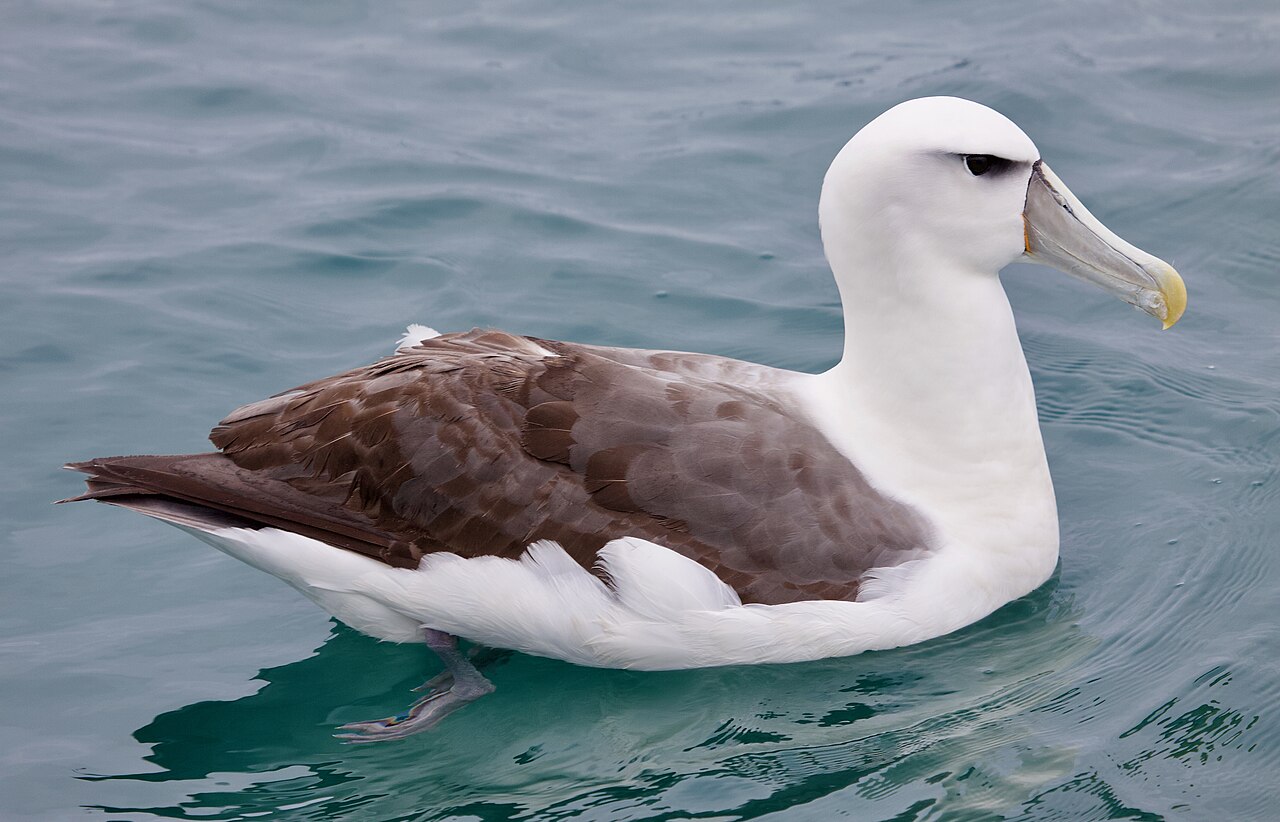
Licensed referenceBasar / CC BY-SA 4.0 · cc-by-sa
—observations
—countries
—peak records
Near ThreatenedConservation statusIUCN Red List categoriesLCNTVUENCREWEXNear ThreatenedRed List categories, explained →
Diet & prey
- Arrow squid
- Jack mackerel
- Salps
Predators
- Killer whale
- Subantarctic skua
- Giant petrel
ThreatsBycatch in longline and trawl fisheries, marine pollution, and extreme weather events
HabitatsOpen southern oceans, shelf waters, and remote windswept subantarctic islands
Life span30 to 40 years
Size / weightNot available
Classification
- OrderProcellariiformes
- FamilyDiomedeidae
- GenusThalassarche
- SpeciesThalassarche steadi
Range data is not available yet.
Interaction riskLow
- Low
- Moderate
- High
- Very high
- Why interaction risk is low
- Safe to observe at a normal distance from boats or shore.
- What to notice
- Recognize by the large pale gray-and-white body, silvery-white cap, and pale bill with a faint yellowish tip.
- Support conservation
- Observe exclusively from marine vessels, keeping a respectful distance to avoid altering natural foraging or resting behaviors.
Responsible observation
- Pelagic Charters: Join dedicated seabird boat trips off southern New Zealand or South Africa for the best views.
- Binocular Glances: Scan trailing wakes behind fishing vessels where individuals gather to feed.
- Nesting Protocol: Avoid approaching breeding colonies on subantarctic islands, as landing permits are strictly regulated.
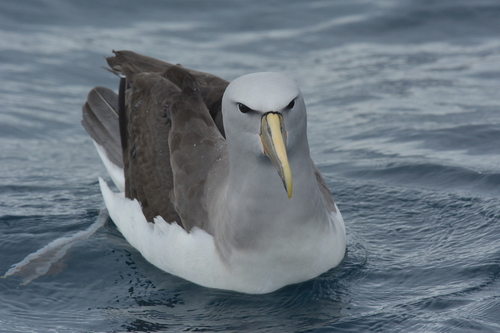
Same Genus (c) Christopher Stephens, some rights reserved (CC BY-SA) · cc-by-sa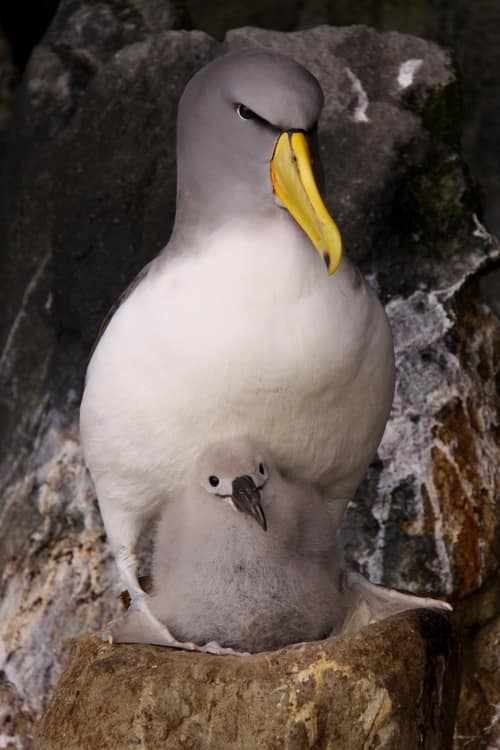
Same Genus no rights reserved, uploaded by Mark Fraser · cc0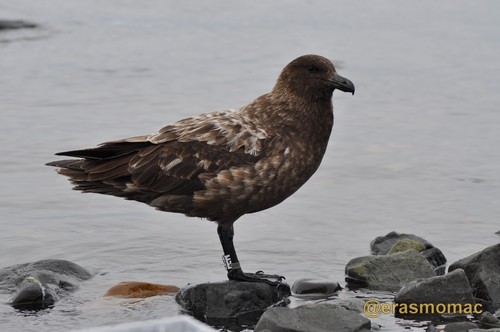
Predator (c) Erasmo Macaya Horta, some rights reserved (CC BY), uploaded by Erasmo Macaya Horta · cc-by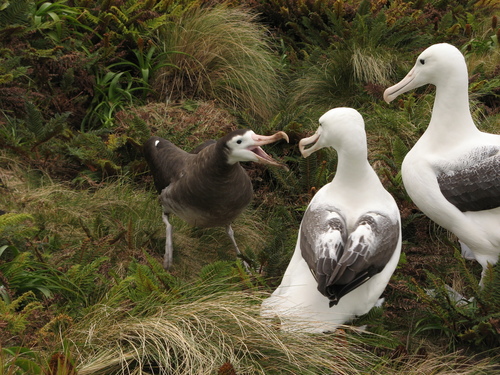
Neighbor (c) M Rutherford, some rights reserved (CC BY) · cc-by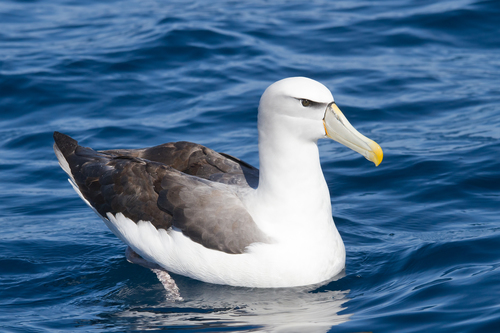
Close Relative (c) JJ Harrison, some rights reserved (CC BY-SA) · cc-by-sa
Help improve the field guideSomething wrong?
Checking your Fauna account…Report a name, category, or profile issue for review.