
Mammal
American Mastodon
Mammut americanumAlso known as Mastodon
American mastodons were robust, heavily built proboscideans adapted for browsing dense woodlands and spruce forests across North America during the Pleistocene. Unlike their mammoth contemporaries, mastodons had low, domed skulls, long curved tusks, and distinct cone-shaped cusps on their molars designed for crushing woody twigs, conifers, and leaves. They lived in small maternal herds and frequently frequented swamps, bogs, and kettle ponds, where many of their fossil skeletons were ultimately preserved.
PrehistoricHerbivore
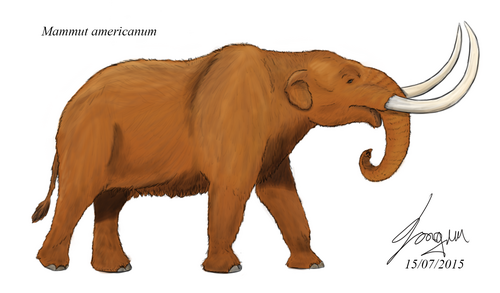
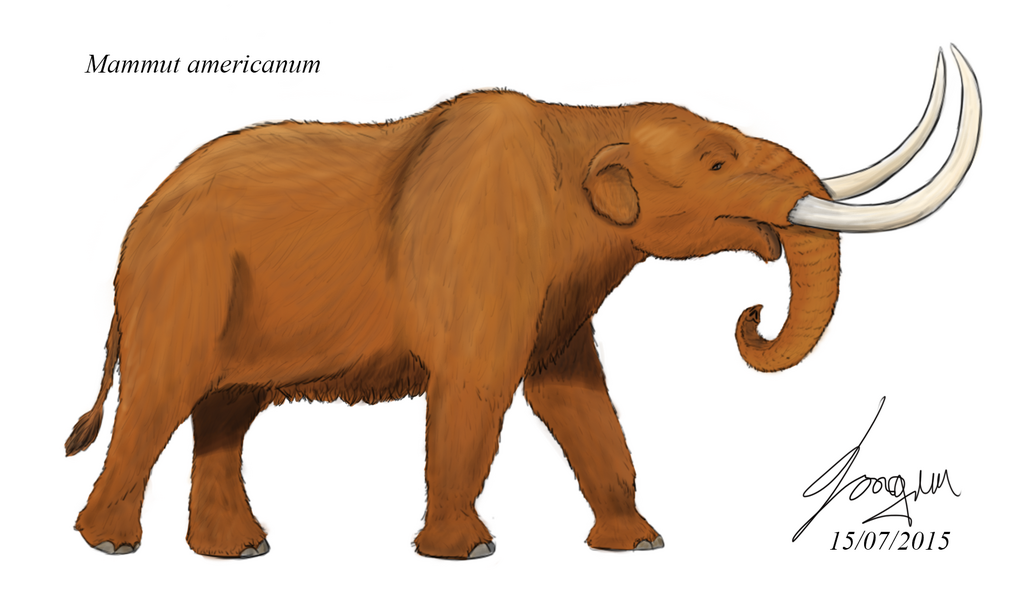
—observations
—countries
—peak records
ExtinctConservation statusIUCN Red List categoriesLCNTVUENCREWEXExtinctRed List categories, explained →
Diet & preySpruce and pine needles, Tree bark and twigs, Aquatic wetland plants
Predators
- Human (Paleo-American hunters)
- Saber-toothed cat (juveniles)
- Dire wolf (juveniles)
ThreatsOverhunting by early humans and abrupt climatic changes at the end of the Pleistocene
HabitatsBoreal forests, spruce woodlands, wetlands, and peat bogs
Life span60 years
Classification
- FamilyMammutidae
- SpeciesMammut americanum
Range data is not available yet.
Interaction riskLow
- Low
- Moderate
- High
- Very high
- Why interaction risk is low
- Extinct species; known exclusively from fossil and skeletal remains.
Responsible observation
- Museum Viewing: Examine fossil dentition to see the signature cusped molars adapted for twigs.
- Fossil Etiquette: Leave any unexcavated paleontological finds in place and notify local authorities.
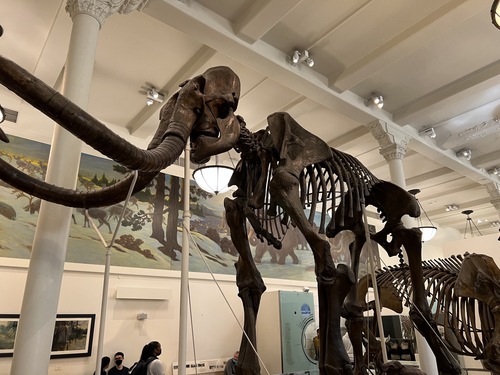
Coexisting Proboscidean no rights reserved, uploaded by mionectes · cc0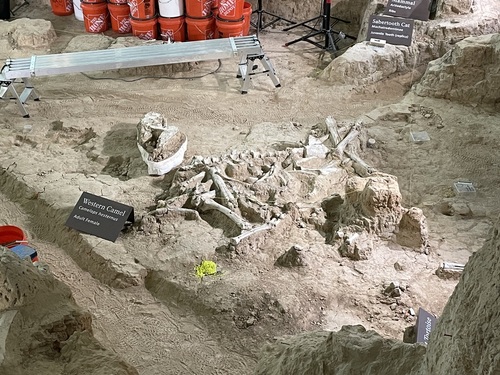
Coexisting Proboscidean (c) lejones417, some rights reserved (CC BY-SA) · cc-by-sa Image unavailable
Close Relative 
Distant Relative Yathin S Krishnappa / CC BY-SA 3.0 · cc-by-sa
Help improve the field guideSomething wrong?
Checking your Fauna account…Report a name, category, or profile issue for review.