
Bird
Bluethroat
Luscinia svecicaAlso known as Red-Spotted Bluethroat, White-Spotted Bluethroat, Swedish Nightingale
Adult males display an iridescent electric-blue throat bib, often centered with a vivid rusty-red or crisp white star depending on the subspecies. These secretive skulkers spend much of their time hopping through thick damp undergrowth, yet males ascend to exposed perches or perform aerial display flights to pour out a magnificent, highly varied song that mimics neighboring bird species. Each autumn, populations across the Palearctic undertake long migrations to wintering grounds in southern Asia, North Africa, and southern Europe.
MigratorySongbirdInsectivore
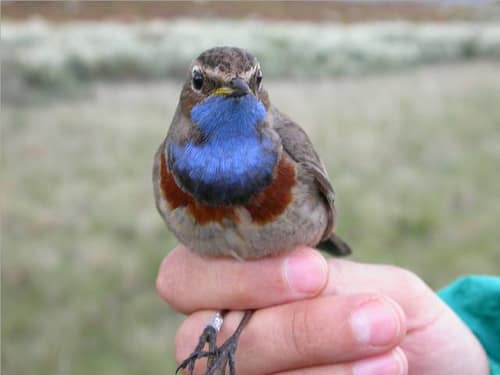
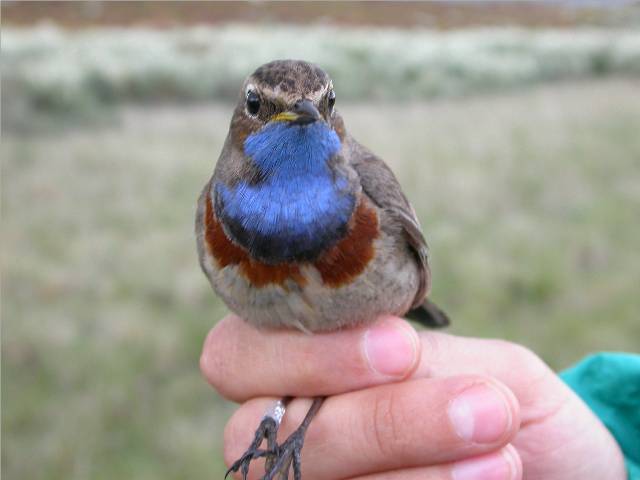
—observations
—countries
—peak records
Least ConcernConservation statusIUCN Red List categoriesLCNTVUENCREWEXLeast ConcernRed List categories, explained →
Diet & preyInsects, Spiders, Earthworms
Predators
- Eurasian Sparrowhawk
- Domestic Cat
- Stoat
ThreatsWetland drainage, habitat loss, climate change
HabitatsWet birch woods, swampy thickets, tundra, riverbanks
Life span3–8 years
Classification
- FamilyMuscicapidae
- SpeciesLuscinia svecica
Range data is not available yet.
Interaction riskLow
- Low
- Moderate
- High
- Very high
- Why interaction risk is low
- Safe to observe at a normal distance.
- What to notice
- Look for small brown birds with chestnut tail bases hopping rapidly near marshy ground.
- Support conservation
- Stay on established boardwalks or trails through wetlands and use optics to observe singing males.
Responsible observation
- Listen for Song: Males sing from prominent bushes during early morning in breeding season.
- Maintain Distance: Avoid searching for nests hidden low in dense tundra or reed beds.
- Scan Damp Vegetation: Look near muddy water margins where they hop along searching for prey.
 Image unavailable
Related Chat 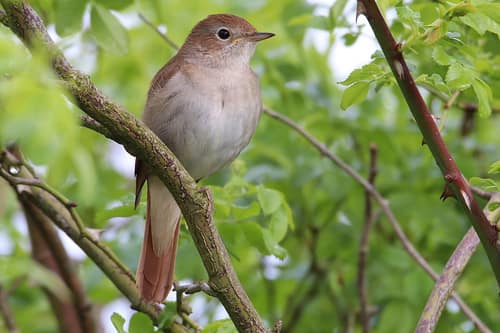
Close Relative Warrieboy / CC BY-SA 4.0 · cc-by-sa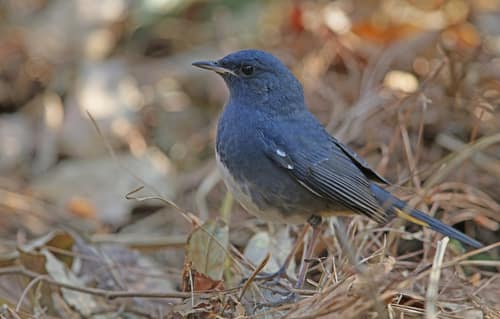
Close Relative (c) Christoph Moning, some rights reserved (CC BY), uploaded by Christoph Moning · cc-by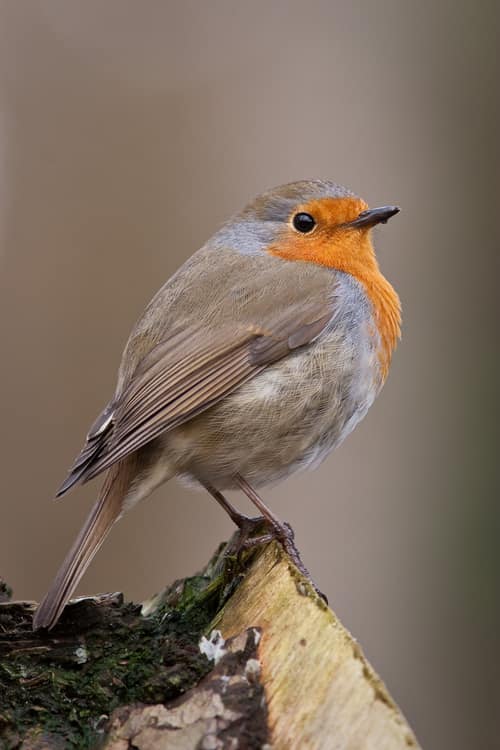
Family Member (c) Arjan Haverkamp, some rights reserved (CC BY) · cc-by
Help improve the field guideSomething wrong?
Checking your Fauna account…Report a name, category, or profile issue for review.