
Invertebrate
Spotted Unicorn
Acanthinucella punctulataAlso known as Spotted Thorn Drupe, Spotted Thorn Snail
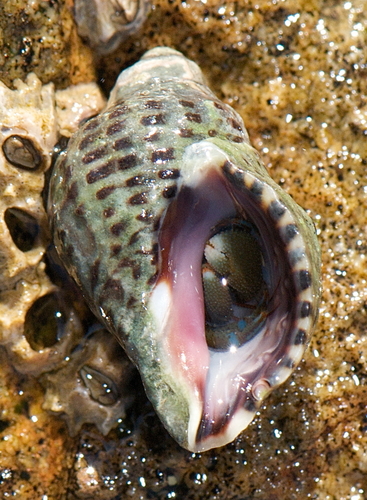
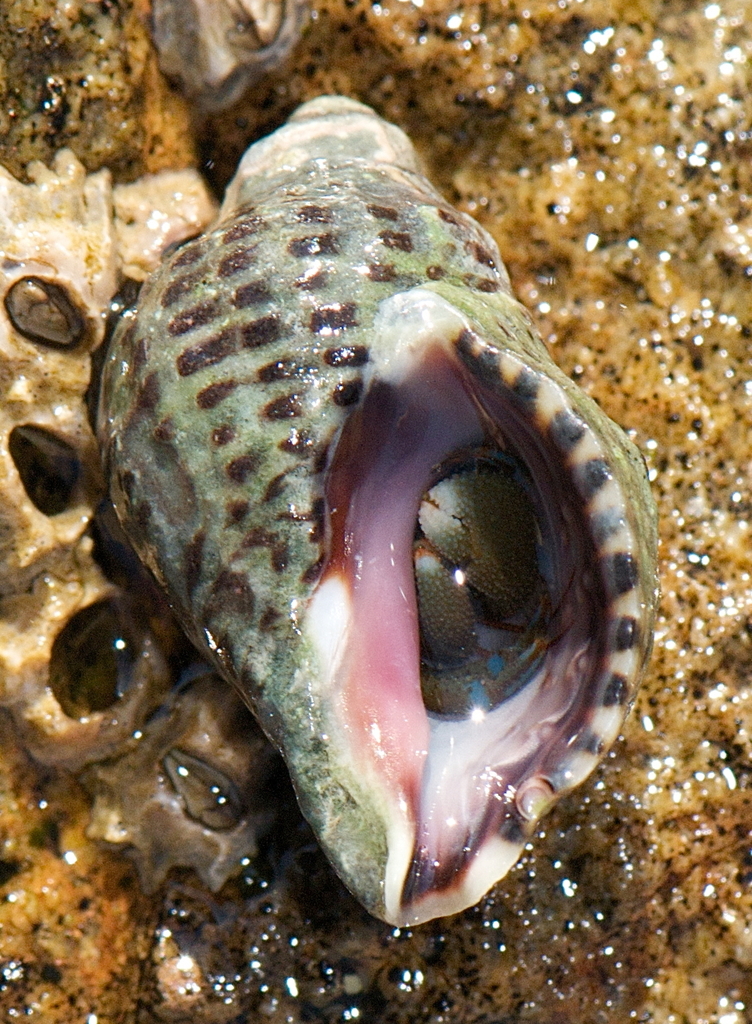
Spotted unicorn snails roam wave-swept rocky shores, hunting small invertebrates tucked into cracks and tide pools along the Pacific coastline. Equipped with a sharp, spine-like tooth along the outer rim of the shell opening, this predatory gastropod uses mechanical leverage to wedge open barnacle plates and extract soft flesh. Sturdy, speckled shells blend seamlessly against barnacle-encrusted granite, sheltering the animal from crushing surf and desiccation during low tide.
IntertidalPredatorMarine
—observations
—countries
—peak records
Not EvaluatedConservation statusIUCN Red List categoriesLCNTVUENCREWEXNot Evaluated — not placed on the risk ladderRed List categories, explained →
Diet & preyAcorn Barnacles, Fingered Limpets, Checkered Periwinkles
Predators
- Ochre Sea Star
- Black Oystercatcher
- Striped Shore Crab
ThreatsOcean acidification, coastal pollution, and intertidal trampling
HabitatsRocky intertidal shores, boulder fields, and tide pools
Life span3–8 years
Classification
- OrderNeogastropoda
- FamilyMuricidae
- GenusAcanthinucella
- SpeciesAcanthinucella punctulata
Range data is not available yet.
Interaction riskLow
- Low
- Moderate
- High
- Very high
- Why interaction risk is low
- Safe to observe at a normal distance.
Responsible observation
- Tide Pool Etiquette: Observe them resting or moving on wet rocks without prying them off, which damages their muscular foot.
- Shell Inspection: Look closely at the lower outer margin of the aperture to spot the tiny, sharp thorn used to pry open prey.
- Tide Timing: Visit rocky shorelines during spring low tides when exposed mussel and barnacle beds reveal foraging snails.
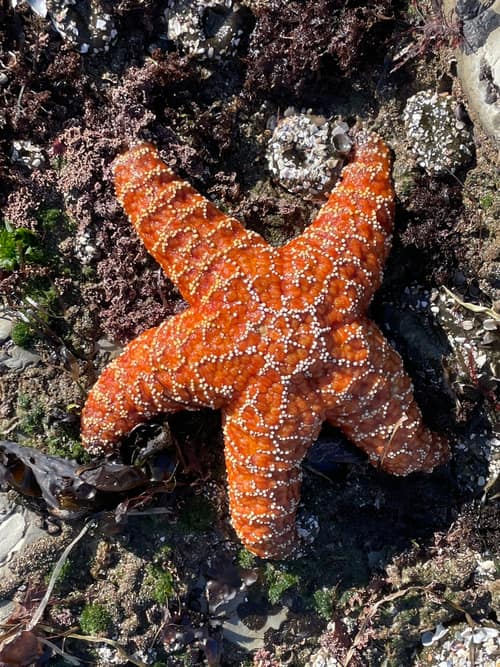
Predator no rights reserved · cc0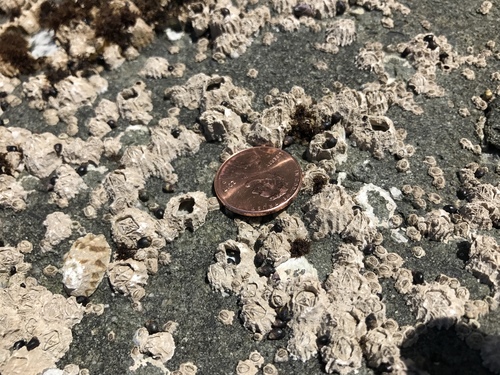
Prey (c) Nelson Balcar, some rights reserved (CC BY), uploaded by Nelson Balcar · cc-by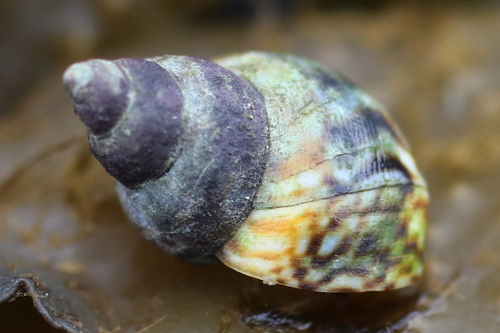
Frequent Companion (c) Erin McKittrick, some rights reserved (CC BY), uploaded by Erin McKittrick · cc-by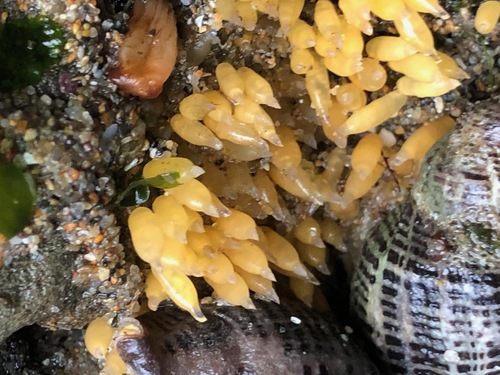
Close Relative no rights reserved · cc0
Help improve the field guideSomething wrong?
Checking your Fauna account…Report a name, category, or profile issue for review.