
Invertebrate
Mottled Star
Evasterias troscheliiAlso known as False Ochre Sea Star, Troschel's True Star, Mottled Sea Star
Mottled stars cling tightly to rocky shorelines, using hundreds of suction-tipped tube feet to withstand crashing Pacific waves. These adaptable predators hunt bivalves by using their arms to pry open shells before inserting their stomachs to digest the prey. Often confused with the ochre star, they are distinguished by their smaller central discs and longer, more slender arms.
MarineIntertidalPredator


—observations
—countries
—peak records
Not EvaluatedConservation statusIUCN Red List categoriesLCNTVUENCREWEXNot Evaluated — not placed on the risk ladderRed List categories, explained →
Diet & preyMussels, Barnacles, Clams
Predators
- Sea otters
- Gulls
- King crabs
ThreatsSea star wasting disease, ocean warming, coastal pollution
HabitatsRocky intertidal zones, kelp forests, gravelly beaches, and shallow subtidal reefs
Life span10 to 20 years
Classification
- FamilyAsteriidae
- SpeciesEvasterias troschelii
Range data is not available yet.
Interaction riskLow
- Low
- Moderate
- High
- Very high
- Why interaction risk is low
- Safe to observe at a normal distance.
- What to notice
- Recognizable by its five long, tapering arms, mottled coloration, and small central disc.
- Support conservation
- Avoid touching or moving them, as physical stress can exacerbate susceptibility to disease.
Responsible observation
- Tread carefully: Watch your step on slippery intertidal rocks to avoid crushing hidden marine life.
- Leave in place: Do not pry them off rocks, as this can tear their delicate tube feet.
- Observe tide pools: Look for them clinging to vertical rock faces or tucked under kelp during low tide.
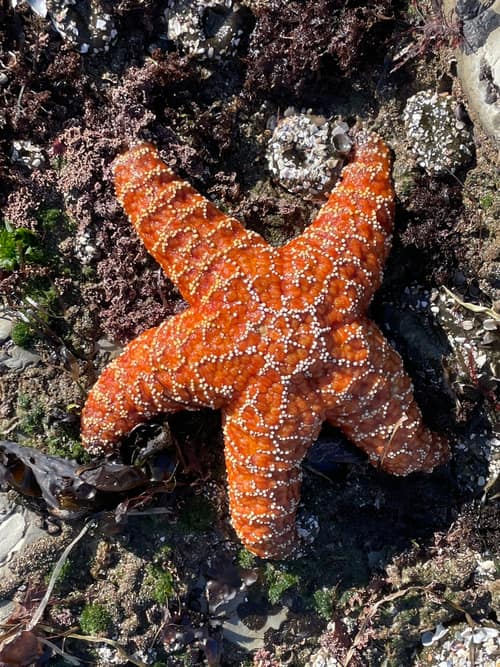
Look-alike no rights reserved · cc0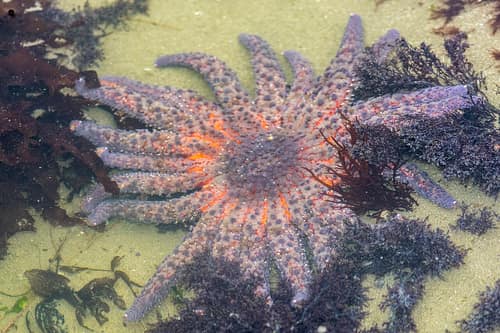
Co-occurring Predator Jerry Kirkhart from Los Osos, Calif. / CC BY 2.0 · cc-by
Help improve the field guideSomething wrong?
Checking your Fauna account…Report a name, category, or profile issue for review.