
Mammal
Siamang
Symphalangus syndactylusAlso known as Siamang Gibbon
Monogamous pairs begin each morning with a booming, synchronized duet amplified by an inflatable throat sac that swells to the size of their head. These extraordinary acrobats propel themselves through the upper rainforest canopy using powerful arms with a span exceeding 1.5 meters, swinging smoothly beneath limbs via rapid brachiation. Tight-knit family groups spend over half their waking hours foraging together, focusing heavily on tender young leaves and wild figs.
ArborealVocal
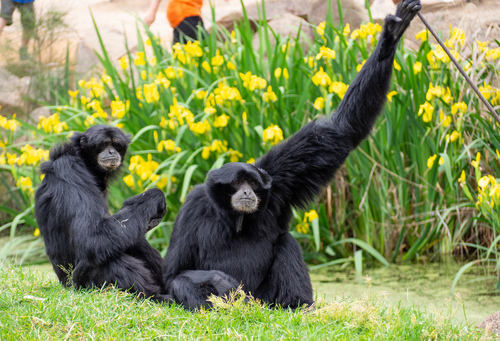
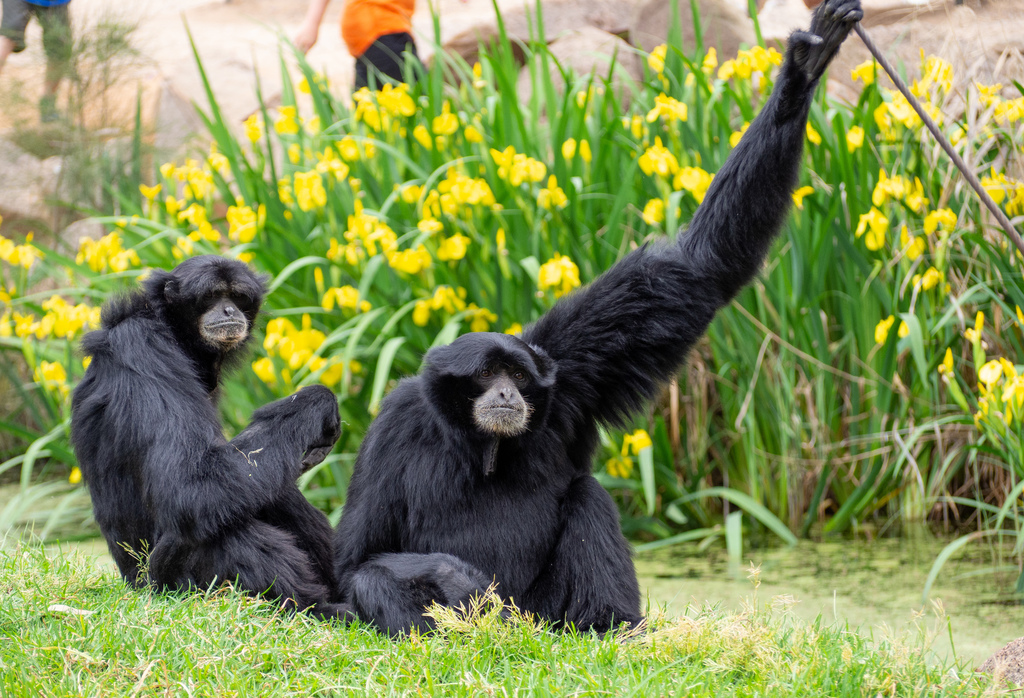
—observations
—countries
—peak records
EndangeredConservation statusIUCN Red List categoriesLCNTVUENCREWEXEndangeredRed List categories, explained →
Diet & preyFigs, Young leaves, Rainforest insects
Predators
- Sunda clouded leopard
- Tiger
- Reticulated python
ThreatsDeforestation for agriculture and palm oil, habitat fragmentation, illegal pet trade
HabitatsTropical lowland and montane rainforests
Life span25–30 years in the wild, up to 40 years in captivity
Classification
- FamilyHylobatidae
- SpeciesSymphalangus syndactylus
Range data is not available yet.
Interaction riskLow
- Low
- Moderate
- High
- Very high
- Why interaction risk is low
- Possesses sharp canines and great physical strength; observe quietly from a safe distance in the wild.
- Why it is dangerous
- Large adult primates carry substantial biting force and sharp canines that can deliver severe lacerations if cornered or panicked.
- How to recognize a risky encounter
- Easily identified by uniform glossy black fur, long arms, and a prominent hairless gray-pink throat sac.
- What to do
- Never attempt to touch or feed wild individuals; give them ample space and do not block their arboreal escape routes.
- What to notice
- Look for dense, shaggy black coats without white facial rings, distinguishing them immediately from smaller gibbon species.
- Support conservation
- Avoid using playback calls that disrupt their territorial integrity, and keep tourist groups small and quiet in protected reserves.
Responsible observation
- Listen at Dawn: Locate groups by tuning in to their loud, resonant morning calls that carry for over two kilometers.
- Scan Emergent Trees: Look high in the canopy rather than lower down, as they rarely descend near the forest floor.
- Maintain Quiet: Move softly along trails to avoid alarming resting pairs and triggering retreat calls.

Competitor (c) Ladislav Král, some rights reserved (CC BY-SA) · cc-by-sa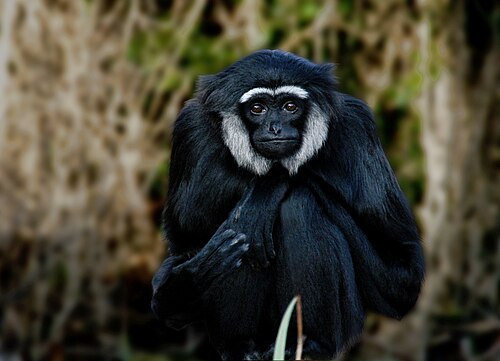
Competitor Julielangford / CC BY-SA 3.0 · cc-by-sa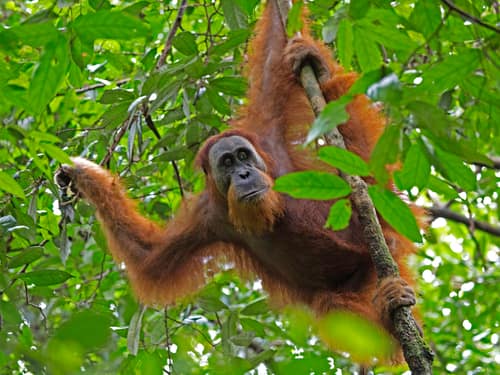
Neighbor (c) Lip Kee, some rights reserved (CC BY-SA) · cc-by-sa
Predator www.photosbypaulo.com / CC BY-SA 3.0 · cc-by-sa
Help improve the field guideSomething wrong?
Checking your Fauna account…Report a name, category, or profile issue for review.