
Mammal · GBIF taxon 4266945
Red Ruffed Lemur
Varecia rubraAlso known as Red Lemur, Northeastern Ruffed Lemur
Red ruffed lemurs are striking high-canopy frugivores renowned for their deep, echoing roaring calls that reverberate across the Masoala rainforests. Unlike most other primates, females build elaborate leaf nests high in the trees where they give birth to litters of young, nursing them in safety before carrying them by mouth. They play a pivotal ecological role as primary seed dispersers for Madagascar's large-seeded hardwood trees.
ArborealFrugivorousLoud Call
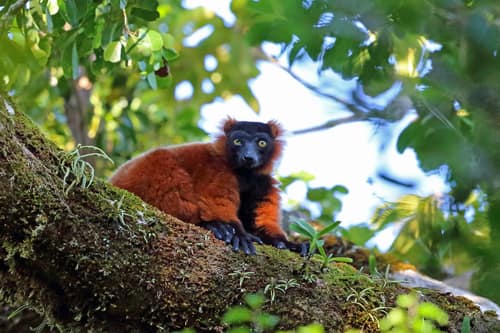
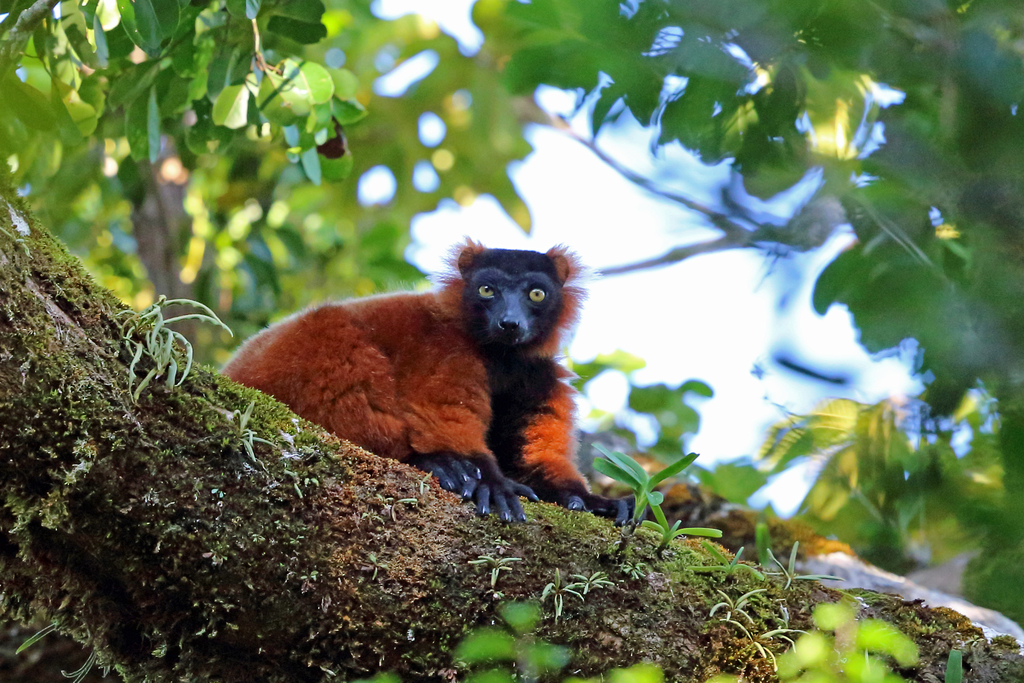
—observations
—countries
—peak records
Critically EndangeredConservation statusIUCN Red List categoriesLCNTVUENCREWEXCritically EndangeredRed List categories, explained →
Diet & prey
- Ripe fruits
- Tree flowers and nectar
- Young leaves
Predators
- Fossa
- Madagascar Harrier-Hawk
- Madagascar Tree Boa
ThreatsHabitat loss, illegal logging, habitat fragmentation, and bushmeat hunting
HabitatsPrimary tropical lowland rainforests
Life span15–20 years in the wild (up to 25+ years in captivity)
Size / weightNot available
Classification
- OrderPrimates
- FamilyLemuridae
- GenusVarecia
- SpeciesVarecia rubra
Range data is not available yet.
Interaction riskLow
- Low
- Moderate
- High
- Very high
- Why interaction risk is low
- Can deliver a severe bite if cornered; observe quietly from a safe distance in guided park trails.
- Why it is dangerous
- Primates possess sharp canine teeth and strong jaws capable of inflicting deep lacerations if threatened or cornered.
- How to recognize a risky encounter
- Identified by dense rust-red fur, black limbs and face, and a distinct white patch behind the neck.
- What to do
- Never approach, feed, or attempt to handle wild individuals; maintain a respectful distance with local park guides.
- What to notice
- Look for large rust-red primates moving in small family groups high in northeastern Malagasy rainforests.
- Support conservation
- Visit only with licensed park guides, stay on marked trails, and never reveal specific roost or nest locations.
Responsible observation
- Listen for Calls: Track their presence through their loud, echoing contact and alarm calls high in the canopy.
- Keep Distances: Stay on designated park trails in Masoala National Park to minimize stress on wild groups.
- Look Above: Focus viewing on the highest forest canopy levels where they spend most of their time foraging.
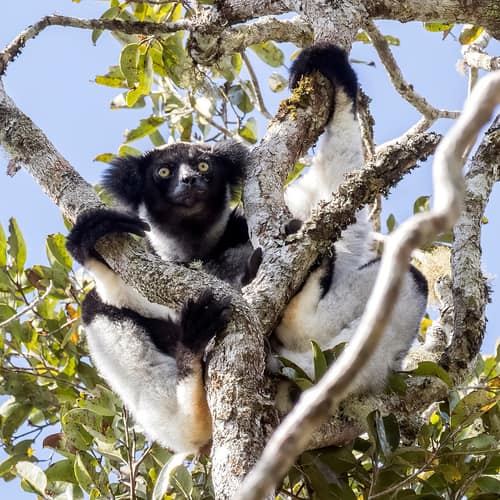
Fellow Lemur Charles J. Sharp / CC BY-SA 4.0 · cc-by-sa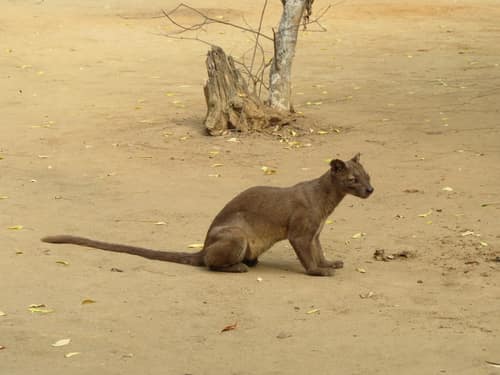
Predator (c) Micha Baum, some rights reserved (CC BY-SA), uploaded by Micha Baum · cc-by-sa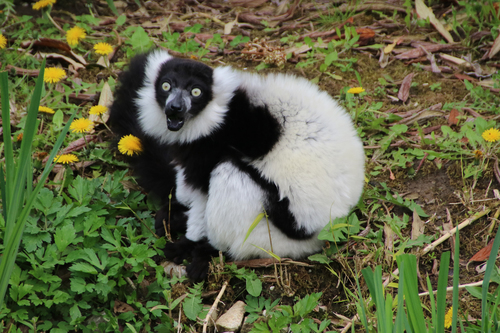
Close Relative (c) Clemens Stockner, some rights reserved (CC BY-SA) · cc-by-sa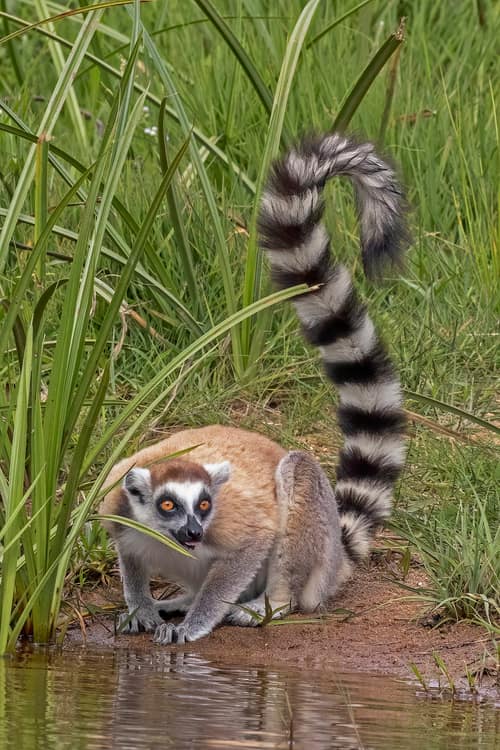
Family Member Charles J. Sharp / CC BY-SA 4.0 · cc-by-sa
Help improve the field guideSomething wrong?
Checking your Fauna account…Report a name, category, or profile issue for review.