
Mammal
Shortridge's Horseshoe Bat
Rhinolophus shortridgeiShortridge's horseshoe bats navigate dense forest canopies and limestone landscapes using sophisticated high-duty-cycle echolocation emitted entirely through their intricate nasal structures. By day, small colonies roost quietly in subterranean caves, rocky crevices, or abandoned human structures to avoid diurnal predators. At dusk, they take to the air on broad, maneuverable wings to glean insects directly off foliage or snap up prey in mid-flight.
NocturnalCave DwellerInsectivore


—observations
—countries
—peak records
Least ConcernConservation statusIUCN Red List categoriesLCNTVUENCREWEXLeast ConcernRed List categories, explained →
Diet & preyMoths, Beetles, Flies
Predators
- Barn Owl
- Cave racer snakes
- Small civets
ThreatsCave roost disturbance, quarrying of karst hills, and forest clearing
HabitatsSubtropical evergreen forests, hill forests, and karst limestone caves
Life span6–12 years
Classification
- FamilyRhinolophidae
- SpeciesRhinolophus shortridgei
Range data is not available yet.
Interaction riskModerate
- Low
- Moderate
- High
- Very high
- Why interaction risk is moderate
- May carry mammalian viruses and deliver sharp defensive bites; never handle wild bats.
- Why it is dangerous
- Like all wild bats, this species can harbor zoonotic pathogens, including lyssaviruses, which transmit through saliva via bites or scratches.
- How to recognize a risky encounter
- Look for small body size, broad rounded wings, and a complex fleshy horseshoe-shaped nose leaf surrounding the nostrils.
- What to do
- Do not touch or attempt to pick up bats found on the ground or roosting low; contact local wildlife authorities if an animal is in distress.
Responsible observation
- Roost etiquette: Never shine bright flashlights directly at roosting bats in caves, as waking them wastes critical fat reserves.
- Acoustic survey: Use a high-frequency bat detector capable of tuning above 90 kHz to detect their ultrasonic search calls.
- Safe viewing: Watch for foraging individuals around forest edges and clearing margins near dusk from a respectful distance.
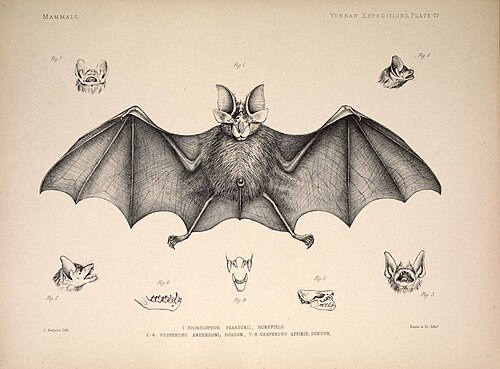
Same Genus Philbert Charles Berjeau / Public domain · cc0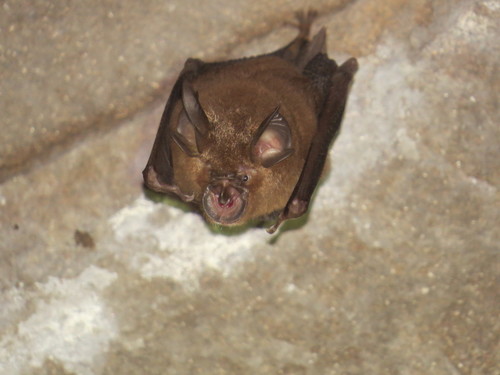
Same Genus (c) Yves Bas, some rights reserved (CC BY), uploaded by Yves Bas · cc-by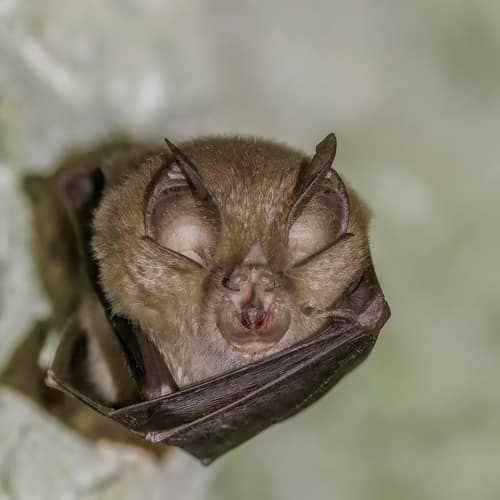
Same Genus Charles J. Sharp / CC BY-SA 4.0 · cc-by-sa Image unavailable
Close Relative
Help improve the field guideSomething wrong?
Checking your Fauna account…Report a name, category, or profile issue for review.