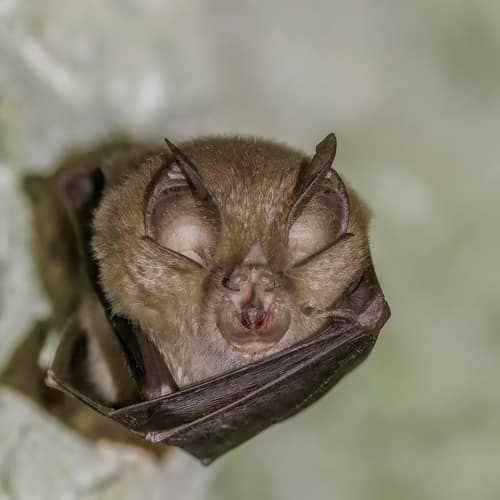
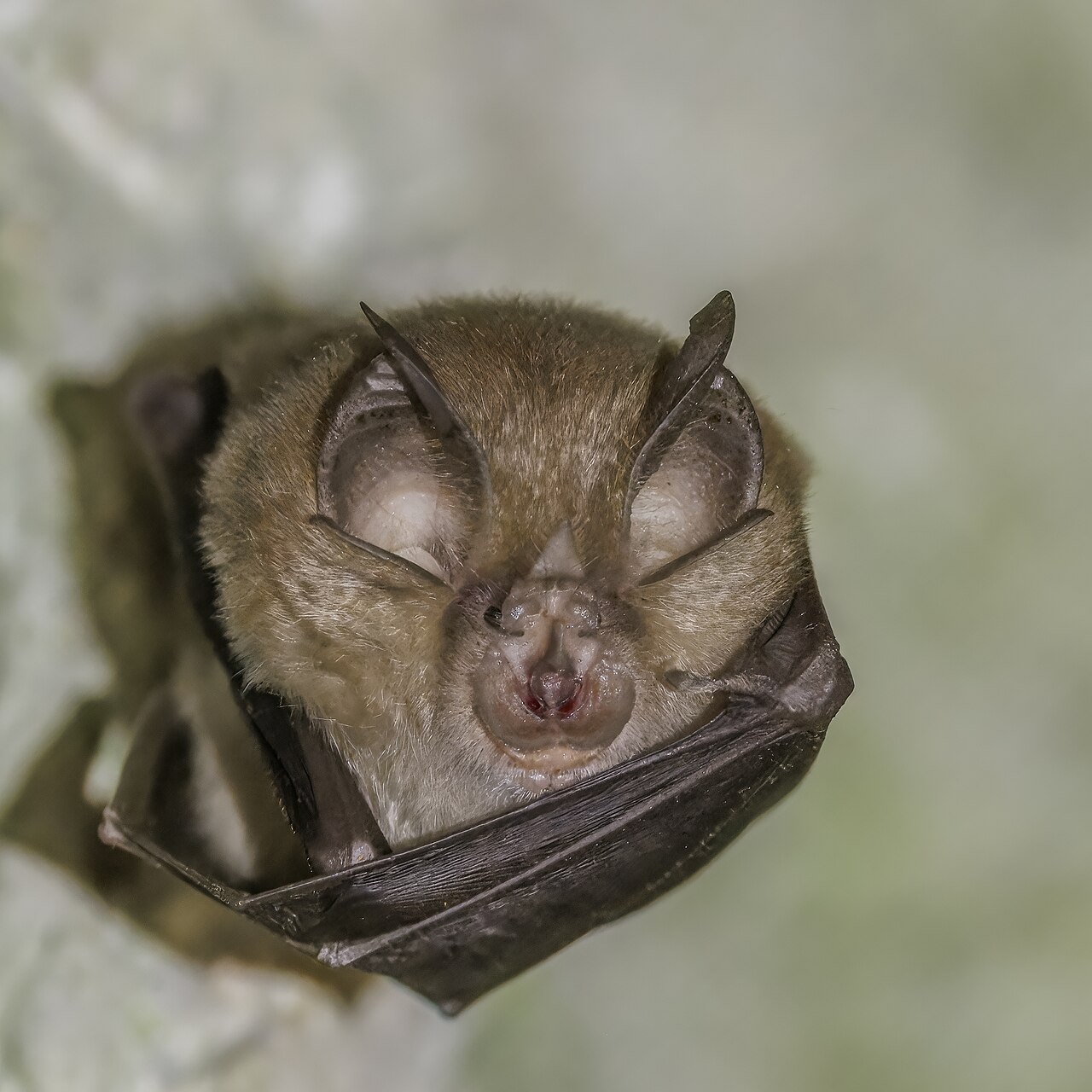
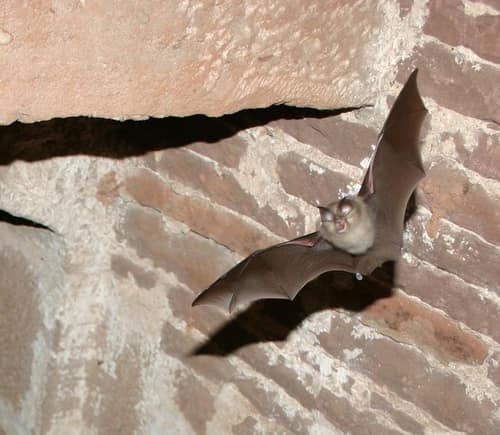
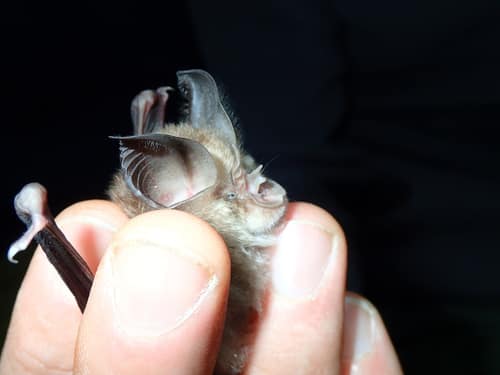
Greater horseshoe bats are agile, low-flying hunters that navigate dense woodland foliage by emitting high-frequency echolocation calls focused through their complex, horseshoe-shaped noseleaves. They roost suspended by their feet with wings wrapped completely around their bodies like a cloak, entering deep torpor in underground caves and disused mines during cold winter months. Females gather in warm maternal colonies in early summer, each bearing a single pup that learns to fly and hunt alongside its mother within weeks.
ThreatsRoost disturbance, loss of wooded linear corridors, and pesticide-driven insect declines
HabitatsDeciduous woodlands, pastoral farmland with hedgerows, caves, and karst valleys
Life span20–30 years
Size / weightNot available
Classification
FamilyRhinolophidae
SpeciesRhinolophus ferrumequinum
Range & activity
Native
Safe observation
Interaction riskModerate
Low
Moderate
High
Very high
Why interaction risk is moderate
Can transmit lyssaviruses via defensive bites; never handle grounded or roosting bats.
Why it is dangerous
Like all wild bats, this species can harbor European bat lyssaviruses, which cause fatal rabies-like infections if transmitted through saliva into broken skin.
How to recognize a risky encounter
Recognized by its large size for a European bat, warm reddish-buff fur, and prominent fleshy horseshoe facial structure around the nostrils.
What to do
Do not attempt to touch or catch grounded bats: use an inverted cardboard box to cover the animal safely and call a licensed wildlife rescue organization.
What to notice
Hangs freely by its claws with its wings wrapped tightly around its body like a teardrop cocoon.
Support conservation
Stay out of known maternity and hibernation caves between November and August to avoid causing fatal energy loss or pup abandonment.
Responsible observation
Roost etiquette: Keep quiet and never shine bright lights directly at hibernating or roosting colonies.
Detection: Use a bat detector tuned to around 81 kHz to pick up their distinctive echolocation pulses at dusk.