
Plant · GBIF taxon 3616287
Brazilian Jasmine
Mandevilla sanderiAlso known as Dipladenia, Rose Dipladenia, Brazilian Trumpet Vine
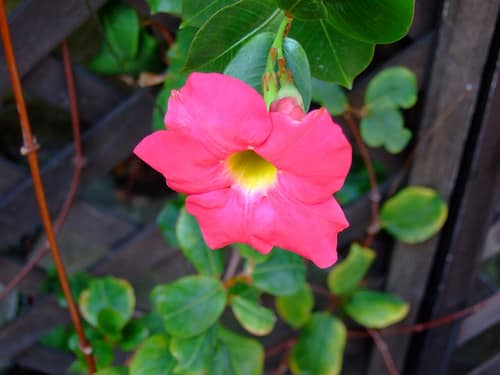
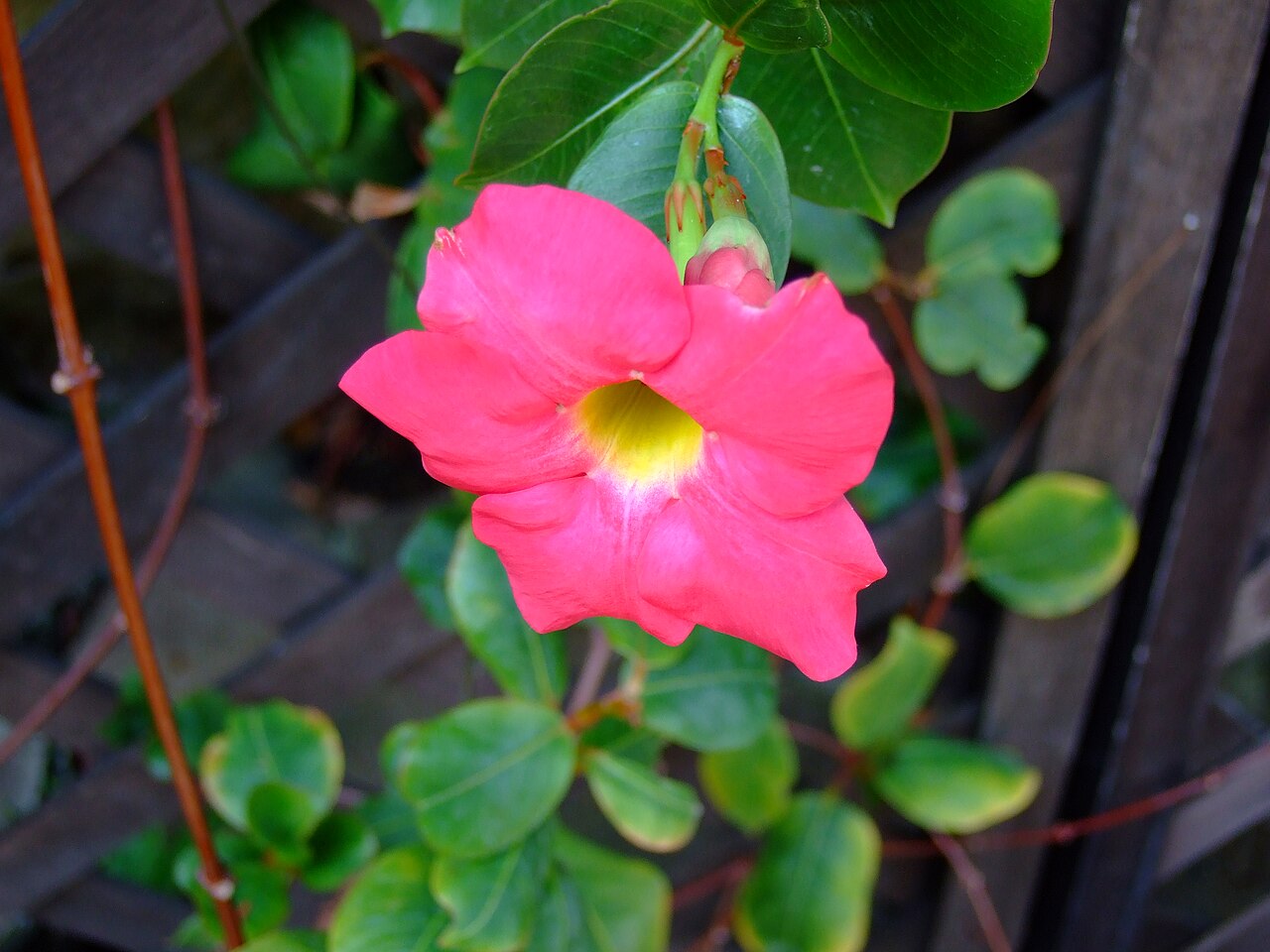
Brazilian jasmine cascades over trellises and arbors with glossy, leathery evergreen leaves and vibrant, trumpet-shaped flowers that bloom continuously from late spring into autumn. Stems produce a thick milky sap that deters browsing herbivores while twining rapidly around nearby supports. Endemic to coastal thickets in southeastern Brazil, this climbing shrub thrives in warm, humid microclimates and sunny garden settings worldwide.
TropicalClimbing VineFlowering
—observations
—countries
—peak records
Not EvaluatedConservation statusIUCN Red List categoriesLCNTVUENCREWEXNot Evaluated — not placed on the risk ladderRed List categories, explained →
Diet & prey
- Autotrophic (Photosynthesis)
Predators
- Spider mites
- Mealybugs
- Scale insects
ThreatsHabitat loss in native range, cold temperatures and frost
HabitatsTropical coastal thickets, moist rocky slopes, cultivated gardens
Life span10–20 years
Size / weightNot available
Classification
- OrderGentianales
- FamilyApocynaceae
- GenusMandevilla
- SpeciesMandevilla sanderi
Range data is not available yet.
Interaction riskHigh
- Low
- Moderate
- High
- Very high
- Why interaction risk is high
- Milky sap irritates skin and causes digestive distress if eaten; wear gloves and keep away from pets.
- Why it is dangerous
- Exudes a sticky, milky latex containing toxic cardiac glycosides and alkaloids that cause dermatitis and severe mouth and belly pain if swallowed.
- How to recognize a risky encounter
- Recognizable by glossy dark-green oval leaves, bright rose-pink trumpet flowers, and white sap dripping from broken stems.
- What to do
- Wear gloves and eye protection during maintenance, wash exposed skin with soap immediately, and keep plant trimmings away from curious pets.
Responsible observation
- Pruning Care: Wear gloves when trimming to avoid milky latex contact with bare skin.
- Support Structures: Provide a sturdy trellis to support rapid twining growth and heavy blooms.
- Sunlight Needs: Position in full sun to light afternoon shade to maximize flower production.
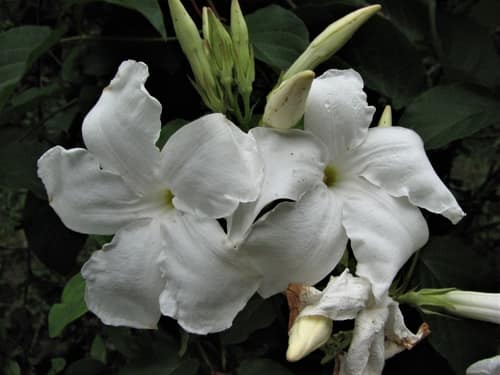
Close Relative (c) Peter L Achuff, some rights reserved (CC BY), uploaded by Peter L Achuff · cc-by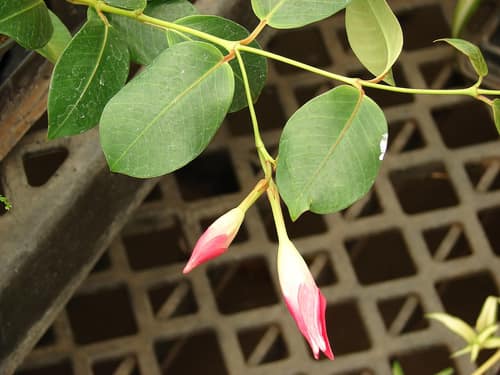
Close Relative Forest & Kim Starr / CC BY 3.0 · cc-by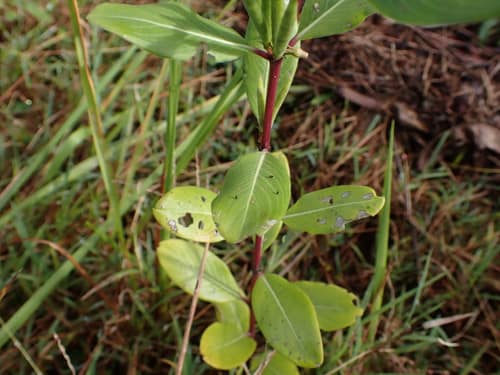
Family Member (c) Louis Aureglia, some rights reserved (CC BY), uploaded by Louis Aureglia · cc-by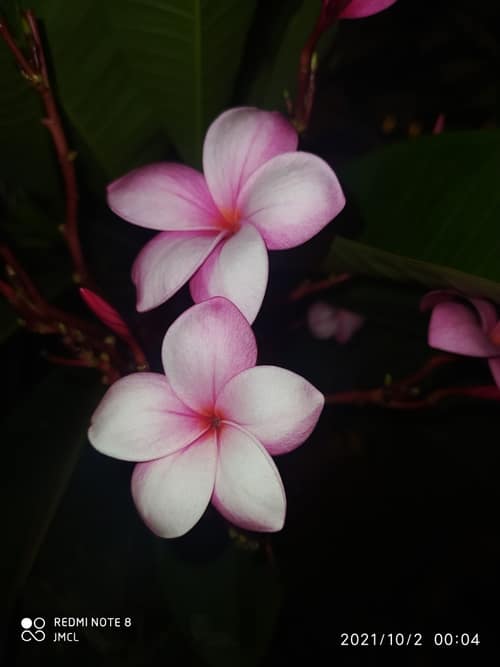
Family Member (c) Cabanillas Lopez Jesus Miguel, some rights reserved (CC BY-SA), uploaded by Cabanillas Lopez Jesus Miguel · cc-by-sa
Help improve the field guideSomething wrong?
Checking your Fauna account…Report a name, category, or profile issue for review.