
Fungus · GBIF taxon 3347381
Termite Mushroom
Termitomyces reticulatusAlso known as Reticulate Termite Mushroom, Net-veined Termite Fungus
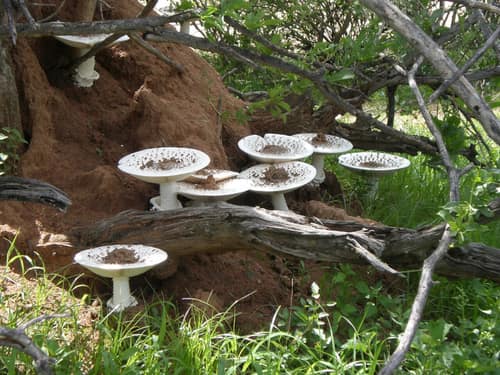
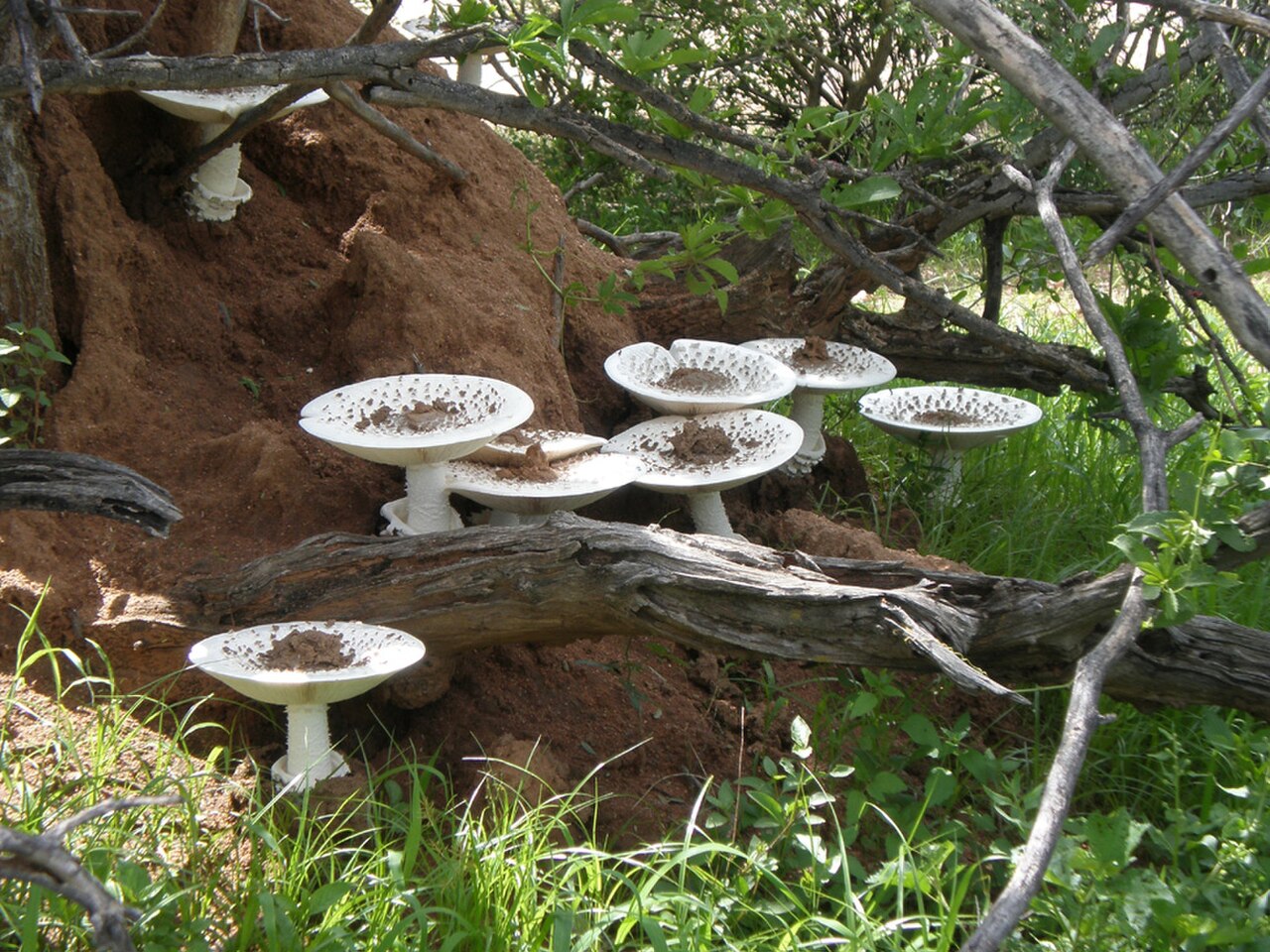
Termite mushrooms emerge directly from subterranean termite nests, growing from specialized comb gardens cultivated deep within the mounds. A distinctive network of reticulate ridges covers the cap surface, anchoring a long subterranean pseudorhiza that extends downward into the gallery. These short-lived fruiting bodies burst forth following seasonal heavy rains, playing an integral role in savanna nutrient cycling.
SymbioticSouthern AfricaMushroom
—observations
—countries
—peak records
Not EvaluatedConservation statusIUCN Red List categoriesLCNTVUENCREWEXNot Evaluated — not placed on the risk ladderRed List categories, explained →
Diet & prey
- Saprotrophic on termitarium comb material
Predators
- Beetles
- Mites
- Rodents
ThreatsDisturbance of termite mounds and land conversion
HabitatsSavannas, open woodlands, and grasslands near termite mounds
Life spanFruiting body lasts 2–4 days; underground mycelium persists with colony
Size / weightNot available
Classification
- FamilyLyophyllaceae
- SpeciesTermitomyces reticulatus
Range data is not available yet.
Interaction riskLow
- Low
- Moderate
- High
- Very high
- Why interaction risk is low
- Many edible mushrooms have toxic look-alikes; never eat wild fungi based on app identification alone.
Responsible observation
- Observation: Search near active termite mounds in southern Africa shortly after heavy rains.
- Identification: Note the subterranean root structure connecting the stem to the nest.
- Photography: Capture the net-like surface pattern on the cap from above without digging up the pseudorhiza.
 Image unavailable
Symbiont Symbiont 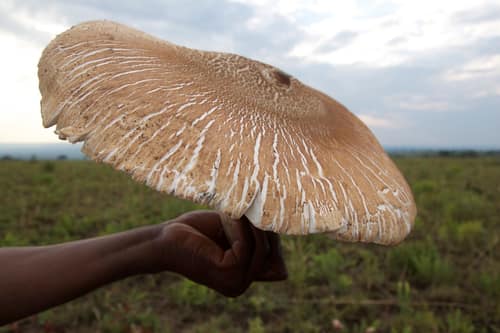
Close Relative Blimeo / CC BY-SA 4.0 · cc-by-sa
Help improve the field guideSomething wrong?
Checking your Fauna account…Report a name, category, or profile issue for review.