
Fungus · GBIF taxon 3347409
Chi-ngulu-ngulu
Termitomyces titanicusAlso known as Titan Termite Mushroom, Chingulungulu, Chinyama-kalinga
Termitomyces titanicus produces the largest known cap of any agaric mushroom, sprawling nearly a meter across on a thick, deeply rooted stem. These colossal fungi emerge directly from underground termitaria, where subterranean termites cultivate the mycelium on gathered plant matter. As the fruiting body matures, the pale cap flattens into an expansive disc with a prominent central umbo and dark smoky-grey gills beneath.
Giant FungusTermite SymbiontTropical
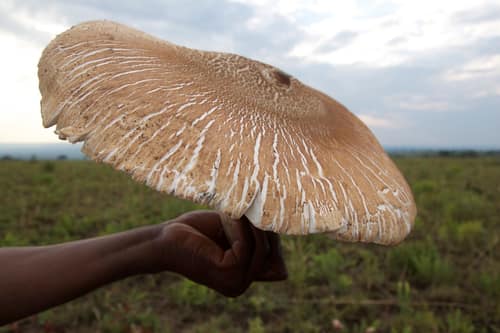
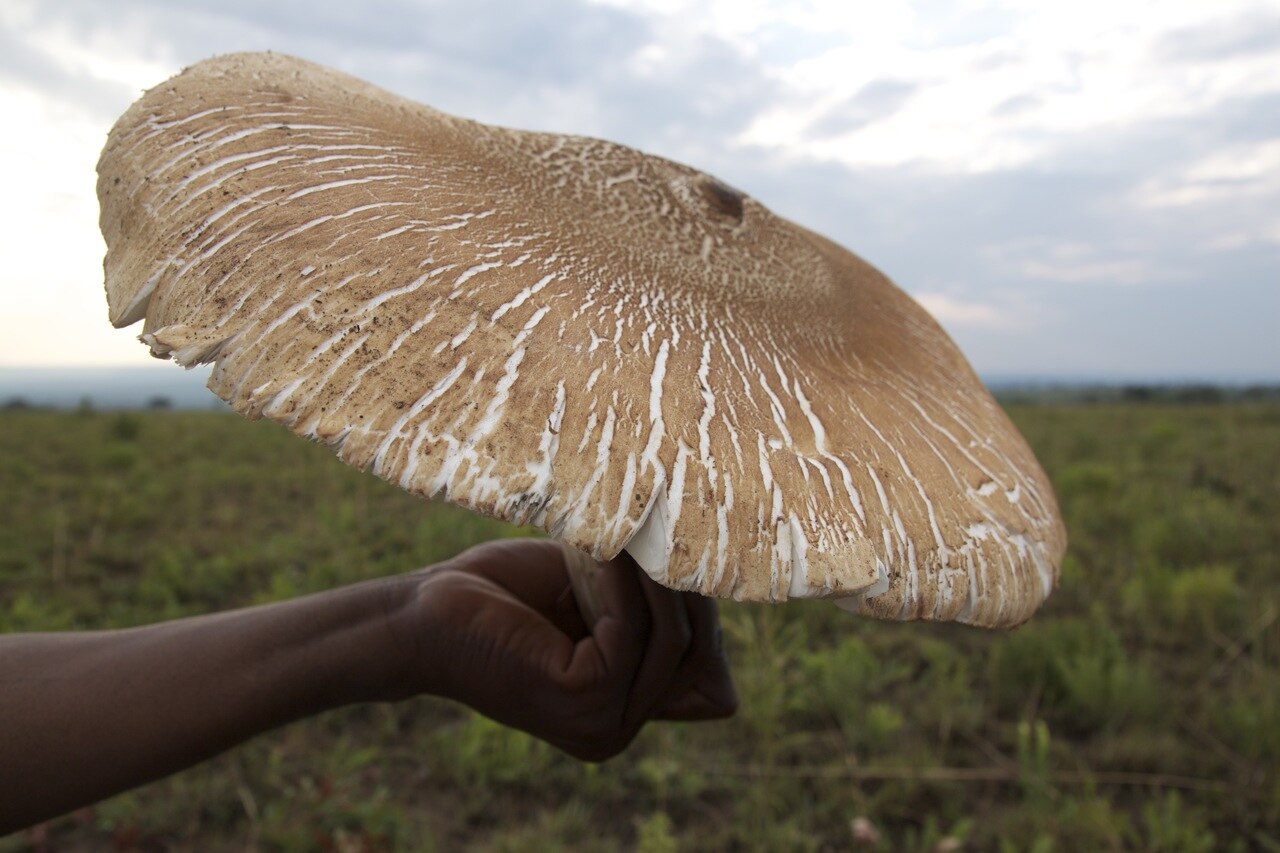
Licensed referenceBlimeo / CC BY-SA 4.0 · cc-by-sa
—observations
—countries
—peak records
Not EvaluatedConservation statusIUCN Red List categoriesLCNTVUENCREWEXNot Evaluated — not placed on the risk ladderRed List categories, explained →
Diet & prey
- Saprotrophic / Mutualistic (cultivated on termite comb)
Predators
- Termites
- Insects
- Small Mammals
ThreatsHabitat destruction, disturbance to native termite mounds
HabitatsTropical savannas, miombo woodlands, and termite mounds
Life spanPerennial mycelium (fruiting bodies last a few days)
Size / weightNot available
Classification
- FamilyLyophyllaceae
- SpeciesTermitomyces titanicus
Range data is not available yet.
Interaction riskLow
- Low
- Moderate
- High
- Very high
- Why interaction risk is low
- Many edible mushrooms have toxic look-alikes; never eat wild fungi based on app identification alone.
Responsible observation
- Observing cap structure: Look for the distinct central bump and deeply rooted stem extending toward a termite mound.
- Respecting habitats: Avoid digging into or breaking open active termite mounds that sustain the underground mycelium.
 Image unavailable
Symbiont 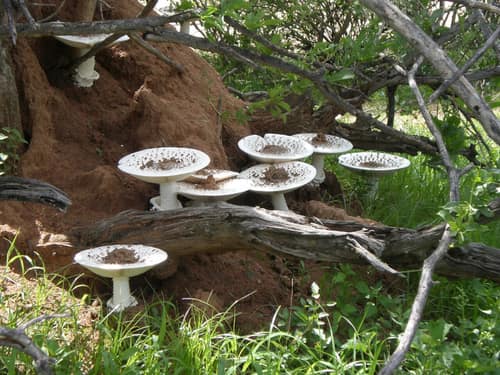
Close Relative This image was created by user Candice (Candice) at Mushroom Observer, a source for mycological images.You can contact this user here. / CC BY-SA 3.0 · cc-by-saClose Relative 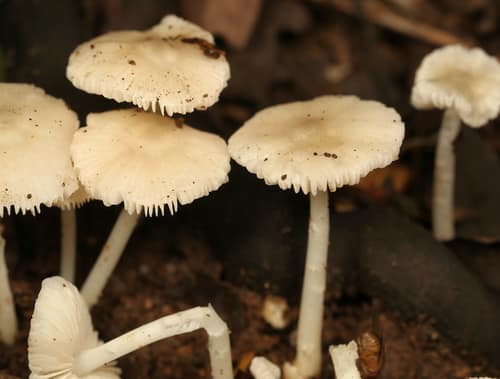
Close Relative (c) Wynand Uys, some rights reserved (CC BY), uploaded by Wynand Uys · cc-by
Help improve the field guideSomething wrong?
Checking your Fauna account…Report a name, category, or profile issue for review.