
Plant · GBIF taxon 3189684
Sal Tree
Shorea robustaAlso known as Shala, Sakhua, Sarai
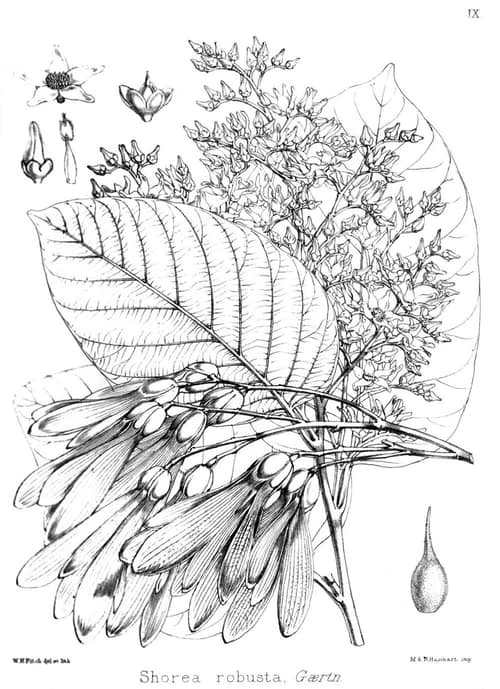
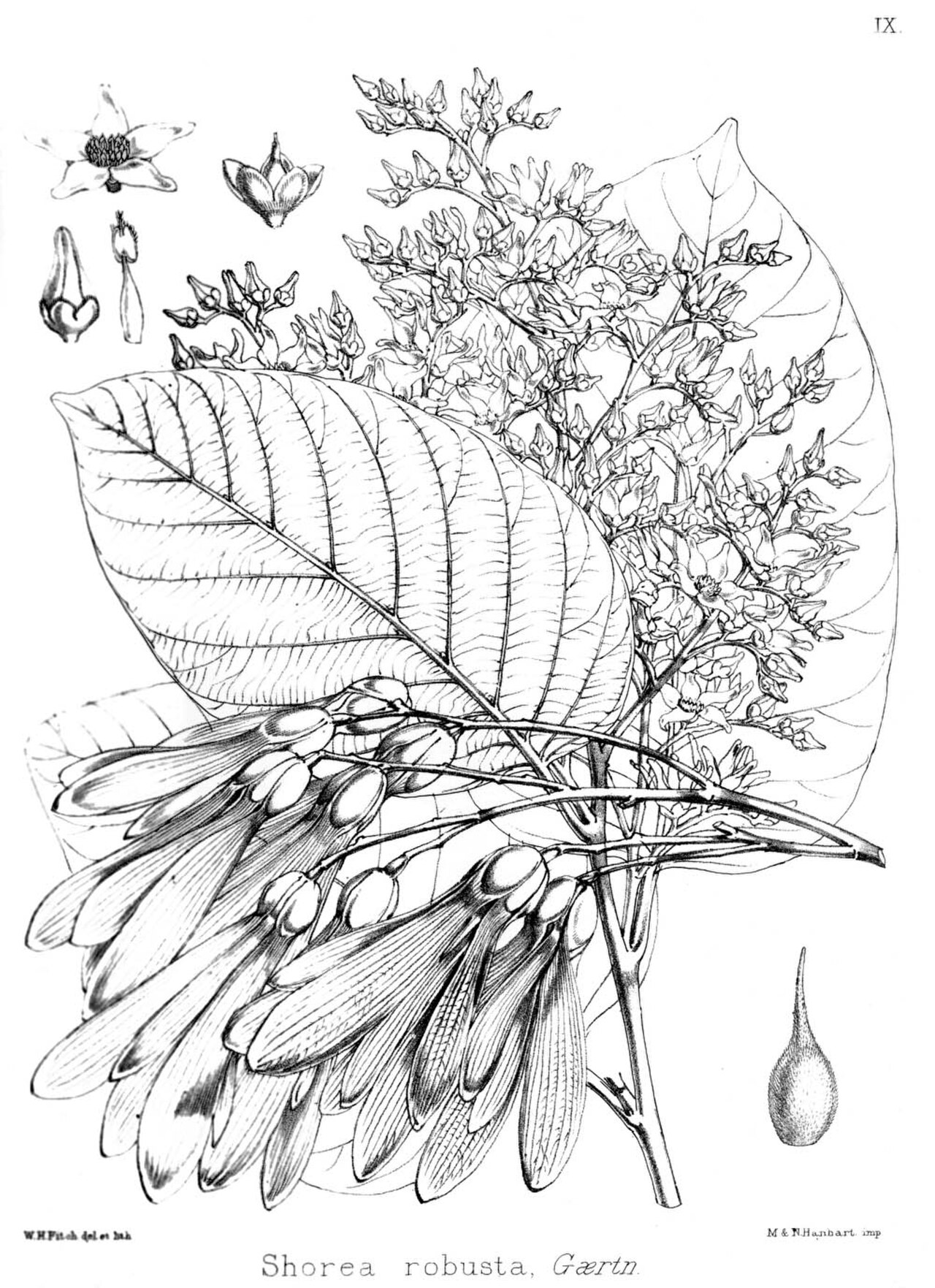
Sal trees dominate large stretches of tropical and subtropical forests across South Asia, growing slowly into monumental canopy trees with thick, fire-resistant bark. During the dry season, they briefly shed their foliage before bursting into fragrant clusters of pale yellow flowers that attract dense swarms of native bees. Their winged seeds swirl like tiny helicopters when dropping from the canopy, aiding wind dispersal across the forest floor.
DeciduousHimalayanCanopy Tree
—observations
—countries
—peak records
Near ThreatenedConservation statusIUCN Red List categoriesLCNTVUENCREWEXNear ThreatenedRed List categories, explained →
Diet & prey
- Autotrophic (Photosynthetic)
Predators
Not available
ThreatsHabitat fragmentation, illegal logging, over-harvesting of resin and seeds
HabitatsSubtropical moist broadleaf forests, tropical dry forests, Himalayan foothills
Life span100–300 years
Size / weightNot available
Classification
- FamilyDipterocarpaceae
- SpeciesShorea robusta
Range data is not available yet.
Interaction riskLow
- Low
- Moderate
- High
- Very high
- Why interaction risk is low
- Safe to observe at a normal distance.
- What to notice
- Look for tall, straight trunks with thick, deeply fissured dark brown bark and leathery oval leaves.
- Support conservation
- Observe forests on established trails without collecting seeds, stripping bark, or tapping resin.
Responsible observation
- Canopy Spotting: Look up into the canopy in late spring to observe cream-colored flower blooms.
- Regeneration Respect: Avoid disturbing germinating seeds on the forest floor, which need undisturbed soil.
 Image unavailable
Ecological Partner Close Relative Close Relative
Help improve the field guideSomething wrong?
Checking your Fauna account…Report a name, category, or profile issue for review.