
Plant · GBIF taxon 3188924
Common Evening-primrose
Oenothera biennisAlso known as Evening Primrose, Weedy Evening Primrose, German Rampion, Kings Cure-All
Common evening-primrose grows as a low rosette of leaves in its first year before shooting up a tall flowering stalk in its second summer. Its bright yellow blossoms open rapidly near dusk to attract night-flying hawkmoths, releasing a sweet fragrance into the evening air. Indigenous peoples traditionally used various parts of the plant for traditional remedies, and today its seeds are commercially harvested for essential fatty acids.
BiennialNight-BloomingYellow Flowers
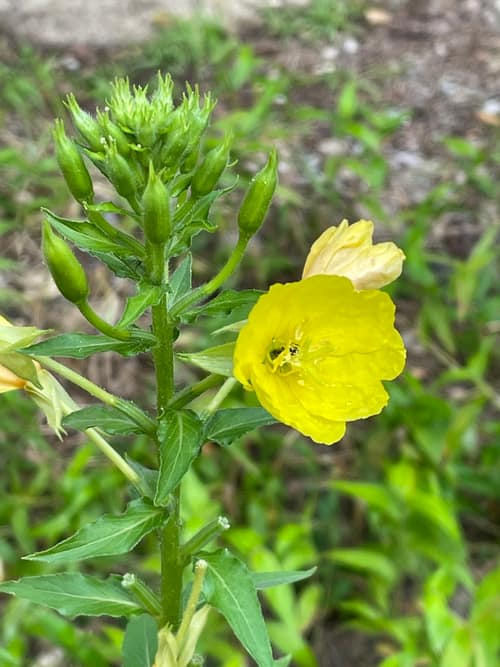
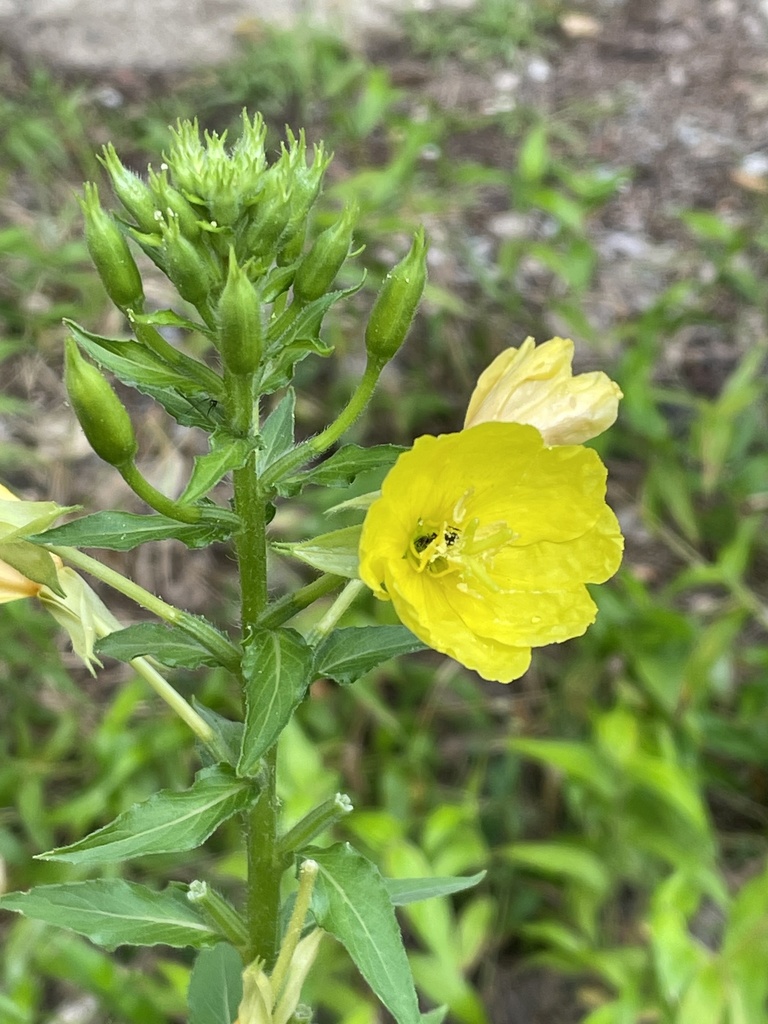 1 / 7
1 / 7—observations
—countries
—peak records
Least ConcernConservation statusIUCN Red List categoriesLCNTVUENCREWEXLeast ConcernRed List categories, explained →
Diet & prey
- Autotrophic (Photosynthesis)
Predators
- Sphinx Moth Caterpillars
- Goldfinches
- Japanese Beetles
ThreatsHabitat conversion and agricultural herbicide application
HabitatsFields, roadsides, disturbed ground, prairies, and open woodlands
Life span2 years (Biennial)
Size / weightNot available
Classification
- OrderMyrtales
- FamilyOnagraceae
- GenusOenothera
- SpeciesOenothera biennis
Range data is not available yet.
Interaction riskLow
- Low
- Moderate
- High
- Very high
- Why interaction risk is low
- Safe to observe at a normal distance.
Responsible observation
- Night Observation: Visit patches at dusk or on cloudy days to watch bright yellow four-petaled flowers pop open in real time.
- Spotting Pollinators: Bring a flashlight after dark to see hawkmoths and sphinx moths sipping nectar from the deep floral tubes.
- Identification Cue: Look for a rosette of basal leaves in the first year followed by a tall, leafy flowering stalk in the second year.
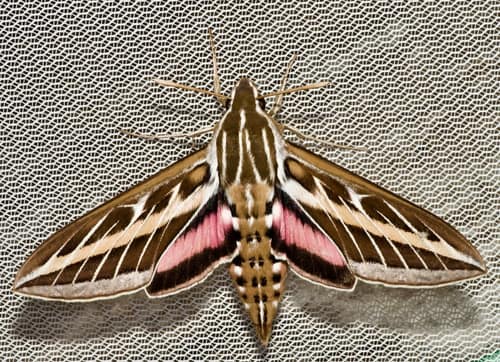
Pollinator (c) Michelle W. (鍾偉瑋), some rights reserved (CC BY), uploaded by Michelle W. (鍾偉瑋) · cc-by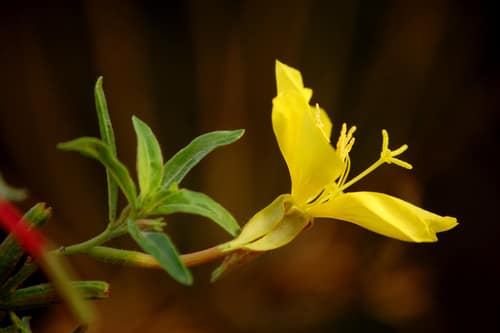
Close Relative (c) Jeff Lahr, some rights reserved (CC BY), uploaded by Jeff Lahr · cc-by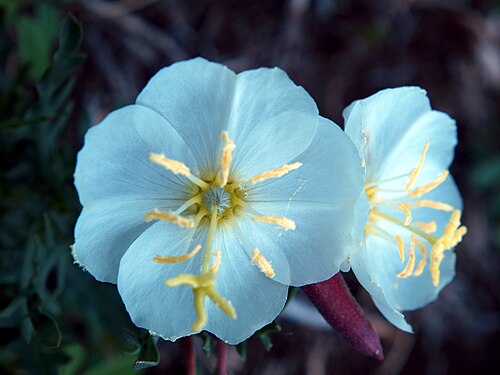
Close Relative Jim Pisarowicz / Public domain · cc0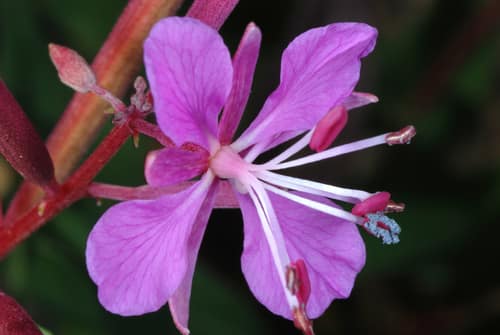
Family Member (c) Douglas Goldman, some rights reserved (CC BY-SA), uploaded by Douglas Goldman · cc-by-sa
Help improve the field guideSomething wrong?
Checking your Fauna account…Report a name, category, or profile issue for review.