
Plant
Flat-topped Yate
Eucalyptus occidentalisAlso known as Swamp Yate
Flat-topped yate is a rugged evergreen tree native to southwest Western Australia, notable for its rough, fibrous basal bark giving way to smooth, pale upper limbs. It thrives in seasonally wet depressions, clay flats, and saline margins where few other large trees can survive. Dense clusters of creamy-white to pale yellow flowers bloom in profusion from spring to autumn, providing an essential nectar source for local honeyeaters and native insects.
EvergreenSalt-tolerantFlowering Tree
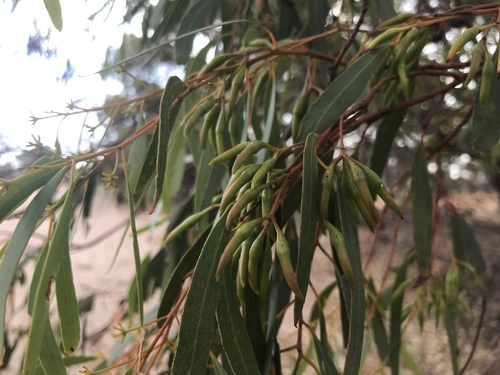
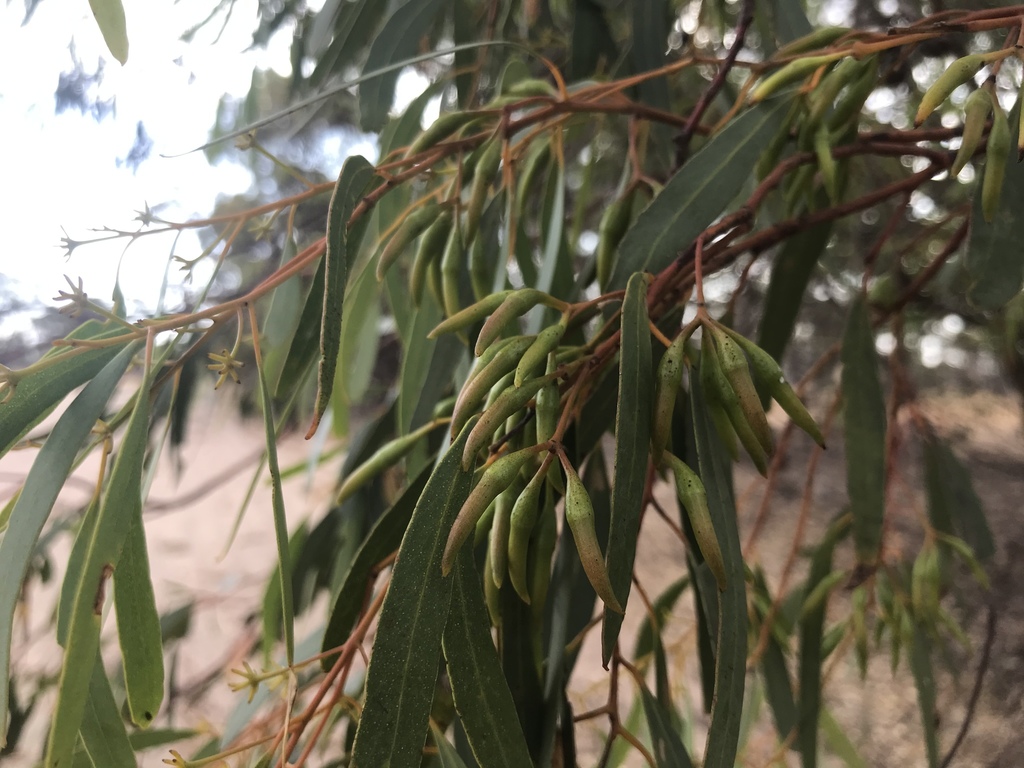
—observations
—countries
—peak records
EndangeredConservation statusIUCN Red List categoriesLCNTVUENCREWEXEndangeredRed List categories, explained →
Diet & preyAutotrophic (photosynthetic)
Predators
- Psyllids
- Borers
- Uraba lugens caterpillars
ThreatsAgricultural land clearing, altered hydrology, rising salinity, and grazing by livestock
HabitatsSeasonally wet flats, salt lake margins, clay pans, and low-lying alluvial plains
Life span100–250 years
Classification
- OrderMyrtales
- FamilyMyrtaceae
- GenusEucalyptus
- SpeciesEucalyptus occidentalis
Range data is not available yet.
Interaction riskHigh
- Low
- Moderate
- High
- Very high
- Why interaction risk is high
- Foliage contains concentrated essential oils; toxic to dogs and cats if ingested.
- What to notice
- Look for a spreading canopy, rough dark bark on the lower trunk, and smooth grey limbs growing in low clay plains.
- Support conservation
- Avoid compacting the soil around root systems and leave seed capsules undisturbed to support natural recruitment.
Responsible observation
- Bud Identification: Look for prominent, horn-shaped opercula capping the cylindrical flower buds.
- Habitat Clues: Seek mature specimens along coastal riverbeds and the edges of salt lakes.
 Image unavailable
Same Genus 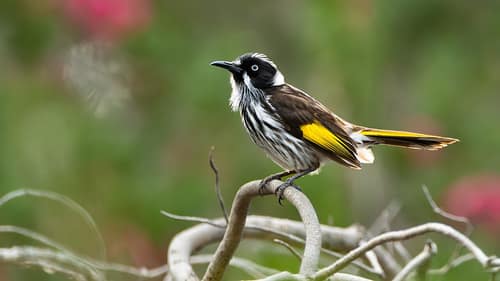
Pollinator Photo by: Paulweberphoto - paulweberphoto.com / CC BY 4.0 · cc-by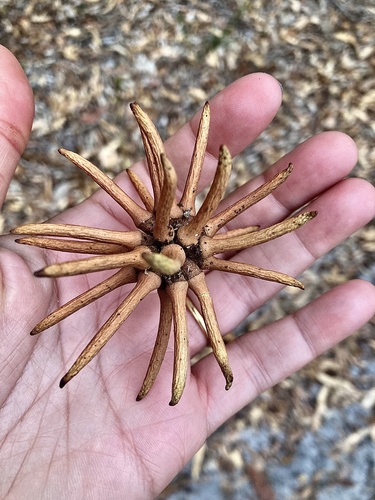
Close Relative (c) pimelea, some rights reserved (CC BY) · cc-byClose Relative
Help improve the field guideSomething wrong?
Checking your Fauna account…Report a name, category, or profile issue for review.