
Plant · GBIF taxon 3172261
Common Jasmine
Jasminum officinaleAlso known as Poet's Jasmine, White Jasmine, True Jasmine, Jessamine
Common jasmine is a vigorous deciduous climbing vine renowned for clusters of starry white flowers that release an intense, sweet fragrance most powerfully at dusk. Native to mountainous valleys and woodlands of Central Asia and the Caucasus, it scrambles upward by twining slender green stems through neighboring canopy vegetation. Long cultivated across the Mediterranean and beyond, its blossoms remain a cornerstone of commercial perfumery and attract a wide array of night-flying sphinx moths.
AromaticFloweringClimbing Vine
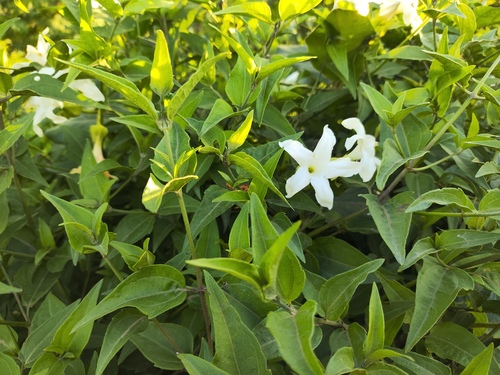
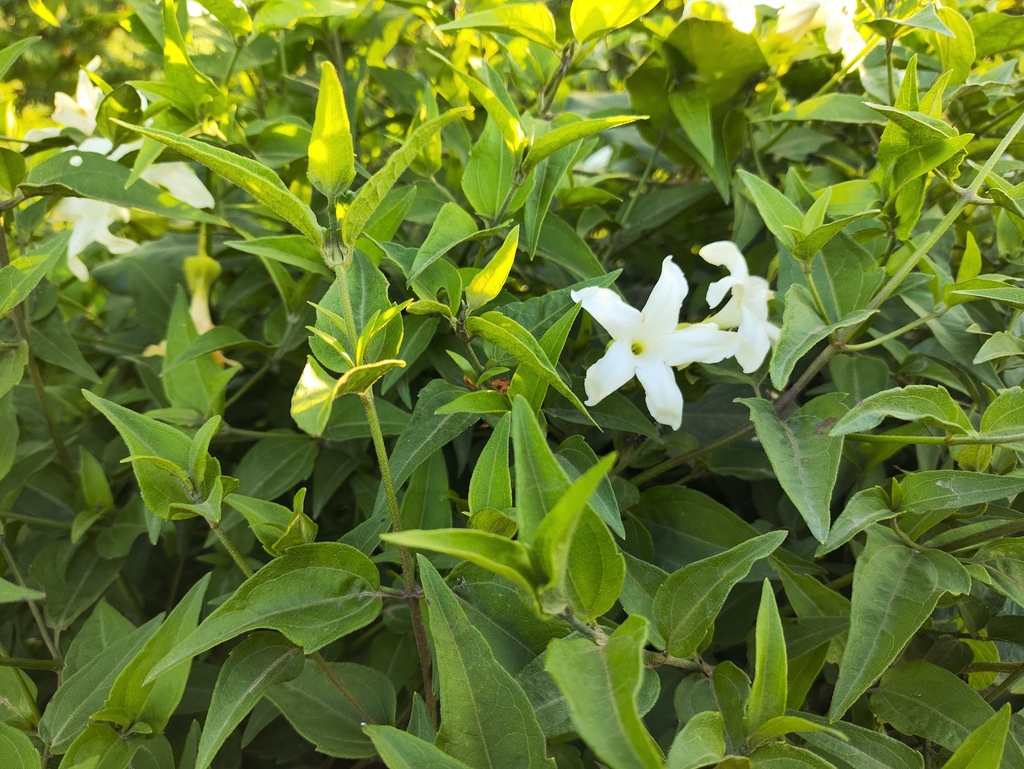 1 / 7
1 / 7—observations
—countries
—peak records
Least ConcernConservation statusIUCN Red List categoriesLCNTVUENCREWEXLeast ConcernRed List categories, explained →
Diet & prey
- Autotrophic (photosynthetic)
Predators
- Spider Mites
- Aphids
- Whiteflies
ThreatsHabitat clearing within native ranges, localized overgrazing
HabitatsWoodland borders, scrub slopes, river canyons, ravines, cultivated gardens
Life span15–30 years
Size / weightNot available
Classification
- FamilyOleaceae
- SpeciesJasminum officinale
Range data is not available yet.
Interaction riskLow
- Low
- Moderate
- High
- Very high
- Why interaction risk is low
- Safe to observe at a normal distance; wild berries have toxic look-alikes and should never be eaten.
Responsible observation
- Scent Timing: Sniff blossoms during dusk or early evening when essential oil volatility peaks.
- Foliage Inspection: Look for compound leaves arranged oppositely with five to nine distinct leaflets.
- Pollinator Watching: Watch quietly at twilight to catch fast-flying hawkmoths hovering before the blossoms.
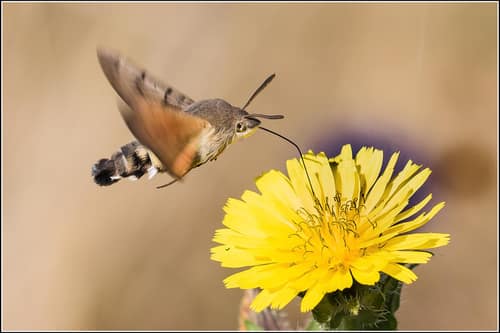
Pollinator (c) Smudge 9000, some rights reserved (CC BY-SA) · cc-by-sa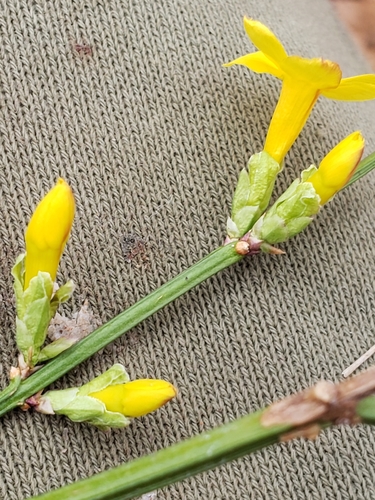
Close Relative (c) Mark Richman, some rights reserved (CC BY) · cc-by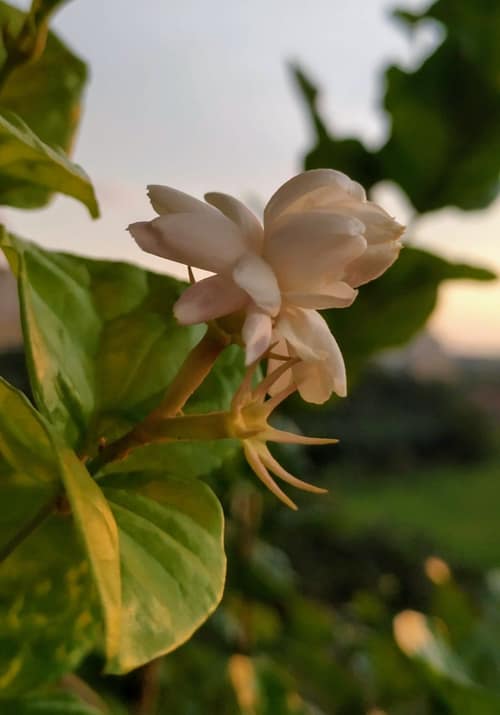
Close Relative (c) sunnyjosef, some rights reserved (CC BY) · cc-by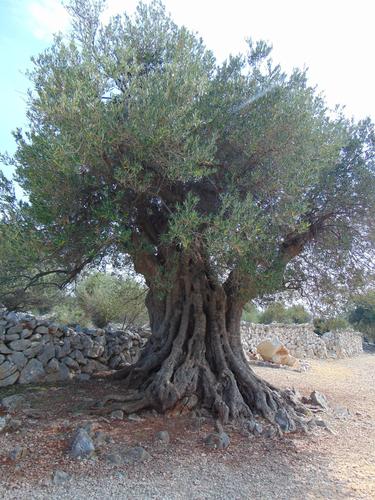
Same Family no rights reserved, uploaded by viridian · cc0
Help improve the field guideSomething wrong?
Checking your Fauna account…Report a name, category, or profile issue for review.