
Insect · GBIF taxon 1864652
Eurasian Hummingbird Hawkmoth
Macroglossum stellatarumAlso known as Hummingbird Hawk-moth, Hummingbird Moth
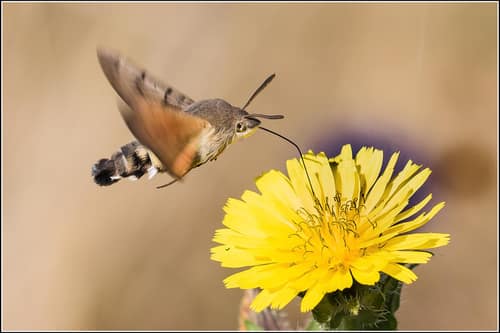
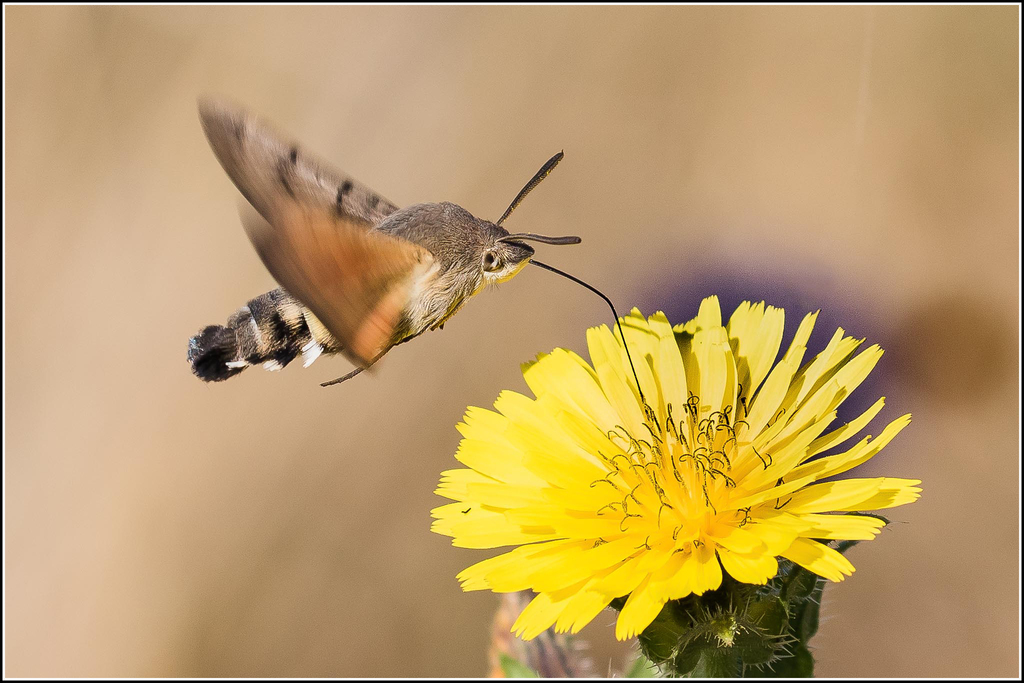
Eurasian hummingbird hawkmoths hover expertly over nectar-rich blossoms, beating their wings up to 85 times per second to generate an audible hum. These day-flying moths migrate thousands of kilometers every summer from southern overwintering grounds across Europe and Asia. Female hawkmoths lay eggs on bedstraw plants, where the bright green caterpillars feed before pupating in loose silk cocoons among leaf litter.
DiurnalFast FlyerMigratory
—observations
—countries
—peak records
Least ConcernConservation statusIUCN Red List categoriesLCNTVUENCREWEXLeast ConcernRed List categories, explained →
Diet & prey
- Verbena nectar
- Buddleja nectar
- Bedstraw leaves
Predators
- Insectivorous birds
- Bats
- Orb-weaver spiders
ThreatsPesticide application, habitat fragmentation, severe weather during migration
HabitatsGardens, meadows, woodland edges, parks, coastal cliffs
Life spanUp to 7 months
Size / weightNot available
Classification
- OrderLepidoptera
- FamilySphingidae
- GenusMacroglossum
- SpeciesMacroglossum stellatarum
Range data is not available yet.
Interaction riskLow
- Low
- Moderate
- High
- Very high
- Why interaction risk is low
- Harmless to humans and safe to observe at a normal distance.
Responsible observation
- Plant Tubular Flowers: Cultivate nectar-rich blooms like verbena, lavender, and buddleja to attract hovering adults.
- Observe Quietly: Approach slowly without casting sudden shadows while they feed during warm, sunny daytime hours.
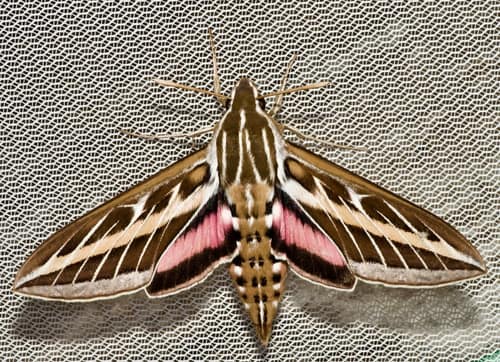
Ecological Counterpart (c) Michelle W. (鍾偉瑋), some rights reserved (CC BY), uploaded by Michelle W. (鍾偉瑋) · cc-by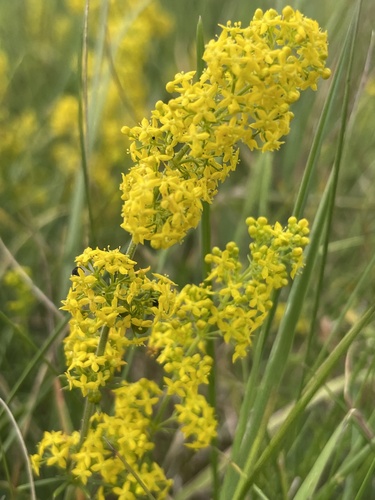
Host Plant (c) Benjamin Flatt, some rights reserved (CC BY), uploaded by Benjamin Flatt · cc-by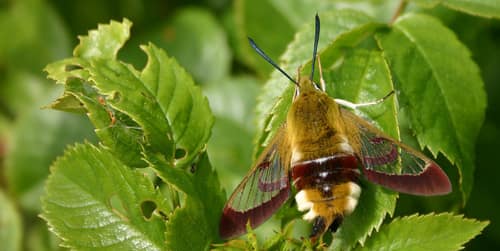
Close Relative (c) Jonas Ahrentorp, some rights reserved (CC BY-SA) · cc-by-sa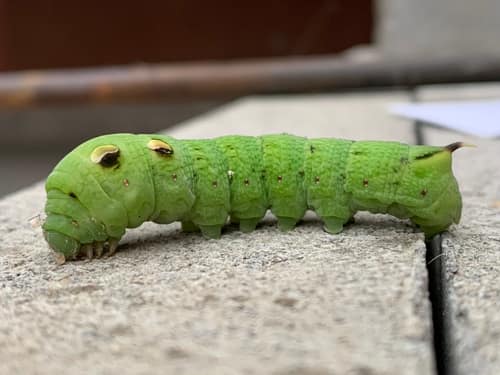
Family Member (c) Azamat A. Totikov, some rights reserved (CC BY), uploaded by Azamat A. Totikov · cc-by
Keep collecting in Fauna
Found in Collections
Species set
Moonlight Marvels
Eurasian Hummingbird Hawkmoth is found in this collection. Identify it in Fauna to fill this slot and continue your progress.
—/7
Help improve the field guideSomething wrong?
Checking your Fauna account…Report a name, category, or profile issue for review.