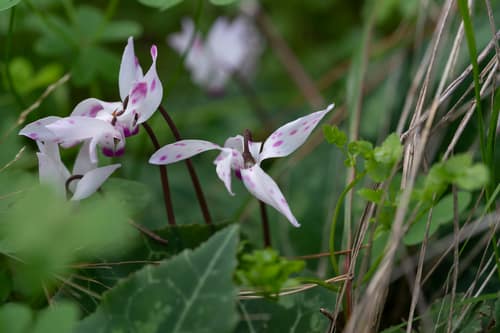
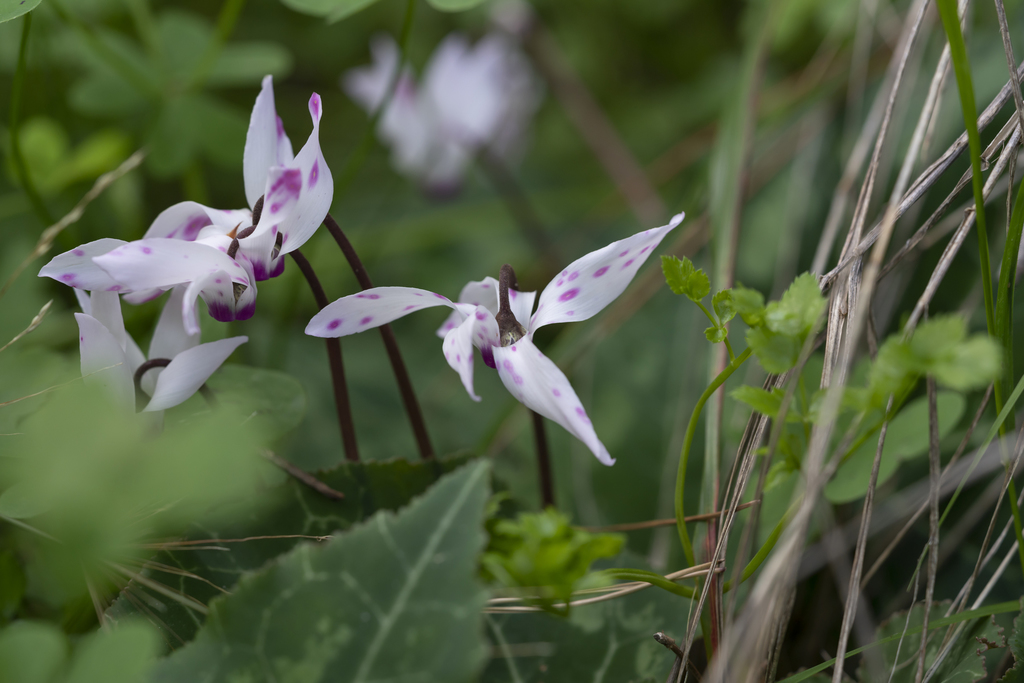
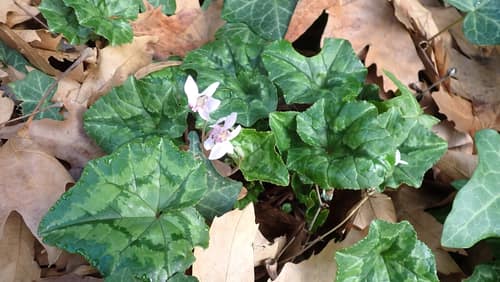
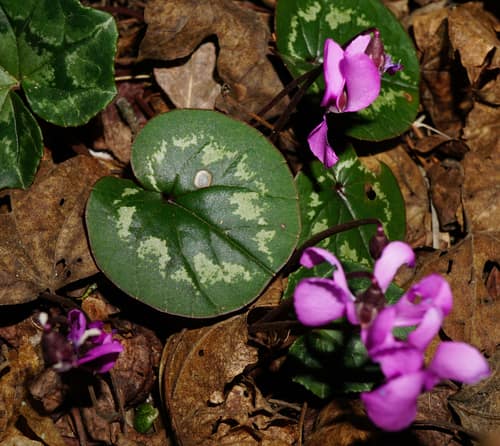
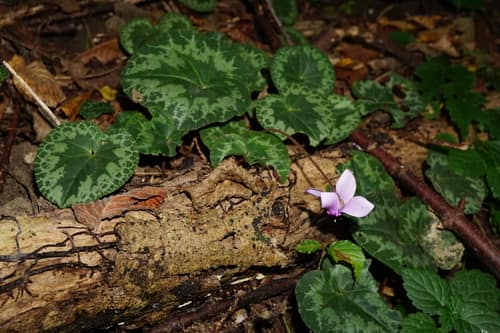
Persian cyclamens emerge from stout underground tubers each autumn, sending up swept-back blossoms in shades of pale pink, white, and magenta alongside intricately marbled, heart-shaped foliage. They thrive through the cool Mediterranean winter, entering complete dormancy as the searing summer drought approaches to protect water reserves. While widely celebrated as the ancestral source of commercial florist cyclamens, wild populations play a vital ecological role by sustaining native early-season solitary bees.
Not EvaluatedConservation statusIUCN Red List categoriesLCNTVUENCREWEXNot Evaluated — not placed on the risk ladderRed List categories, explained →
Key facts
Diet & prey
Autotrophic (photosynthetic)
Predators
Wild boar
Vine weevil
Field mouse
ThreatsHistoric overcollection of wild tubers, urbanization, and excessive grazing
HabitatsRocky hillsides, Mediterranean shrublands, pine woodlands, and limestone crevices
Life span20–100 years
Size / weightNot available
Classification
OrderEricales
FamilyPrimulaceae
GenusCyclamen
SpeciesCyclamen persicum
Range & activity
Range data is not available yet.
Safe observation
Interaction riskHigh
Low
Moderate
High
Very high
Why interaction risk is high
Tubers contain toxic saponins dangerous to pets and humans; keep plants out of reach of domestic animals.
Why it is dangerous
Contains toxic triterpenoid saponins including cyclamin, which induce intense oral pain, severe vomiting, diarrhea, and potentially lethal cardiac arrhythmia if ingested.
How to recognize a risky encounter
Recognized by nodding flowers with upward-swept petals and thick, flattened perennial tubers buried just beneath soil.
What to do
Wear gardening gloves when handling cut tubers, and ensure potted specimens remain out of reach of pets.
Responsible observation
Soil Moisture: Allow potting soil to dry slightly between waterings to prevent tuber rot.
Summer Dormancy: Cease watering when foliage yellows in late spring until autumn regrowth.
Field Observation: Photograph wild stands on rocky slopes without digging or disturbing root zones.