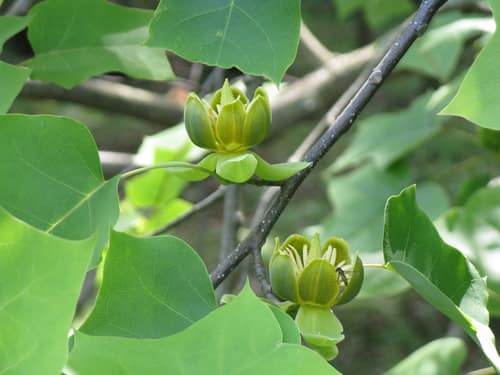
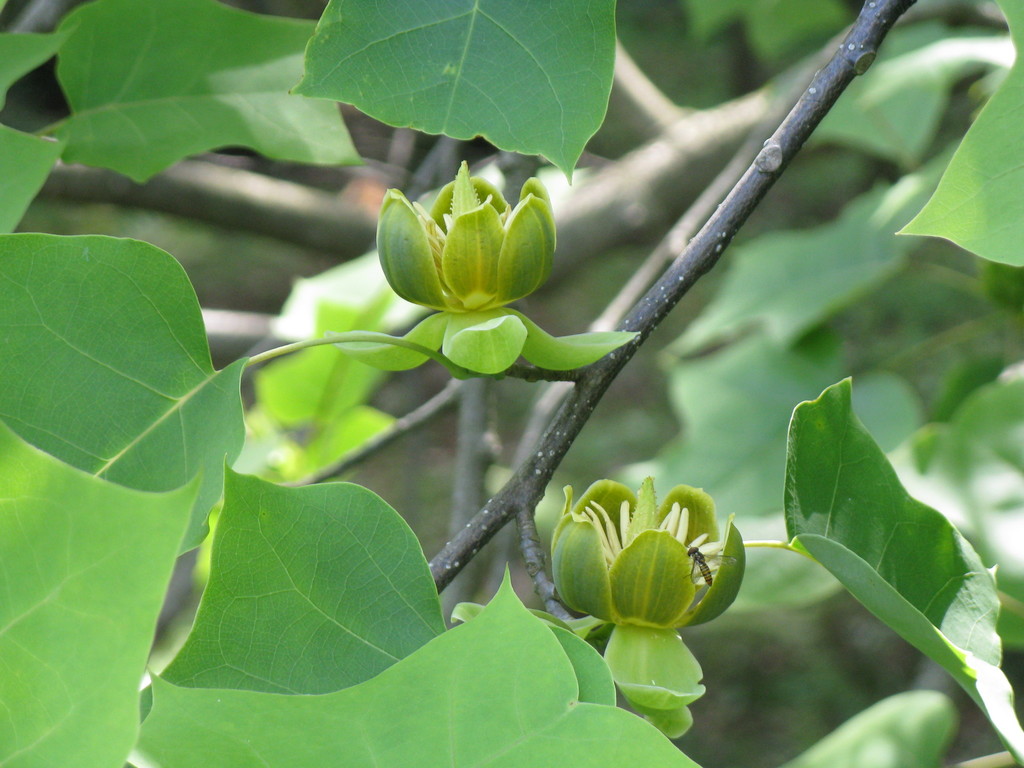
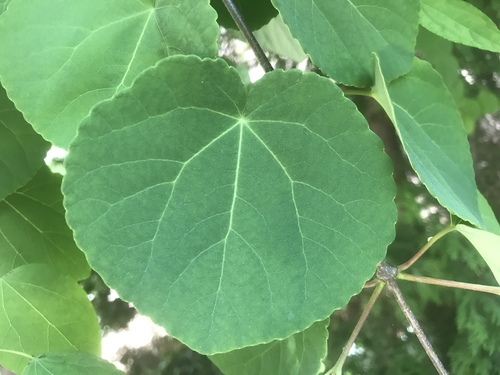
Chinese tulip tree is a magnificent canopy-forming deciduous tree distinguished by curiously saddle-shaped leaves with deeply indented waists. Cup-shaped flowers resembling green-and-yellow tulips emerge high in the crown in late spring, producing copious nectar that attracts diverse native pollinators before setting winged samaras. Wild populations endure severe fragmentation across mountain valleys, making mature seed-bearing specimens an increasingly treasured sight.
ThreatsHabitat fragmentation, illegal logging, and poor natural regeneration
HabitatsMontane mixed mesophytic forests and moist ravines
Life span200–300 years
Classification
FamilyMagnoliaceae
SpeciesLiriodendron chinense
Range & activity
Range data is not available yet.
Safe observation
Interaction riskLow
Low
Moderate
High
Very high
Why interaction risk is low
Safe to observe at a normal distance.
What to notice
Recognizable by large four-lobed saddle-shaped leaves and erect tulip-like flowers blooming high in mountain valley canopies.
Support conservation
Avoid damaging bark or disturbing the delicate roots in protected nature reserves, and leave all seed cones intact on the forest floor.
Responsible observation
Crown inspection: Use binoculars in late spring to spot the subtle greenish-yellow flowers blooming high in the upper canopy.
Leaf identification: Check fallen foliage for deeply cut side lobes that create a distinct waist, differing from the shallower lobes of its American cousin.