Also known as Jack in the Bush, Triffid Weed, Bitter Bush, Christmas Bush
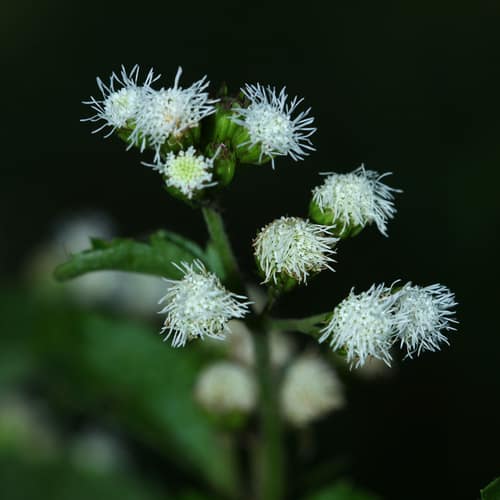
Siam weed is a fast-growing perennial shrub native to the Americas that has become an aggressive invader across tropical Asia, West Africa, and parts of Australia. Its opposite, three-veined triangular leaves release a pungent, turpentine-like odor when crushed, while dense clusters of pale lilac to white florets attract butterflies and bees. Mature plants form tangled, highly flammable thickets that shade out native flora and disperse thousands of feathery, wind-borne seeds.
Not EvaluatedConservation statusIUCN Red List categoriesLCNTVUENCREWEXNot Evaluated — not placed on the risk ladderRed List categories, explained →
Key facts
Diet & preySunlight, Water, Soil minerals
Predators
Siam Weed Gall Fly
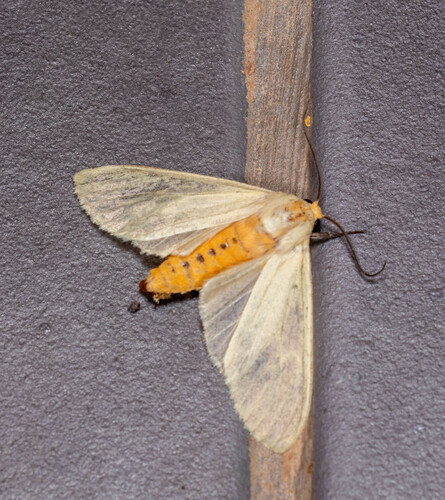
Siam Weed Moth
Leaf-mining flies
ThreatsBiological control agents, manual clearing, and herbicides in introduced ranges
HabitatsForest edges, roadsides, abandoned fields, savannas, and disturbed tropical or subtropical scrub
Life spanPerennial (several years per individual shrub)
Classification
OrderAsterales
FamilyAsteraceae
GenusChromolaena
SpeciesChromolaena odorata
Range & activity
Range data is not available yet.
Safe observation
Interaction riskHigh
Low
Moderate
High
Very high
Why interaction risk is high
Contains pyrrolizidine alkaloids toxic to humans, pets, and livestock if ingested.
Why it is dangerous
Leaves and stems contain pyrrolizidine alkaloids and high nitrate levels, which can cause severe liver damage and poisoning if ingested by humans, pets, or livestock.
How to recognize a risky encounter
Look for opposite, three-veined, triangular leaves with toothed edges that smell strongly of turpentine when crushed, topped by dense clusters of pale lilac-white florets.
What to do
Do not ingest any part of the plant and keep grazing pets or livestock away from thickets; wear gloves when clearing large stands.
Responsible observation
Leaf Scent: Gently rub a leaf to detect its sharp, turpentine-like aroma, then wash your hands.
Flower Season: Look for dense, flat-topped clusters of pale lavender to white florets during the dry season.
Weed Control: Brush off feathery seeds from boots and clothing before leaving infested areas.

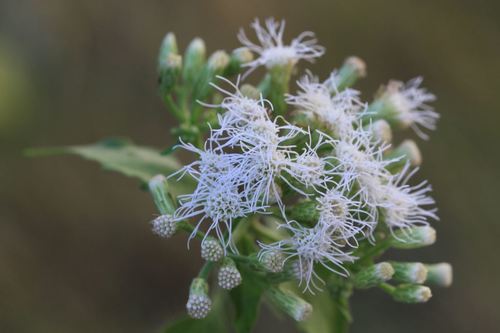
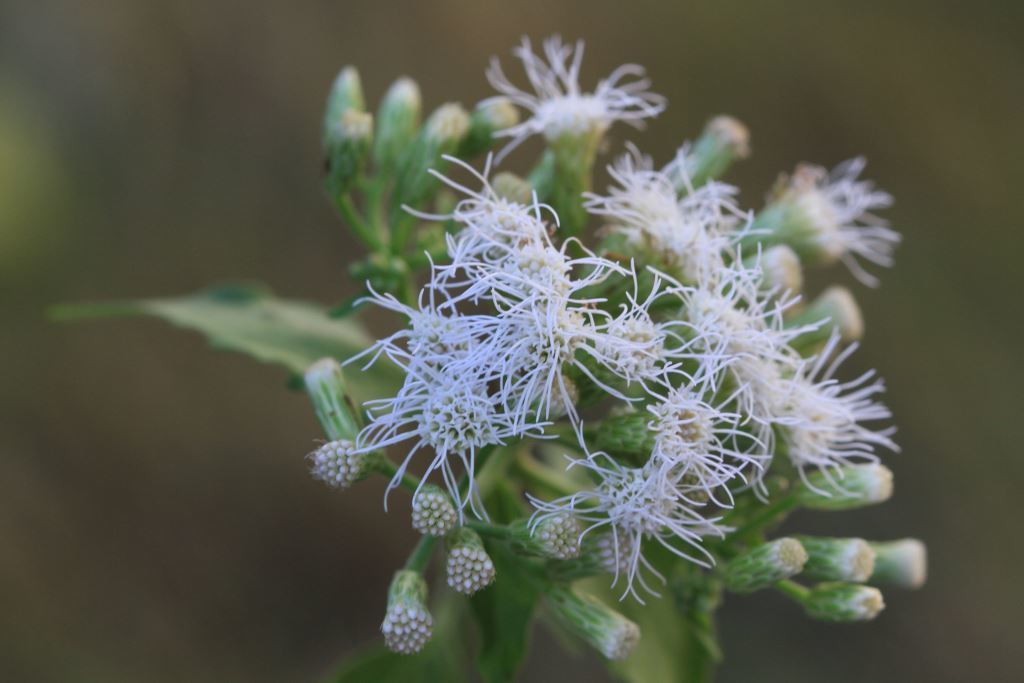
 Image unavailable