Also known as Pokeweed, Poke Sallet, Pokeberry, Inkberry
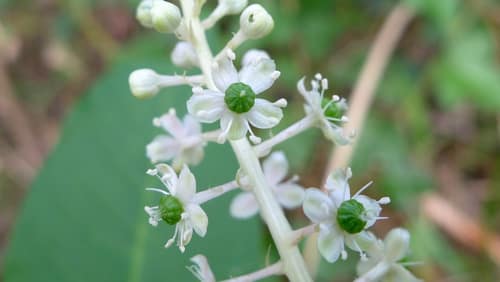
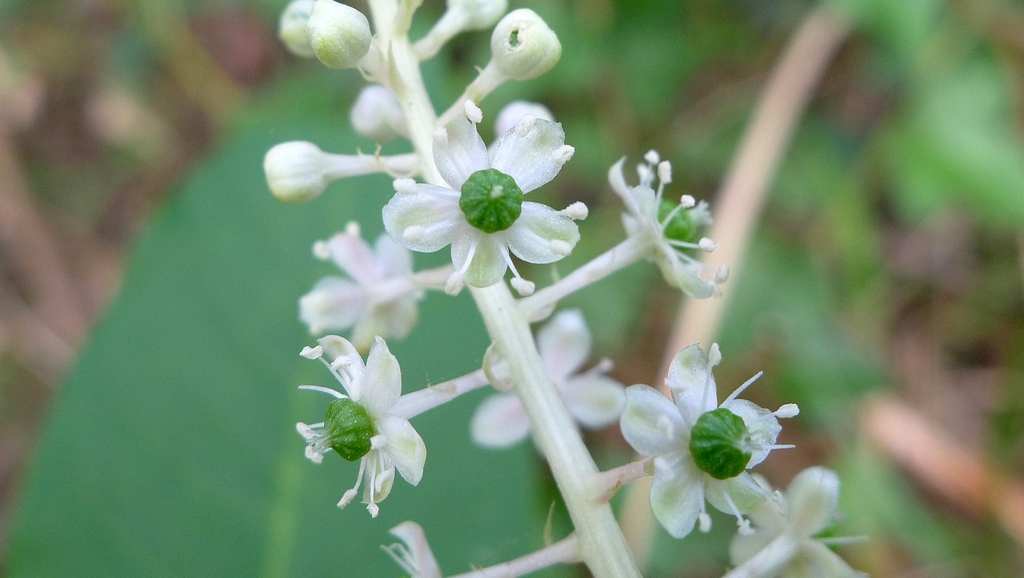
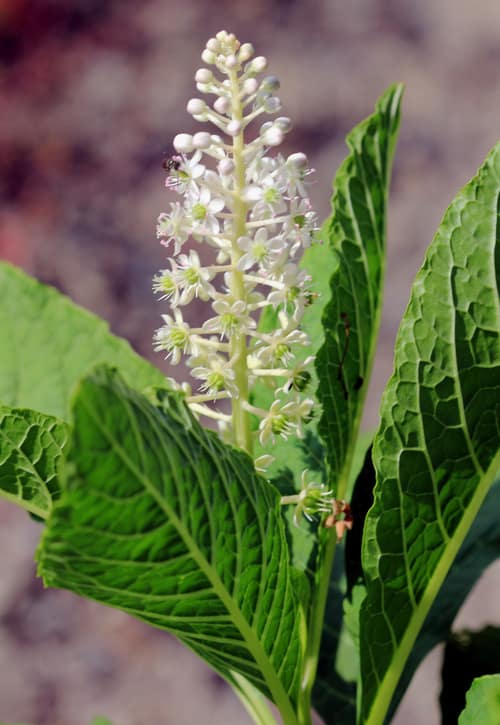
American pokeweed stands as a prominent late-summer perennial, easily recognized by its stout magenta stems and long dangling racemes of dark purple-black berries. Its deep, fleshy taproot allows it to resprout annually in fields, thickets, and disturbed forest edges across eastern North America. While highly toxic to mammals, the ripe berries provide a crucial autumn food source for migrating songbirds, which spread the seeds far and wide.
All parts are toxic, and wild berries have toxic look-alikes; never ingest and avoid skin contact with sap.
Why it is dangerous
Contains toxic saponins and phytolaccatoxin that cause severe gastrointestinal distress, cramping, vomiting, and potential neurological symptoms if ingested.
How to recognize a risky encounter
Recognizable by bright reddish-purple stalks, large smooth leaves, and dangling spikes of deep purple-black berries.
What to do
Wear protective gloves when handling or removing plants, and never ingest any plant parts raw.
Responsible observation
Identification Cue: Look for thick red-to-purple stalks contrasting with green leaves and dark purple berries in late summer.
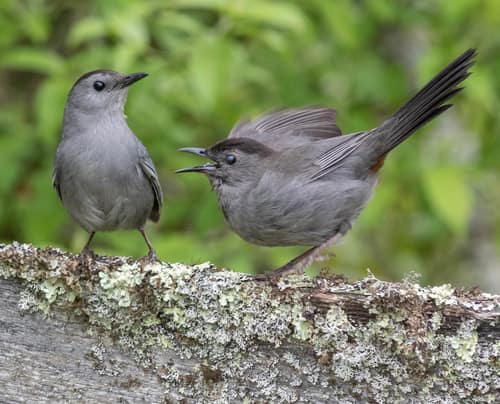
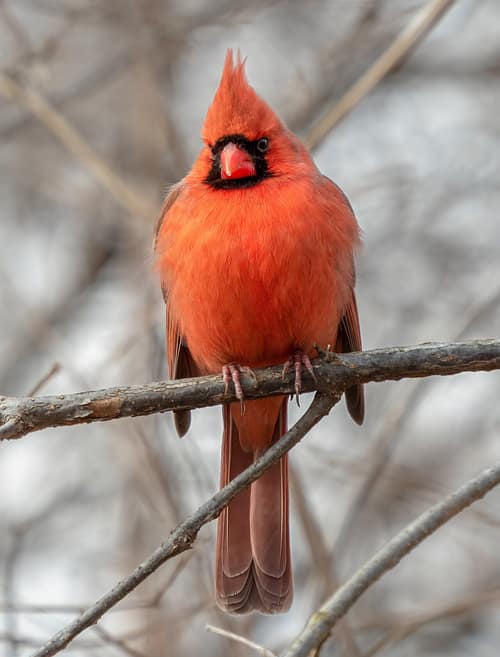
Bird Observation: Position nearby to watch catbirds, mockingbirds, and cardinals feeding on mature berry clusters.
Handling Safety: Wear gloves when clearing plants to avoid contact with skin-irritating sap.