
Plant · GBIF taxon 3067157
Crown-of-Thorns
Euphorbia miliiAlso known as Christ Plant, Christ's Thorn
Scattered with sharp, prominent spines along its succulent woody stems, Crown-of-Thorns produces year-round clusters of vivid red or pink modified leaf bracts enclosing tiny true flowers. Native to the rocky granite hills of Madagascar, this drought-tolerant shrub uses its dense stem armature to deter browsing herbivores in dry habitats. When clipped or damaged, stems exude a thick, caustic white latex that seals wounds and deters insect pests.
SucculentFloweringSpiny
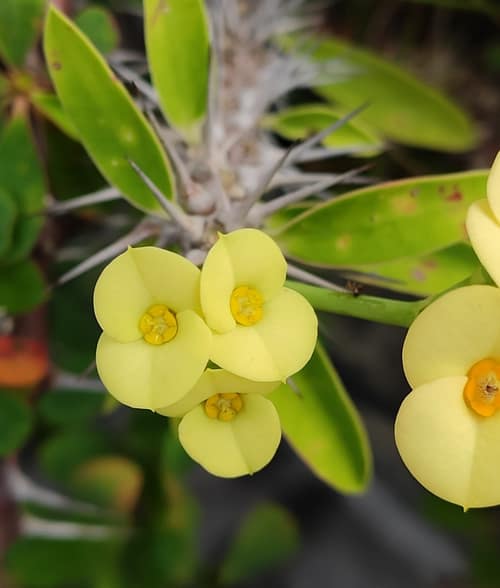
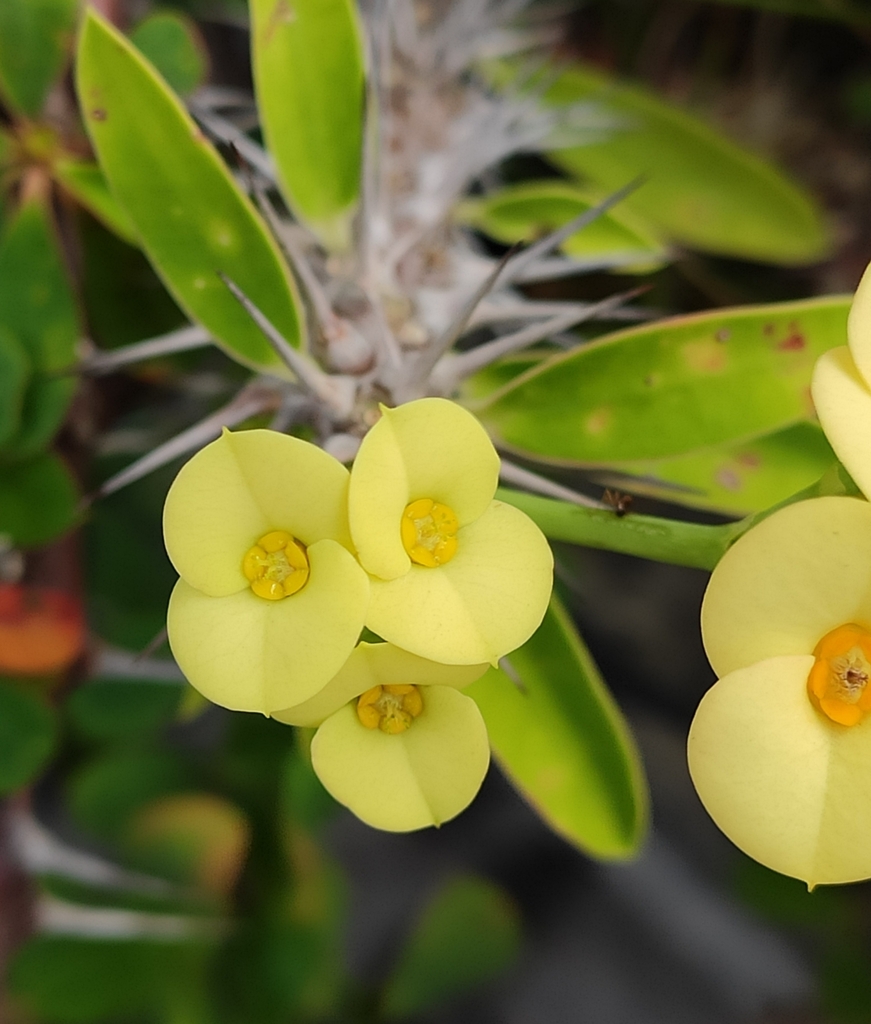 1 / 7
1 / 7—observations
—countries
—peak records
Least ConcernConservation statusIUCN Red List categoriesLCNTVUENCREWEXLeast ConcernRed List categories, explained →
Diet & prey
- Sunlight
- Soil nutrients
- Water
Predators
- Mealybugs
- Spider mites
- Scale insects
ThreatsHabitat loss in native Madagascar range
HabitatsRocky slopes, dry scrublands, tropical gardens
Life span10–30 years
Classification
- OrderMalpighiales
- FamilyEuphorbiaceae
- GenusEuphorbia
- SpeciesEuphorbia milii
Range data is not available yet.
Interaction riskHigh
- Low
- Moderate
- High
- Very high
- Why interaction risk is high
- Milky sap causes skin and eye irritation and is toxic if ingested; handle with gloves.
- Why it is dangerous
- Contains caustic diterpene esters in its milky latex, causing severe skin inflammation, eye irritation, and gastrointestinal toxicity if ingested.
- How to recognize a risky encounter
- Identified by thick stems lined with long sharp thorns and bright red or yellow flower-like bracts that leak white sap when cut.
- What to do
- Wear thick gloves and eye protection when pruning or transplanting, and keep well away from curious pets and children.
Responsible observation
- Pruning Safety: Wear heavy rubber gloves and safety glasses to shield skin and eyes from caustic white sap.
- Light Requirements: Position in full sunlight for six or more hours daily to ensure abundant floral bract displays.
- Watering Balance: Allow the top few centimeters of soil to dry completely between waterings to prevent root rot.
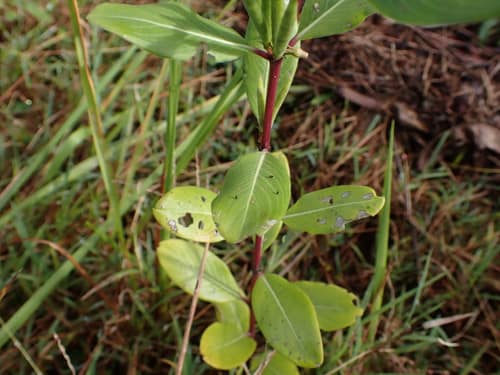
Native Neighbor (c) Louis Aureglia, some rights reserved (CC BY), uploaded by Louis Aureglia · cc-by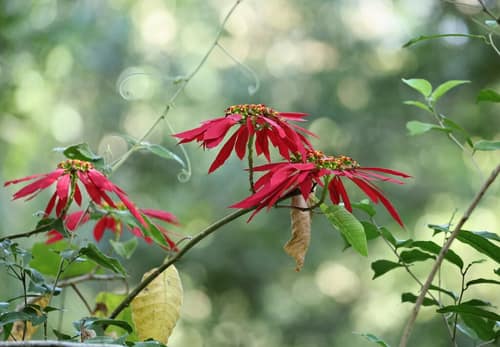
Close Relative (c) nmoorhatch, some rights reserved (CC BY), uploaded by nmoorhatch · cc-by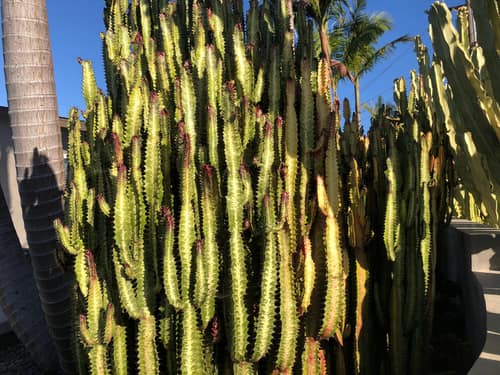
Close Relative no rights reserved · cc0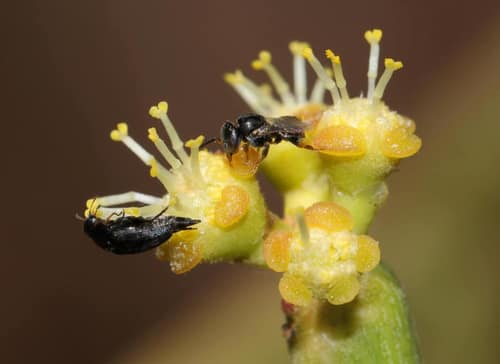
Close Relative (c) Alan Manson, some rights reserved (CC BY), uploaded by Alan Manson · cc-by
Help improve the field guideSomething wrong?
Checking your Fauna account…Report a name, category, or profile issue for review.