
Plant · GBIF taxon 3039269
Russian Olive
Elaeagnus angustifoliaAlso known as Silver Berry, Oleaster, Wild Olive
Russian olive thrives in rugged, arid riparian corridors by hosting nitrogen-fixing actinobacteria in its root nodules, allowing it to colonize barren soils. In late spring, small clustered blossoms produce an intensely sweet, clove-like fragrance that carries across vast river floodplains. Originally planted for windbreaks and erosion control, its dense, thorny thickets now crowd out native cottonwoods and willows across much of western North America.
DeciduousNitrogen-FixingInvasive
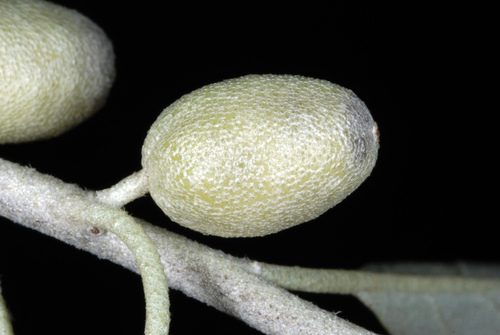
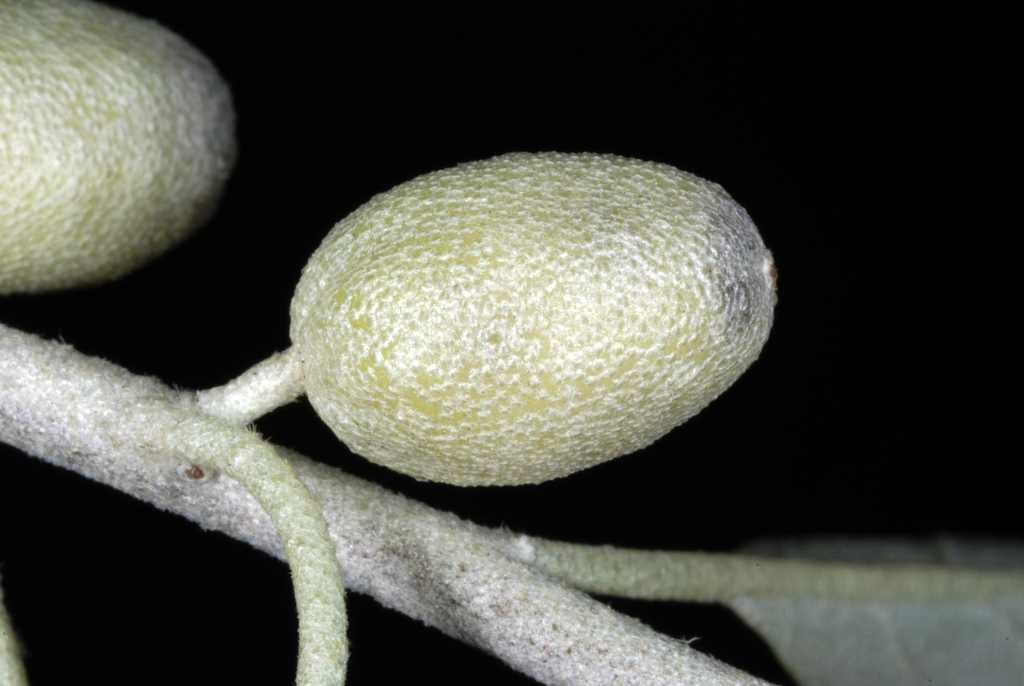 1 / 7
1 / 7—observations
—countries
—peak records
Least ConcernConservation statusIUCN Red List categoriesLCNTVUENCREWEXLeast ConcernRed List categories, explained →
Diet & prey
- Photoautotroph
Predators
- Cedar Waxwing
- European Starling
- Mule Deer
ThreatsMechanical cutting, targeted herbicide applications, fungal cankers
HabitatsRiparian corridors, river floodplains, pastures, roadsides
Life span40–60 years
Size / weightNot available
Classification
- OrderRosales
- FamilyElaeagnaceae
- GenusElaeagnus
- SpeciesElaeagnus angustifolia
Range data is not available yet.
Interaction riskLow
- Low
- Moderate
- High
- Very high
- Why interaction risk is low
- Wild berries have toxic look-alikes; never eat based on app identification alone.
Responsible observation
- Identification: Check for narrow, silvery lance-shaped leaves paired with stout branch spines.
- Stewardship: Report dense riparian thickets to local watershed managers to assist native habitat recovery.
- Photography: Diffuse morning light best highlights the shimmering metallic scales covering the foliage.
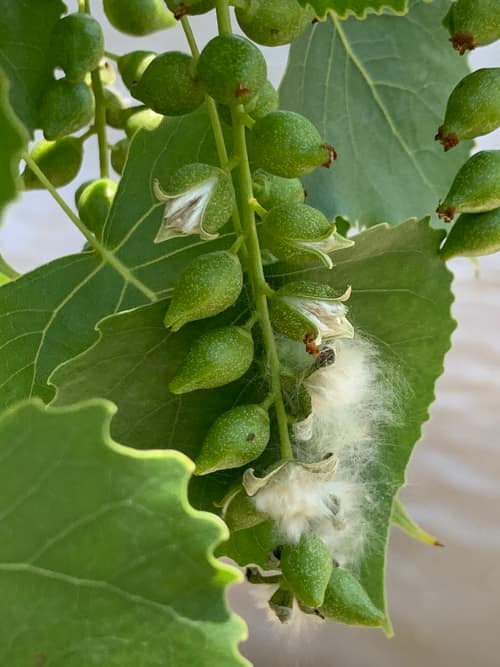
Competitor (c) Sandy Wolkenberg, some rights reserved (CC BY), uploaded by Sandy Wolkenberg · cc-by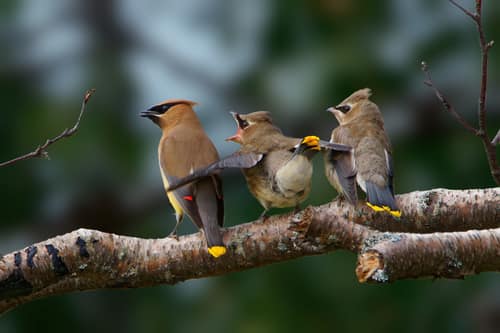
Seed Disperser (c) Christian Back, some rights reserved (CC BY), uploaded by Christian Back · cc-by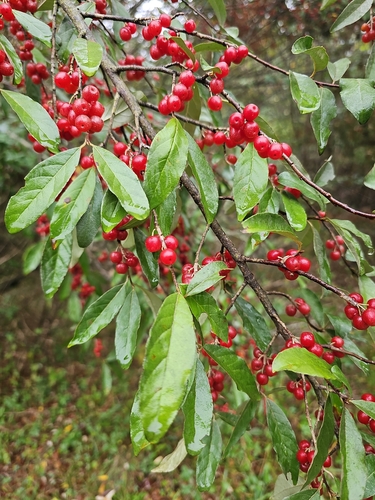
Close Relative no rights reserved, uploaded by Shawn · cc0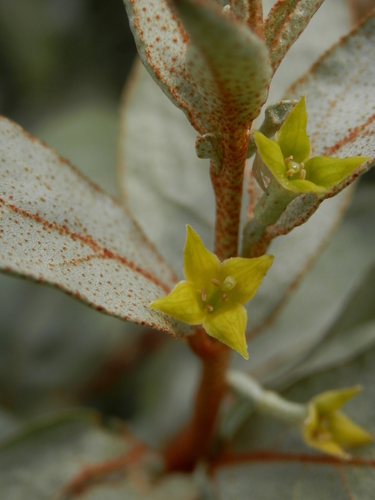
Close Relative (c) Ryan Hodnett, some rights reserved (CC BY-SA) · cc-by-sa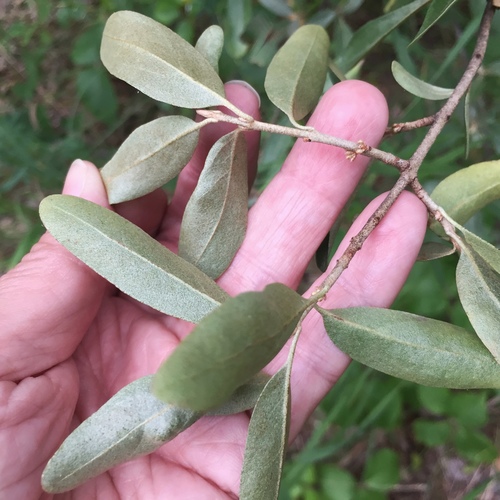
Same Family (c) Mary Krieger, some rights reserved (CC BY), uploaded by Mary Krieger · cc-by
Help improve the field guideSomething wrong?
Checking your Fauna account…Report a name, category, or profile issue for review.