Also known as Angelica Tree, Prickly Ash, Prickly Elder, Hercules Club
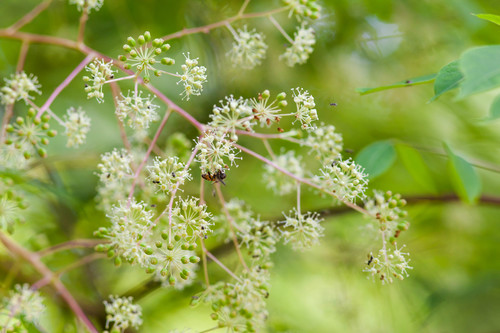
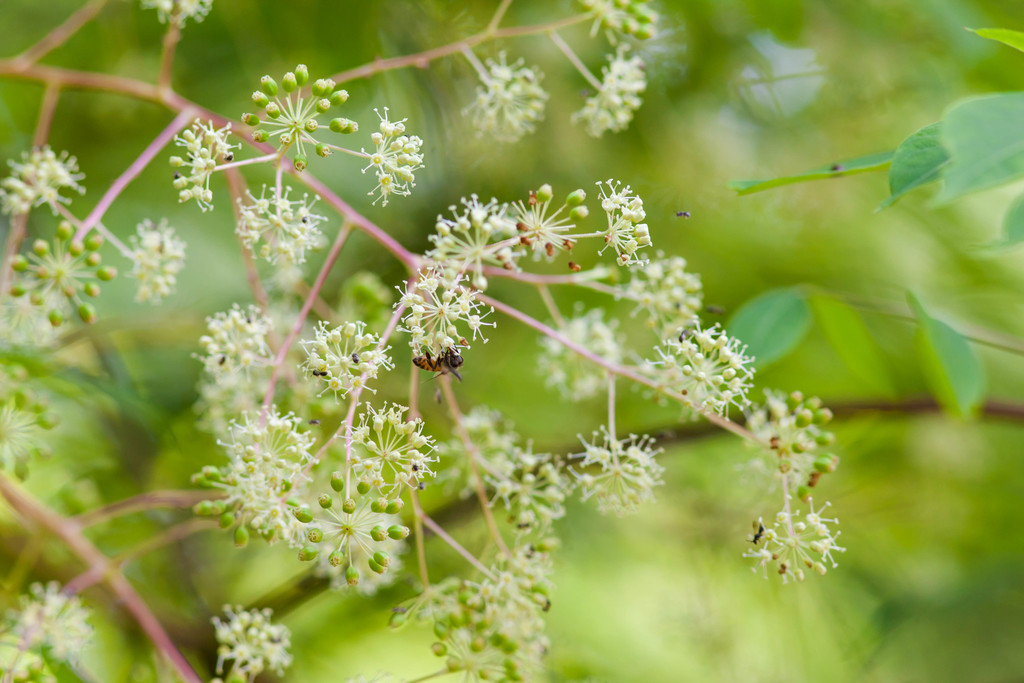
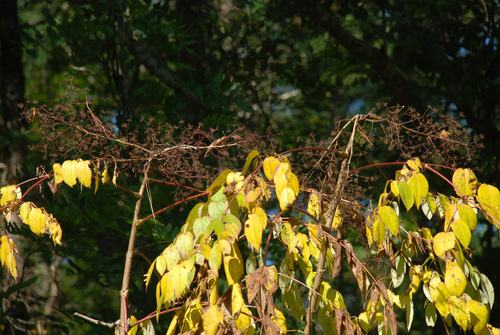
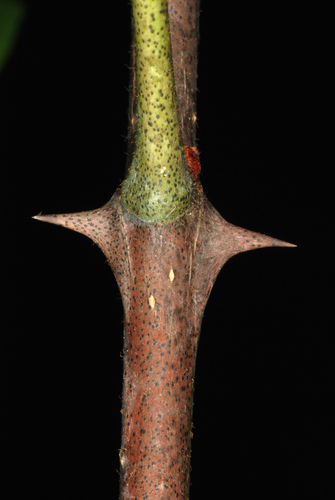
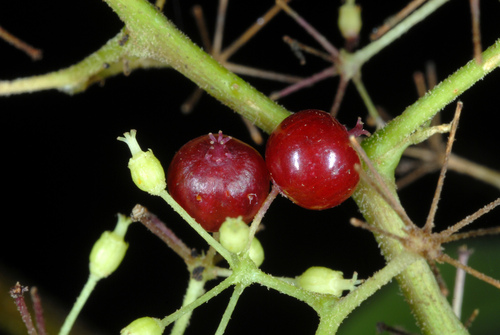
Devil's walkingstick stands out in eastern woodlands with its club-like stem encrusted in stout, lethal prickles and enormous leaves that can reach over a meter in length. In midsummer, vast umbrella-like clusters of creamy white blooms crown the stem, giving way to dense clusters of black drupes that feed migrating songbirds. It spreads aggressively via underground rhizomes to form dense thickets along sunlit forest edges and roadways.
Sharp spines cause physical puncture wounds, and wild berries have toxic look-alikes; do not handle unmittened or ingest.
Why it is dangerous
Stout spines lining the stems can cause painful puncture wounds, while plant tissues contain saponins that cause gastrointestinal distress if consumed.
How to recognize a risky encounter
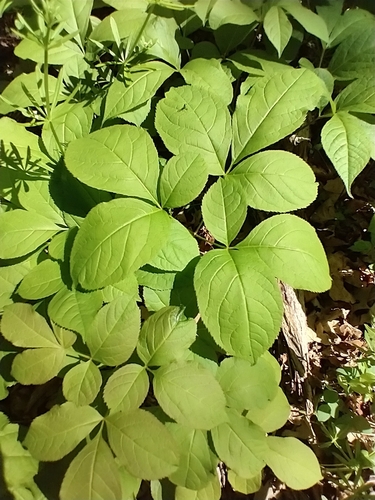
Recognized by its umbrella of doubly compound leaves perched on a single spiny trunk topped with huge creamy-white flower clusters.
What to do
Observe from a safe distance without grabbing stems, and wear thick leather gloves if working near the plant.
Responsible observation
Observation: Look for massive umbrella-like leaf crowns perched atop unbranched, spiny stems during summer.
Safety: Wear thick leather gloves and long sleeves when clearing or moving through stands.
Wildlife Watching: Watch for late-summer pollinators drawn to the massive white floral panicles.