
Plant · GBIF taxon 3190089
Northern Prickly Ash
Zanthoxylum americanumAlso known as Toothache Tree, Pellitory Bark, Yellow Wood
Northern prickly ash spreads readily through creeping root suckers, creating dense thickets along forest borders, fencerows, and sunlit woodlots. Crushing any part of the plant releases a pungent citrus aroma, revealing its close genetic kinship to true oranges and lemons. Throughout northern ranges, these shrubs serve as an indispensable nursery for giant swallowtail butterflies, whose caterpillars feast upon the aromatic foliage.
AromaticShrubDeciduous
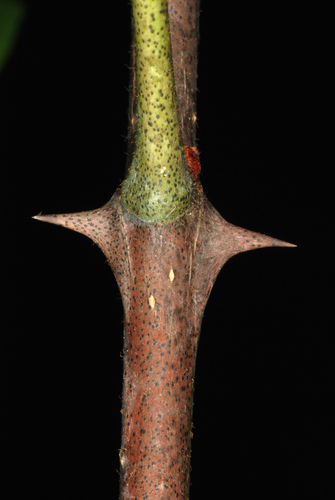
 1 / 7
1 / 7—observations
—countries
—peak records
Least ConcernConservation statusIUCN Red List categoriesLCNTVUENCREWEXLeast ConcernRed List categories, explained →
Diet & prey
- Autotroph (photosynthetic)
Predators
- Giant Swallowtail Caterpillar
- White-tailed Deer
- Eastern Cottontail
ThreatsHabitat clearing, canopy closure from fire suppression, and displacement by invasive brush
HabitatsWoodland edges, fencerows, riverbanks, and open rocky bluffs
Life span30–50 years
Classification
- FamilyRutaceae
- SpeciesZanthoxylum americanum
Range data is not available yet.
Interaction riskLow
- Low
- Moderate
- High
- Very high
- Why interaction risk is low
- Wild berries and seed capsules have toxic look-alikes; never eat based on app identification alone.
Responsible observation
- Aroma testing: Lightly bruise a fallen leaflet between your fingers to detect a bright lemon scent.
- Branch caution: Watch for sharp, paired prickles at each node before reaching into dense thickets.
- Caterpillar scouting: Search the tops of sunny leaves in midsummer for resting swallowtail larvae.
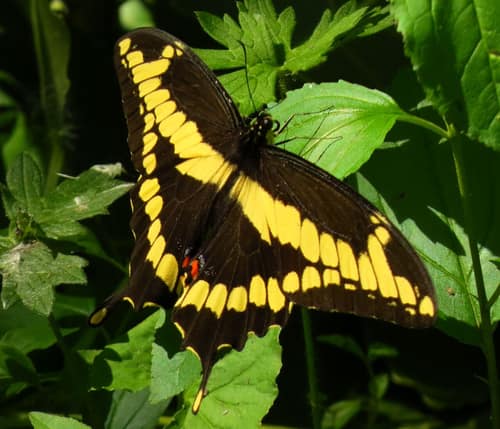
Host Plant D. Gordon E. Robertson / CC BY-SA 3.0 · cc-by-sa
Frequent Companion (c) Tom Norton, some rights reserved (CC BY) · cc-by
Close Relative (c) Cleveland Powell, some rights reserved (CC BY) · cc-by
Close Relative (c) Douglas Goldman, some rights reserved (CC BY-SA), uploaded by Douglas Goldman · cc-by-sa
Help improve the field guideSomething wrong?
Checking your Fauna account…Report a name, category, or profile issue for review.