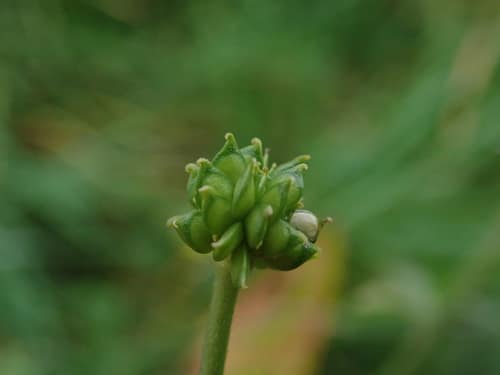
Also known as Monkshood, Aconite, Venus' Chariot, Wolfsbane
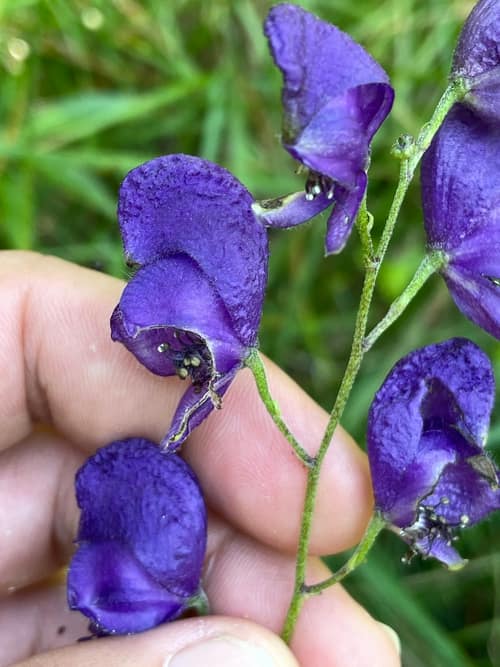
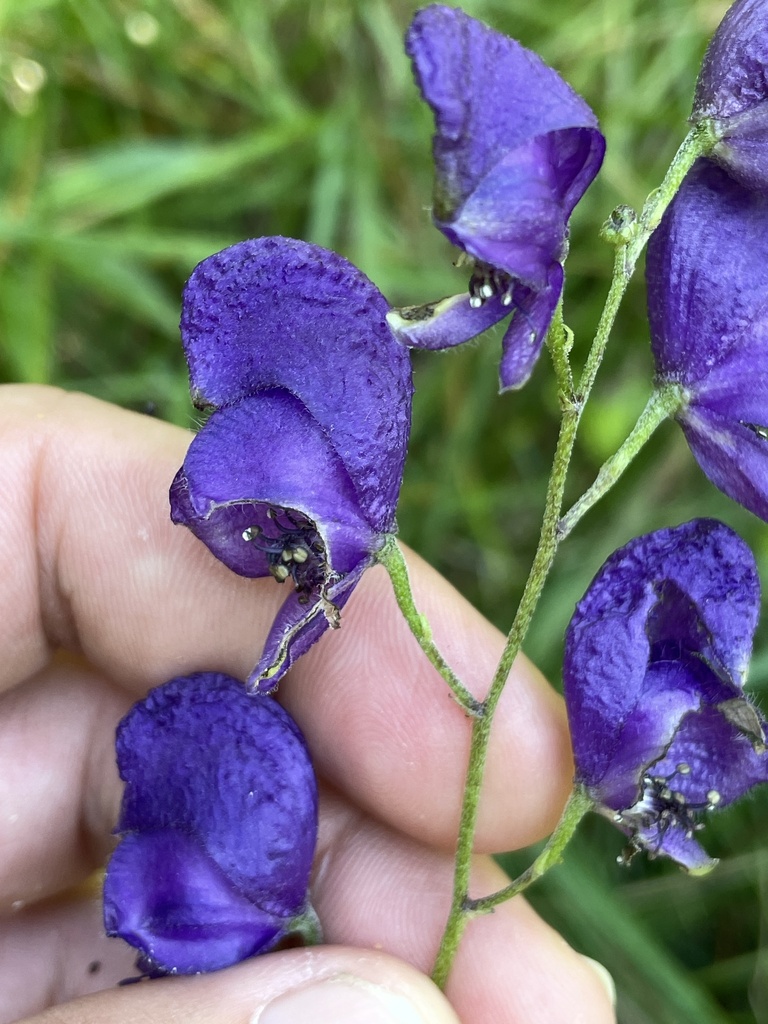
Monk's-hood produces tall spires of intense deep blue to purple flowers shaped like dark hooded cowls along European streams and damp mountain meadows. Highly adapted for bumblebee pollination, the specialized helmet-like sepal conceals complex nectar-producing petals inside. Despite its attractive woodland bloom, every part of the plant harbors deadly neurotoxins that historically earned it fame as an arrow poison and livestock hazard.
HabitatsDamp mountain meadows, stream banks, open woodlands
Life spanPerennial (10+ years)
Classification
FamilyRanunculaceae
SpeciesAconitum napellus
Range & activity
Range data is not available yet.
Safe observation
Interaction riskHigh
Low
Moderate
High
Very high
Why interaction risk is high
All parts contain lethal aconitine toxins; do not handle with bare hands or ingest under any circumstances.
Why it is dangerous
Contains aconitine and related alkaloids that disrupt cardiac and neurological function, causing severe poisoning or fatal heart failure upon ingestion or dermal absorption.
How to recognize a risky encounter
Recognized by its tall upright spikes of deep purple hooded flowers and deeply divided hand-shaped leaves.
What to do
Do not handle bare-handed, as toxins readily absorb through the skin; wear heavy gloves if working nearby.
Responsible observation
Observation Safety: View from a safe distance and never touch leaves, stems, or roots without protective gloves.
Identification: Look for distinctive blue-purple helmet-shaped flowers arranged along a tall erect stem.
Foraging Caution: Wild plants have toxic look-alikes; never ingest wild flora based on app identification.

 1 / 7
1 / 7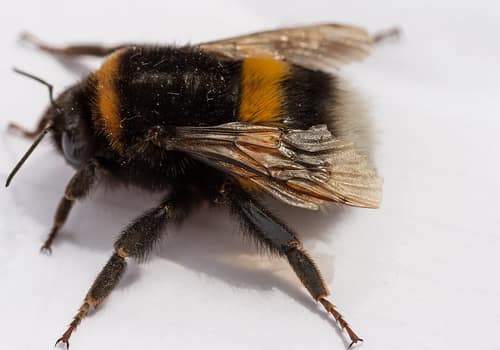
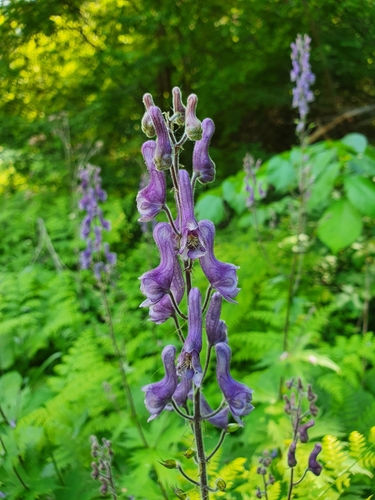
 Image unavailable