
Plant
Carolina Laurelcherry
Prunus carolinianaAlso known as Carolina Cherry Laurel, Carolina Cherry, Cherry Laurel
Carolina laurelcherry thrives as an understory tree or dense shrub across maritime forests, bottomlands, and suburban hedges of the American Southeast. Glossy evergreen leaves emit a distinct scent of maraschino cherry or bitter almond when bruised, signaling the presence of protective cyanogenic compounds. Small white flowers open in early spring on slender racemes, maturing by autumn into shiny black drupes that sustain resident songbirds throughout the winter.
EvergreenToxic to PetsNative Tree
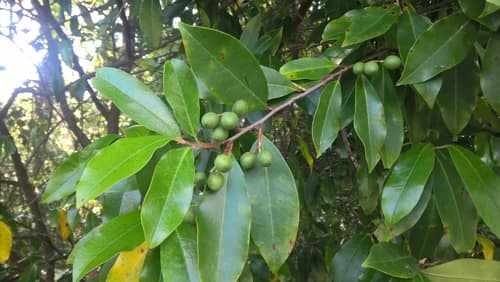
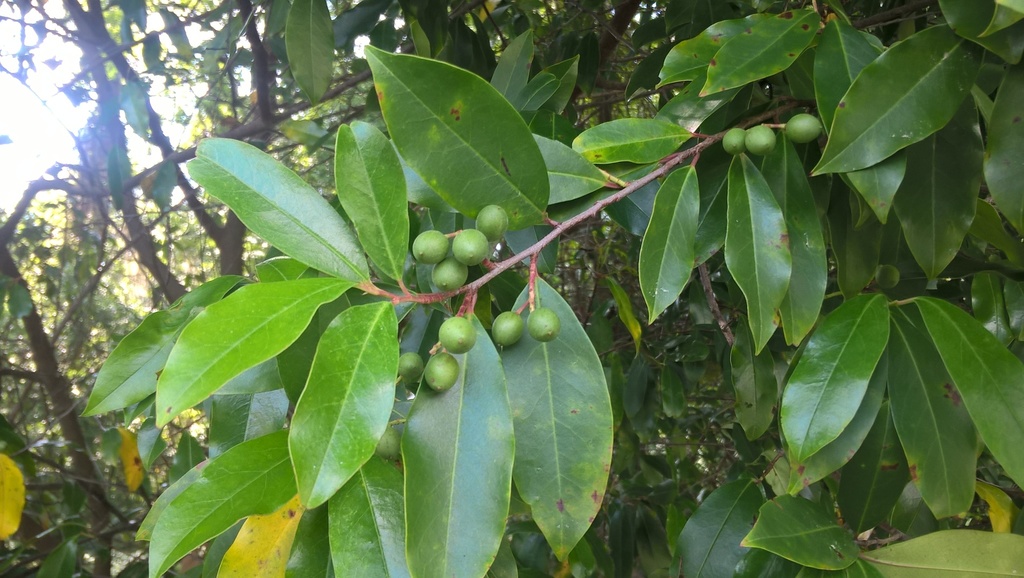
—observations
—countries
—peak records
Least ConcernConservation statusIUCN Red List categoriesLCNTVUENCREWEXLeast ConcernRed List categories, explained →
Diet & preySunlight, Water, Soil nutrients
Predators
- Black Cherry Aphid
- Peachtree Borer
- Eastern Tent Caterpillar
ThreatsHabitat fragmentation, severe freezes outside hardiness zones, and borers
HabitatsMaritime forests, river bluffs, hammocks, bottomlands, and disturbed woodlands
Life span40–60 years
Classification
- OrderRosales
- FamilyRosaceae
- GenusPrunus
- SpeciesPrunus caroliniana
Range data is not available yet.
Interaction riskHigh
- Low
- Moderate
- High
- Very high
- Why interaction risk is high
- Foliage and pits contain cyanogenic compounds lethal to livestock and pets; never forage wild berries.
- Why it is dangerous
- All parts except the fruit flesh contain cyanogenic glycosides that metabolize into lethal hydrogen cyanide, causing cellular asphyxiation in mammals.
- How to recognize a risky encounter
- Look for glossy, alternate evergreen leaves with few or no teeth and dark purple-black oval fruit in axillary racemes.
- What to do
- Do not chew leaves, stems, or seeds, and dispose of pruned trimmings where livestock and pets cannot browse them.
Responsible observation
- Crushed Foliage: Gently crush a fallen leaf to verify identification by its strong maraschino cherry aroma.
- Pet Safety: Keep browsing dogs, horses, and cattle away from wilted clippings or fallen twigs.
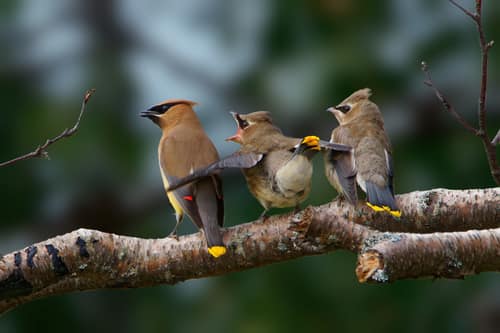
Seed Disperser (c) Christian Back, some rights reserved (CC BY), uploaded by Christian Back · cc-by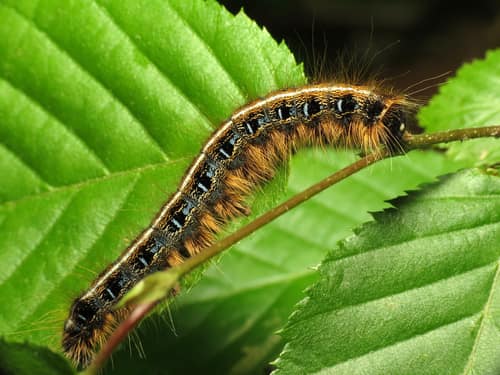
Herbivore "Eastern Tent Caterpillar" by treegrow is licensed under CC BY 2.0. To view a copy of this license, visit https://creativecommons.org/licenses/by/2.0/. · cc-by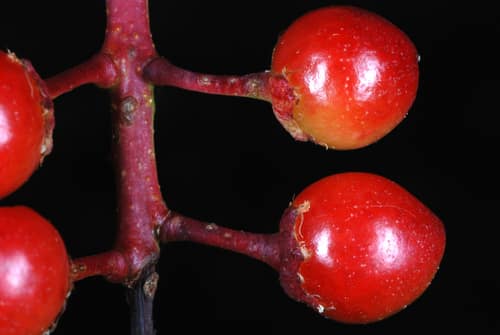
Close Relative (c) Douglas Goldman, some rights reserved (CC BY-SA), uploaded by Douglas Goldman · cc-by-sa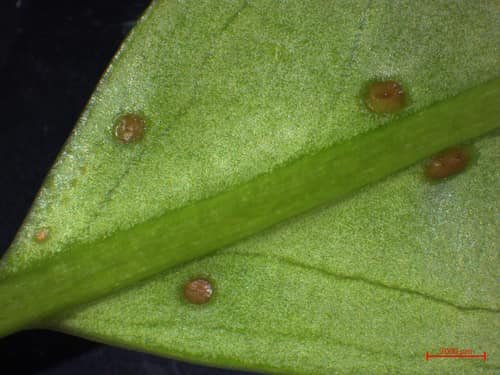
Close Relative (c) Plant Image Library, some rights reserved (CC BY-SA) · cc-by-sa
Help improve the field guideSomething wrong?
Checking your Fauna account…Report a name, category, or profile issue for review.