Also known as Littleleaf Box, Japanese Box, Littleleaf Boxwood, Japanese Boxwood
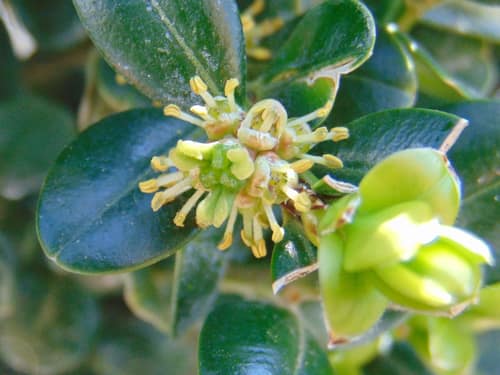
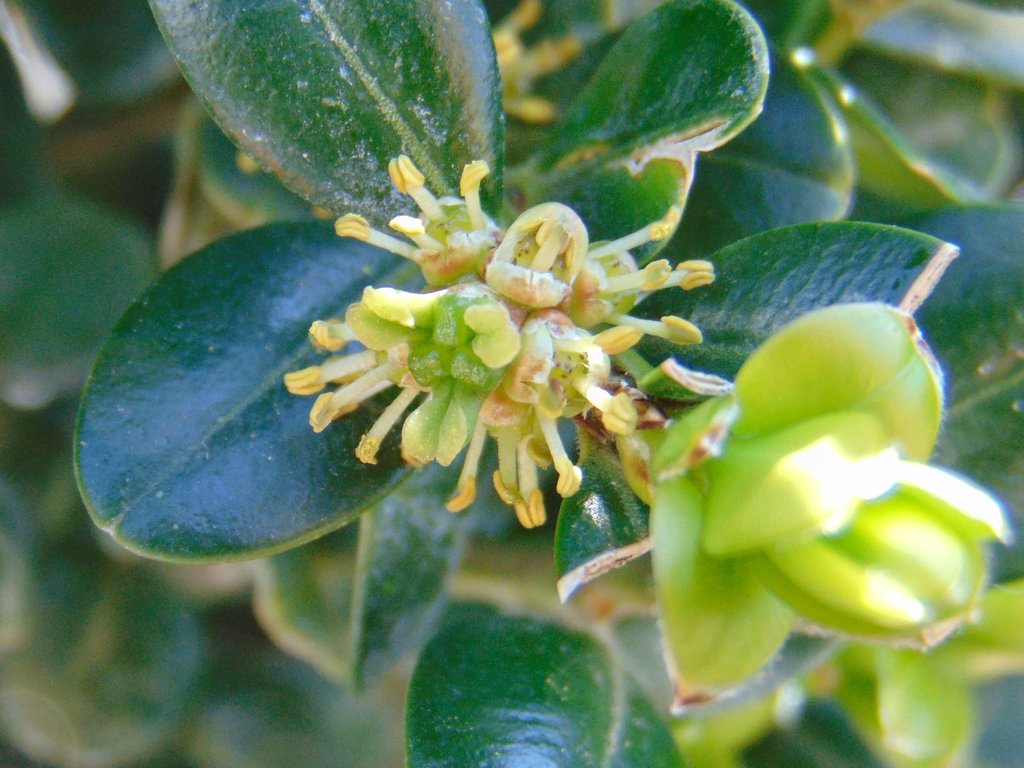
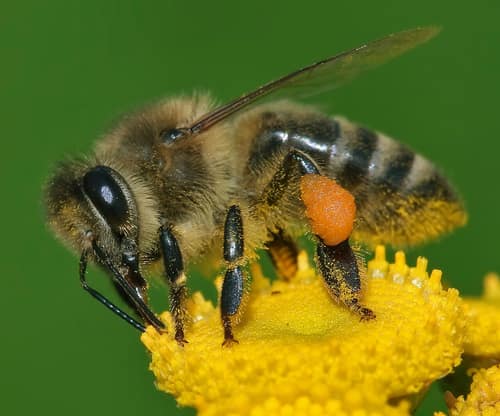
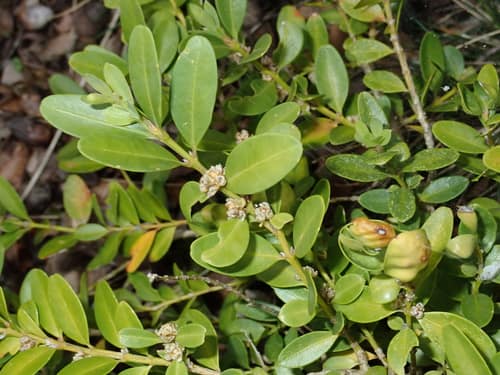
Small-leaved box produces dense tiers of glossy, opposite leaves that persist year-round, often blushing with warm bronze tones during harsh winter frosts. In early spring, inconspicuous clusters of pale chartreuse, apetalous blossoms emit a delicate fragrance that lures early-season bees and hoverflies. Prized across the world in formal topiary for its compact branching and shearing resilience, native populations thrive quietly on limestone ridges and rocky hillsides in East Asia.
Contains steroidal alkaloids that are toxic to humans and pets if ingested; never consume.
Why it is dangerous
Contains buxine and related steroidal alkaloids that induce severe gastrointestinal cramping, vomiting, diarrhea, and central nervous system depression if chewed or eaten.
How to recognize a risky encounter
Look for compact, tightly branched growth bearing small, leathery, oval leaves with a distinct shallow notch at each tip.
What to do
Keep pruned clippings away from curious dogs, cats, and livestock, and wear gloves when shearing to avoid sap contact.
Responsible observation
Pruning: Shear lightly in late spring after new growth hardens to maintain form without encouraging frost damage.
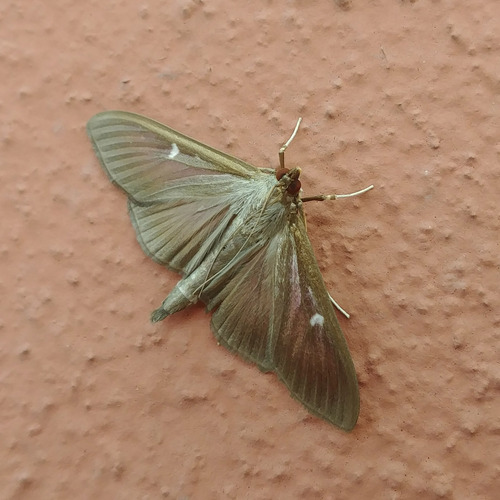
Pest Monitoring: Check interior branches regularly for webbing, chewed leaves, or frass caused by box tree caterpillars.
Drainage: Plant in well-aerated, neutral to alkaline soil to prevent waterlogged conditions that invite root rot.