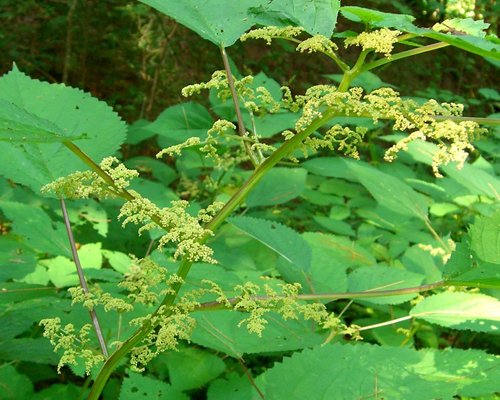
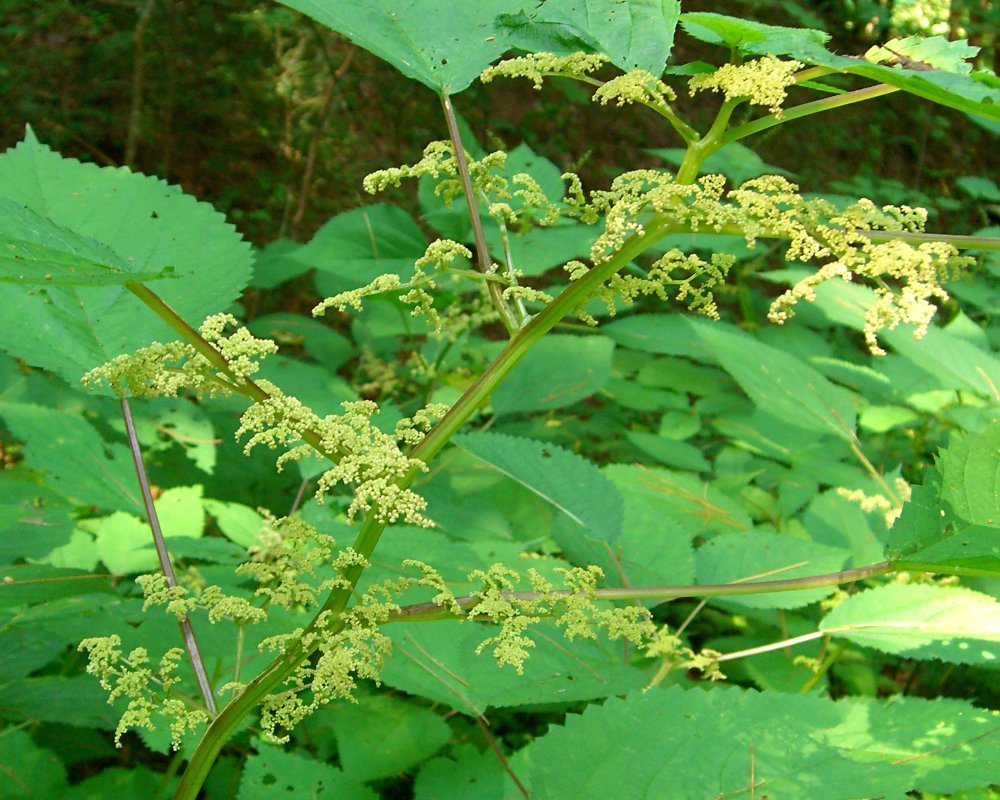
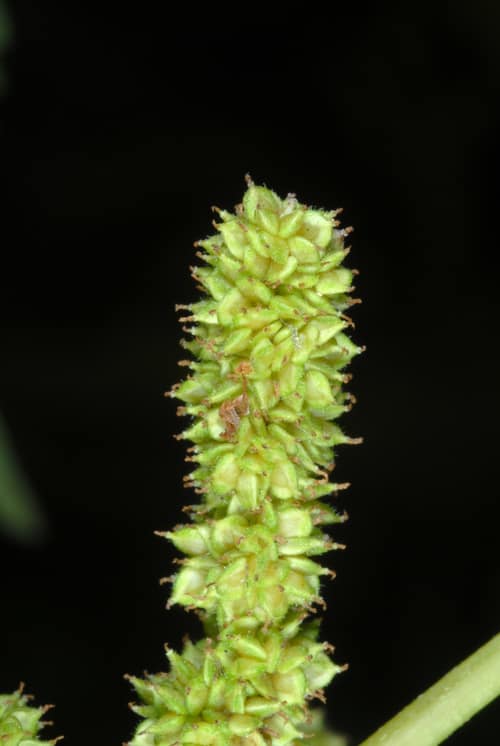
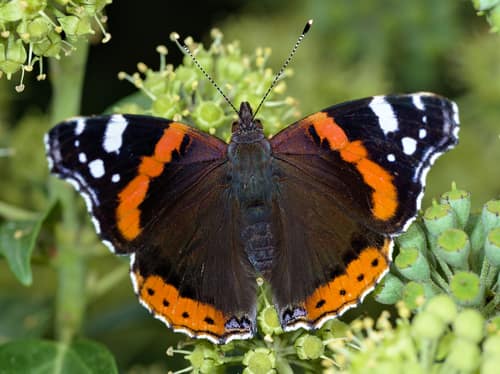
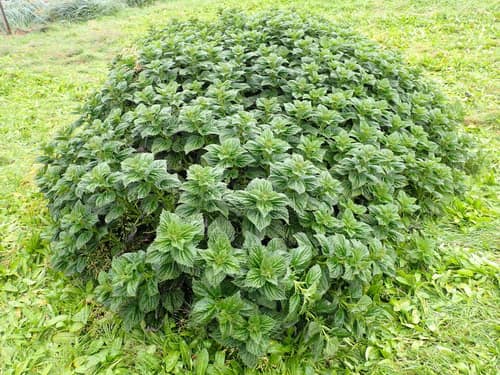
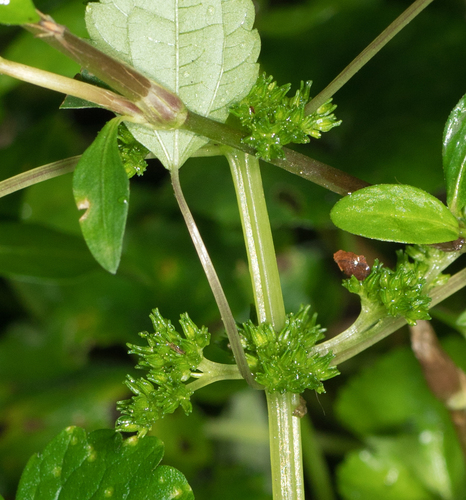
Wood nettle thrives in shaded, nutrient-rich bottomlands where its broad leaves form lush colonies along forest floors. Unlike stinging nettle, this native perennial bears alternate leaves rather than opposite ones, suspended on long stalks covered in tiny defensive hairs. These specialized bristles function like microscopic hypodermic needles, injecting irritants upon contact while the foliage serves as an essential larval host for native brush-footed butterflies.
HabitatsMoist deciduous forests, river bottomlands, floodplain woods, stream banks
Life spanPerennial
Classification
OrderRosales
FamilyUrticaceae
GenusLaportea
SpeciesLaportea canadensis
Range & activity
Range data is not available yet.
Safe observation
Interaction riskLow
Low
Moderate
High
Very high
Why interaction risk is low
Stinging hairs break on contact to inject painful skin irritants; avoid touching with bare skin.
Why it is dangerous
Stems and leaf surfaces are coated in brittle, hollow hairs that snap off in the skin, injecting acetylcholine, histamine, and formic acid that induce immediate burning and persistent red welts.
How to recognize a risky encounter
Recognize it by its alternate leaf arrangement, large egg-shaped leaves with coarse teeth, and hairy stems in damp woods.
What to do
Avoid bare skin contact entirely; if brushed accidentally, wash the area with cold water and avoid scratching to prevent spreading irritants.
Responsible observation
Identification: Look for broad, alternate oval leaves on hair-covered stems growing in rich forest shade.
Avoiding Stings: Stay on established trails and wear long trousers when walking through river floodplain woods.
Wildlife Observation: Search the undersides of leaves in summer for folded tents made by butterfly caterpillars.