
Plant · GBIF taxon 2970430
Great Leadtree
Leucaena pulverulentaAlso known as Tepeguaje, Chalky Leucaena
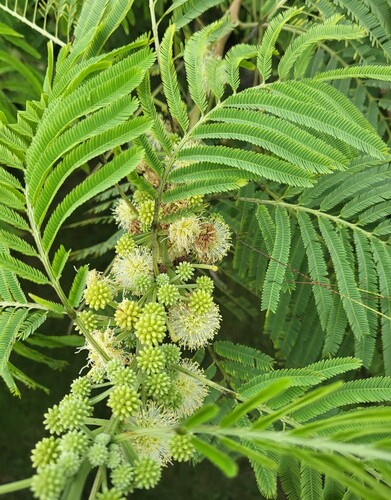
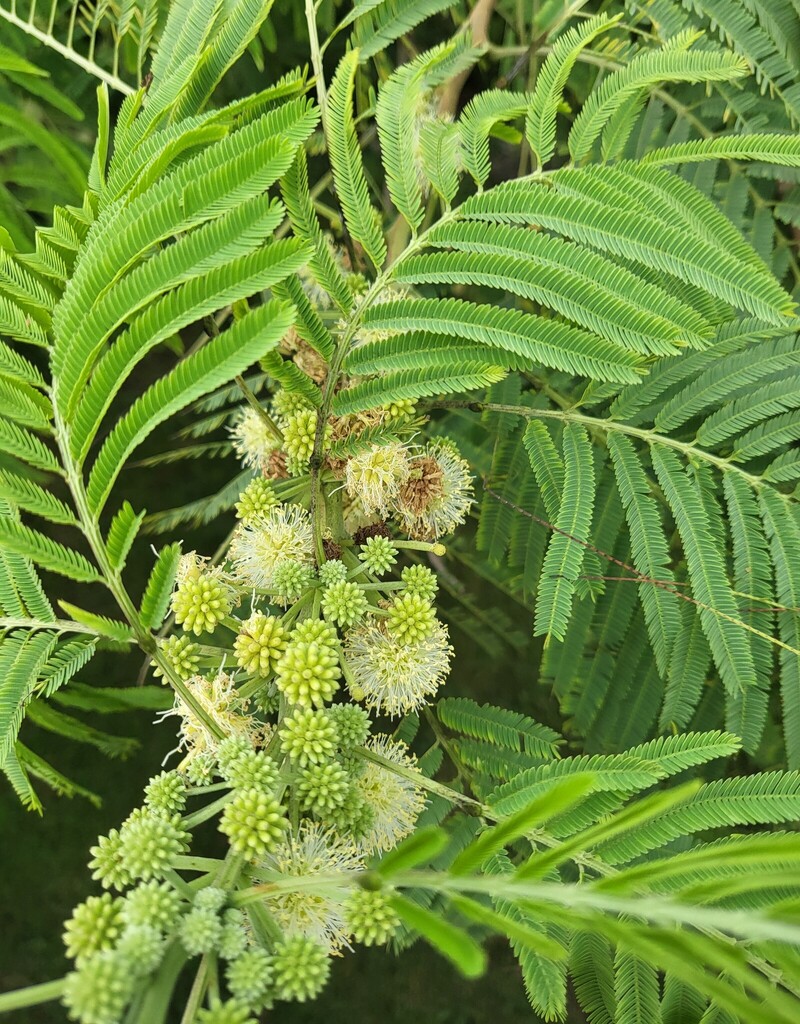
Great leadtree is a fast-growing subtropical canopy tree distinguished by exceptionally feathery, twice-pinnate leaves and chalky, powdery young branchlets. Spherical clusters of creamy-white blossom heads appear throughout the warm months, providing an abundant nectar pulse for native butterflies and wild bees before setting dense hanging clusters of flat, reddish-brown seedpods. As an efficient nitrogen fixer along the lower Rio Grande floodplain, it steadily restores depleted soils while casting the gentle dappled shade required by slow-growing thornforest saplings.
Nitrogen-FixingRiparianDeciduous
—observations
—countries
—peak records
Least ConcernConservation statusIUCN Red List categoriesLCNTVUENCREWEXLeast ConcernRed List categories, explained →
Diet & prey
- Autotrophic (photosynthesis)
Predators
- White-tailed Deer
- Bean Weevils
- Domestic Cattle
ThreatsAgricultural clearing, riverflow alterations, and competition from non-native invasive weeds
HabitatsRiparian woodlands, resaca banks, floodplain terraces, and thornscrub margins
Life span40–60 years
Size / weightNot available
Classification
- FamilyFabaceae
- SpeciesLeucaena pulverulenta
Range data is not available yet.
Interaction riskHigh
- Low
- Moderate
- High
- Very high
- Why interaction risk is high
- Seeds and foliage contain mimosine, which is toxic to horses, dogs, and humans if ingested.
- Why it is dangerous
- Tissues contain the non-protein amino acid mimosine, which causes hair loss, thyroid disruption, and stomach ulceration in monogastric mammals.
- How to recognize a risky encounter
- Recognizable by immense, twice-pinnate leaves with thousands of microscopic leaflets and long, flat, thin-shelled seedpods.
- What to do
- Enjoy observing the tree safely from the path, but never harvest or consume pods, seeds, or foliage.
Responsible observation
- Foliage Inspection: Look closely at fresh branch tips to observe the fine whitish bloom that gives the species its botanical name.
- Wildlife Watching: Check canopy blooms during midday heat for visiting hairstreak butterflies and native leafcutter bees.
- Pet Safety: Keep grazing dogs and horses away from dropped seedpods beneath the tree canopy.
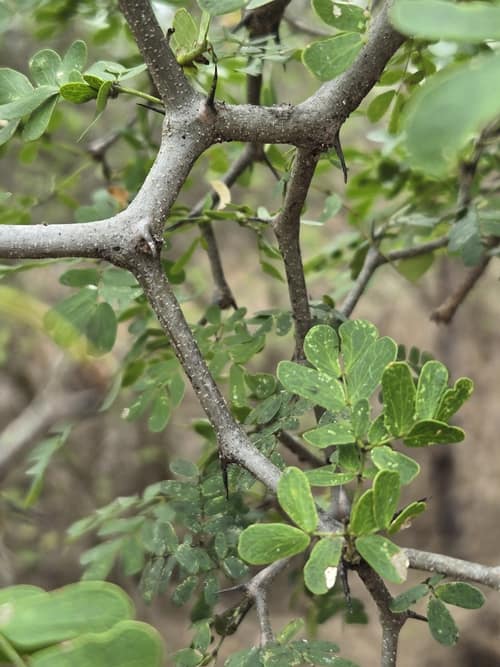
Neighbor (c) Jo Roberts, some rights reserved (CC BY) · cc-by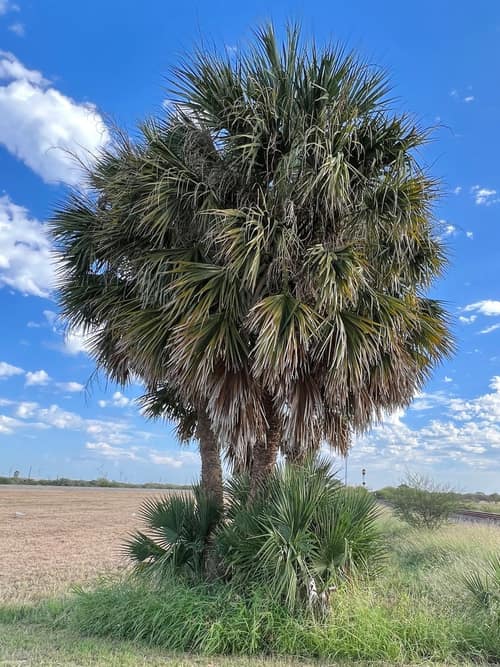
Neighbor (c) CK2AZ, some rights reserved (CC BY), uploaded by CK2AZ · cc-by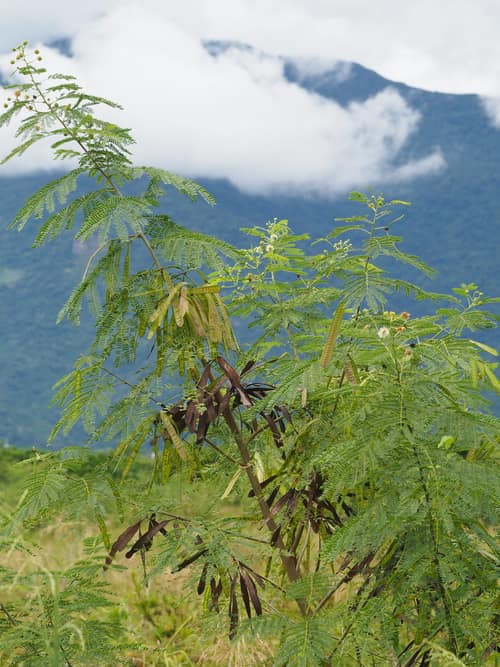
Close Relative no rights reserved, uploaded by 葉子 · cc0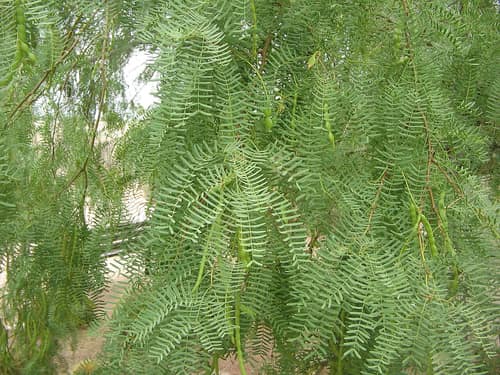
Same Family Don A.W. Carlson / CC BY 2.5 · cc-by
Help improve the field guideSomething wrong?
Checking your Fauna account…Report a name, category, or profile issue for review.