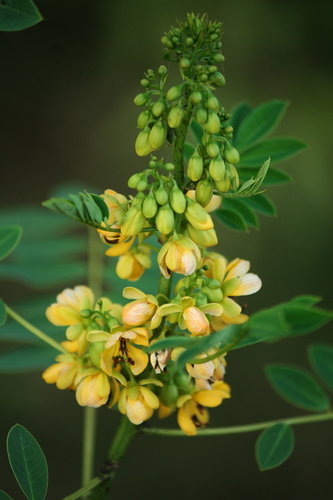
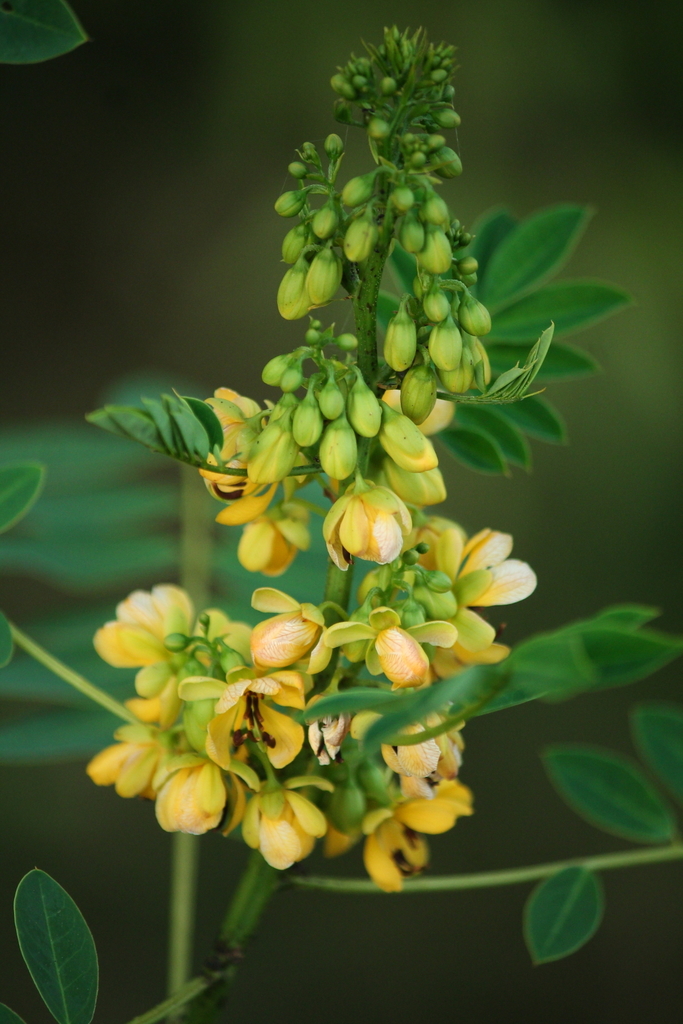
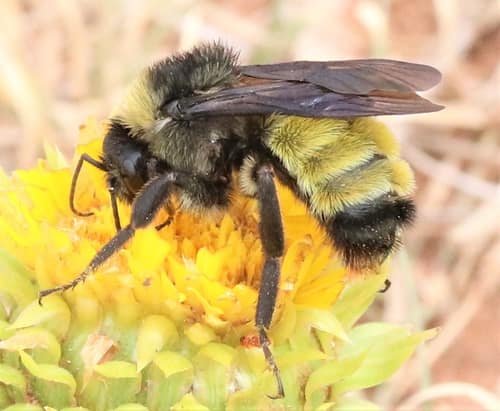
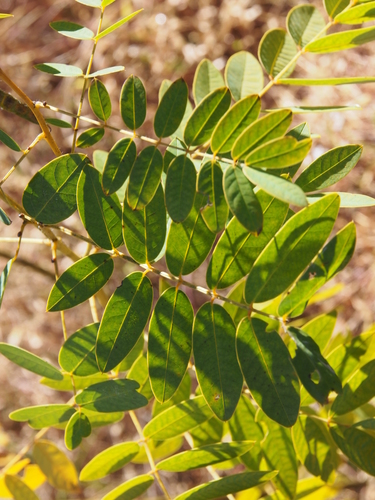
Maryland senna is a robust perennial wildflower that forms stately, shrub-like clumps topped with clusters of bright yellow blossoms in late summer. Specialized extrafloral nectaries near the base of its compound leaf petioles secrete sweet fluids to recruit ants and predatory wasps as bodyguards against herbivorous insects. Bumblebees rely on rapid thoracic vibrations, known as buzz pollination, to release the pollen tightly held inside the blossom's uniquely shaped anthers.
ThreatsHabitat loss from wetland drainage, invasive species encroachment, and intensive mowing
HabitatsMoist prairies, open floodplain woods, riverbanks, and wet meadows
Life spanPerennial (typically 10–20 years in wild colonies)
Classification
OrderFabales
FamilyFabaceae
GenusSenna
SpeciesSenna marilandica
Range & activity
Range data is not available yet.
Safe observation
Interaction riskHigh
Low
Moderate
High
Very high
Why interaction risk is high
Contains purgative anthraquinones toxic to livestock and pets if consumed; safe to observe.
Why it is dangerous
Plant tissues, especially seeds and foliage, contain anthraquinone glycosides that cause severe gastrointestinal distress, diarrhea, and muscle weakness in livestock and domestic pets.
How to recognize a risky encounter
Look for alternate pinnately compound leaves with oval leaflets and a small club-shaped gland near the petiole base.
What to do
Refrain from grazing livestock near established stands, and prevent pets from chewing on foliage or dried seedpods.
Responsible observation
Ant observations: Look near the base of the leaf stems to see ants feeding on sugary extrafloral nectar.
Pollinator watching: Listen closely on warm mornings for the audible buzzing of bumblebees vibrating the flowers.
Seed pod inspection: Watch in autumn as long, dark, flattened legumes ripen and persist into winter.