Also known as Pricklyburr, Recurved Thorn-Apple, Toloache, Indian Apple
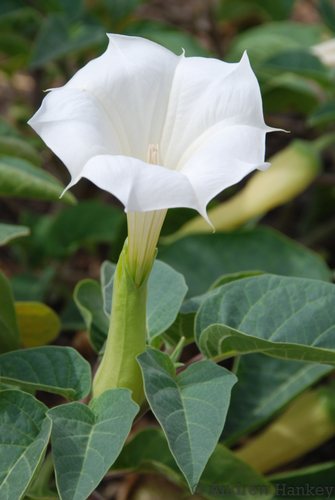
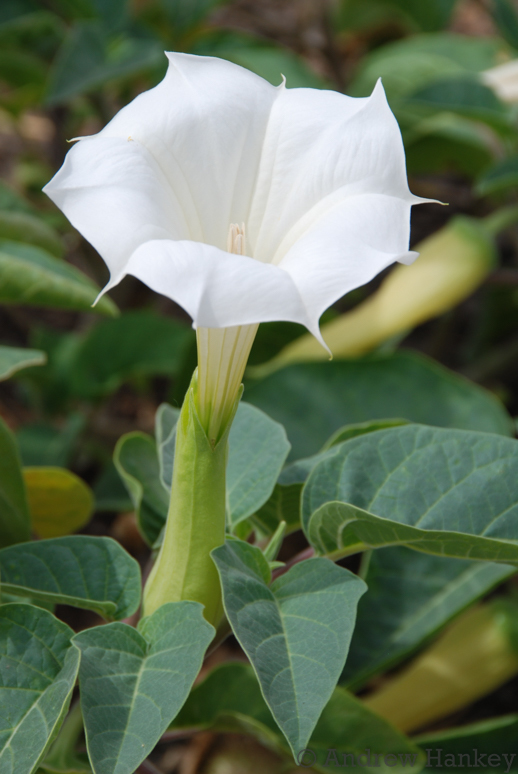
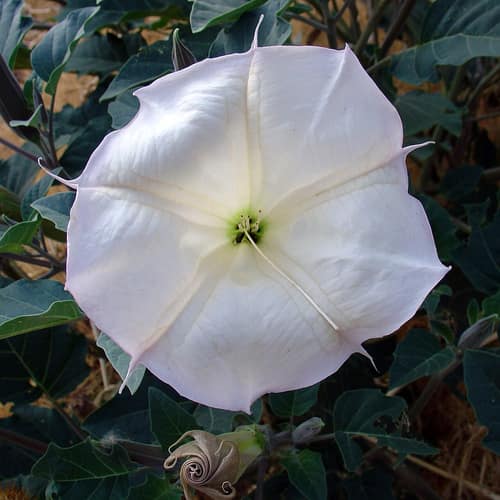
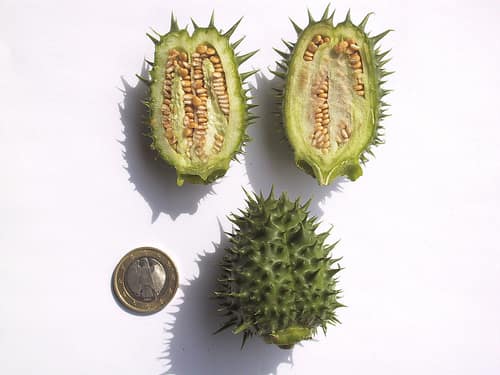
Downy thorn-apple unfurls large, trumpet-shaped white blossoms that open at dusk and emit a sweet scent to attract hawkmoths. Soft, velvety hairs cover its grayish-green stems and foliage, giving the plant its signature downy texture and distinguishing it from smoother nightshades. Its nodding, spiky seed pods mature in late summer, eventually splitting open to drop hundreds of flat seeds into the surrounding soil.
ThreatsEradication programs where considered an invasive weed
HabitatsDeserts, dry scrublands, disturbed roadsides, waste areas
Life spanPerennial (often grown as an annual in cold climates)
Classification
OrderSolanales
FamilySolanaceae
GenusDatura
SpeciesDatura innoxia
Range & activity
Range data is not available yet.
Safe observation
Interaction riskHigh
Low
Moderate
High
Very high
Why interaction risk is high
All parts contain lethal tropane alkaloids; do not ingest and keep out of reach of children and pets.
Why it is dangerous
Contains deadly tropane alkaloids including scopolamine, hyoscyamine, and atropine, which cause severe delirium, dangerous heart rate spikes, seizures, or fatal respiratory failure.
How to recognize a risky encounter
Look for large trumpet-shaped white flowers blooming at night, velvety grayish foliage, and nodding spiky burrs.
What to do
Observe from a safe distance and never harvest, handle without gloves, or ingest any portion of the plant.
Responsible observation
Dusk Watching: Visit near twilight or early morning to catch the large flowers fully open and fragrant.
Observe Safely: Avoid breaking leaves or stems to prevent contact with toxic plant sap.
Foraging Warning: Never consume wild plants or seeds that resemble edible squashes or melons.