
Plant
Carolina Ponysfoot
Dichondra carolinensisAlso known as Carolina Dichondra, Pony's Foot, Kidneyweed
Carolina ponysfoot forms lush, dense carpets of diminutive, kidney-shaped leaves that root continuously at each trailing node. Tiny, pale greenish-white flowers tuck discreetly beneath the foliage during spring and summer, relying on small native bees and flies for pollination. Across its native range, it readily colonizes moist sandy lawns and woodland openings, serving as a resilient native groundcover that withstands light foot traffic.
GroundcoverCreepingPerennial
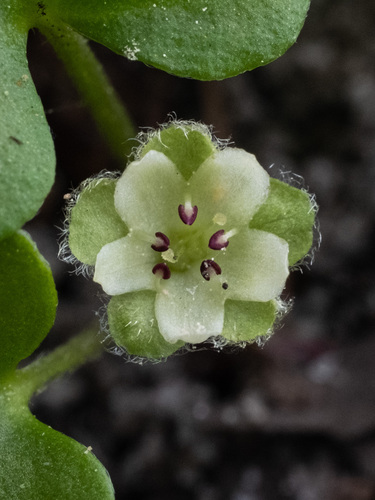
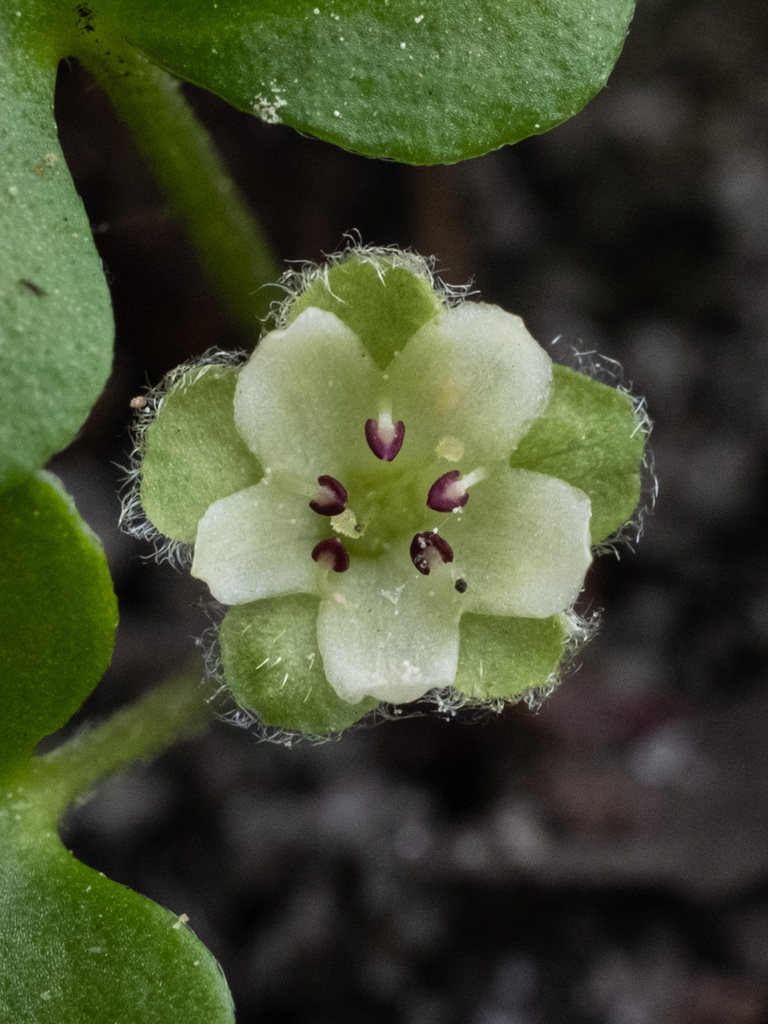
—observations
—countries
—peak records
Not EvaluatedConservation statusIUCN Red List categoriesLCNTVUENCREWEXNot Evaluated — not placed on the risk ladderRed List categories, explained →
Diet & preyPhotoautotrophic
Predators
- Eastern cottontail
- Garden slugs
- Grasshoppers
ThreatsBroadleaf turf herbicides, invasive exotic lawn grasses, and severe soil disturbance
HabitatsMoist sandy lawns, pine flatwoods, savannas, ditch margins, and open woodlands
Life spanPerennial
Classification
- OrderSolanales
- FamilyConvolvulaceae
- GenusDichondra
- SpeciesDichondra carolinensis
Range data is not available yet.
Interaction riskLow
- Low
- Moderate
- High
- Very high
- Why interaction risk is low
- Safe to observe at a normal distance.
Responsible observation
- Groundcover Check: Look beneath the dense foliage layer to spot the diminutive, bell-shaped flowers hidden close to the soil.
- Lawn Alternative: Note how its stolons weave through turfgrass, creating resilient native patches that thrive without mowing.
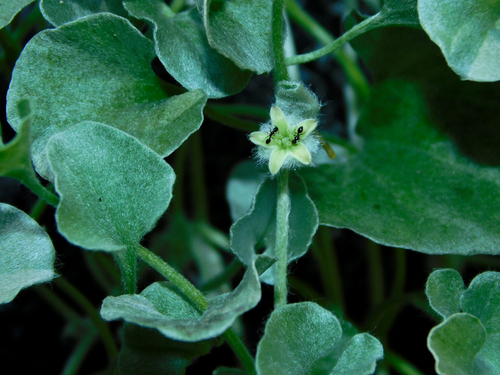
Close Relative (c) Michael J. Papay, some rights reserved (CC BY), uploaded by Michael J. Papay · cc-by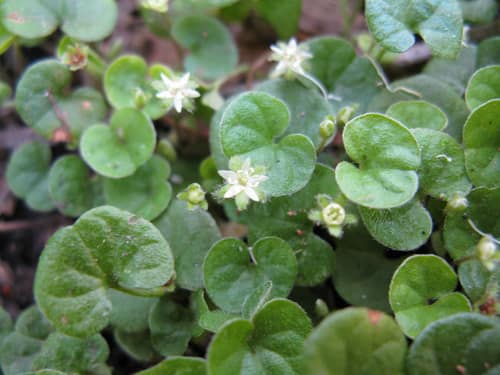
Close Relative Harry Rose from South West Rocks, Australia / CC BY 2.0 · cc-by Image unavailable
Parasitic Relative 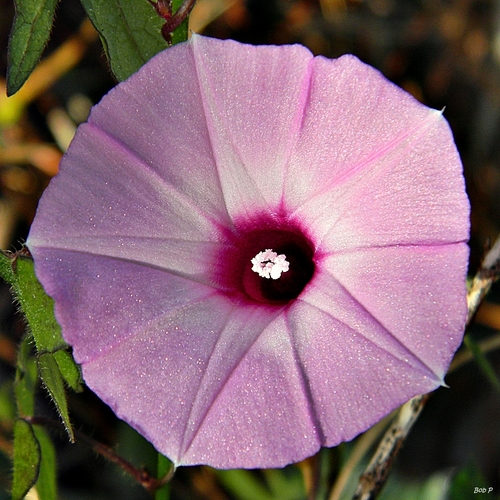
Same Family (c) Bob Peterson, some rights reserved (CC BY) · cc-by
Help improve the field guideSomething wrong?
Checking your Fauna account…Report a name, category, or profile issue for review.