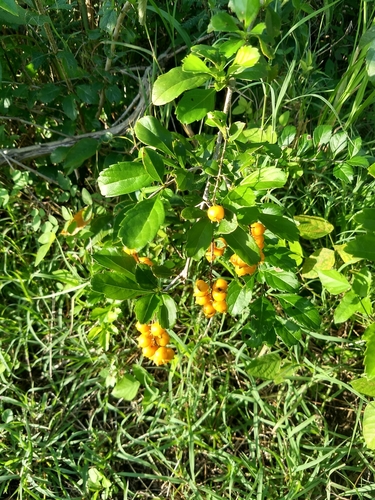
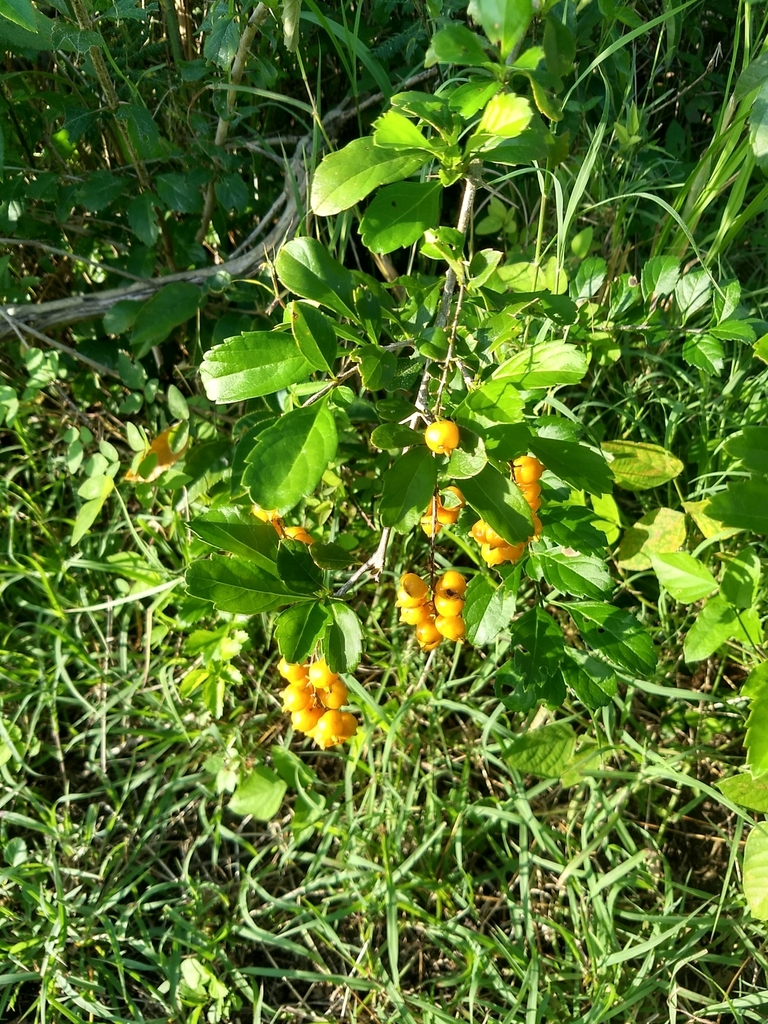
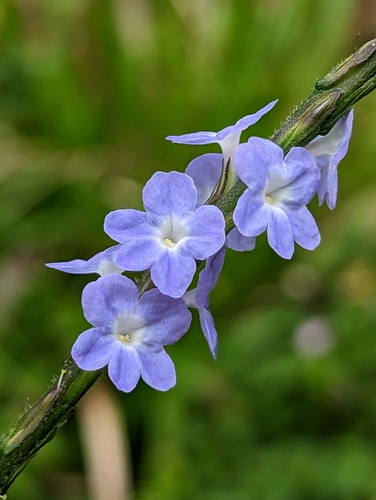
Also known as Golden Dewdrop, Pigeon Berry, Angelswhisper
Skyflower produces cascading clusters of light blue to violet blossoms that bloom nearly year-round in frost-free climates. Glossy golden berries often weigh down the branches alongside fresh flowers, offering year-round color that attracts hummingbirds and butterflies. Escaped garden specimens form dense, impenetrable thickets in disturbed bushland, earning the shrub a reputation as an aggressive environmental weed in parts of Australia and South Africa.
ThreatsHabitat loss in native range; intensive eradication efforts where naturalized as an invasive weed
HabitatsTropical dry forests, scrublands, riparian edges, roadsides, and cultivated gardens
Life span15–30 years
Size / weightNot available
Classification
OrderLamiales
FamilyVerbenaceae
GenusDuranta
SpeciesDuranta erecta
Range & activity
Range data is not available yet.
Safe observation
Interaction riskHigh
Low
Moderate
High
Very high
Why interaction risk is high
Berries and foliage are toxic to humans and pets; wild berries also have toxic look-alikes.
Why it is dangerous
All parts, particularly the golden berries, contain poisonous triterpene saponins and cardiac glycosides that cause nausea, vomiting, fever, drowsiness, and convulsions.
How to recognize a risky encounter
Look for sprawling woody branches with drooping racemes of lavender-blue flowers paired with clusters of marble-sized yellow-orange berries.
What to do
Wear protective gardening gloves when cutting back thickets, wash skin afterward, and keep pets away from fallen berries.
Responsible observation
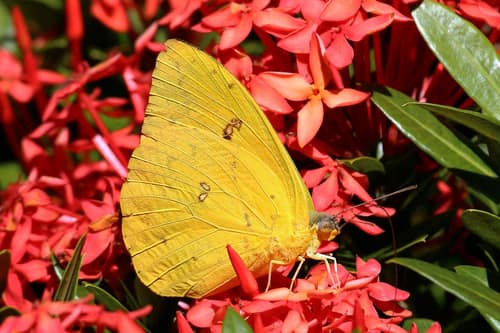
Wildlife Watching: Observe the drooping flower clusters on sunny mornings to see butterflies and skipper insects feeding.
Yard Maintenance: Prune regularly to manage thorny branches and collect fallen fruit before domestic animals can access them.
Disposal Advice: Bag and discard trimmed branches and berries rather than composting to prevent invasive spreading.