Also known as Catawba Rosebay, Mountain Rosebay, Purple Laurel, Red Laurel
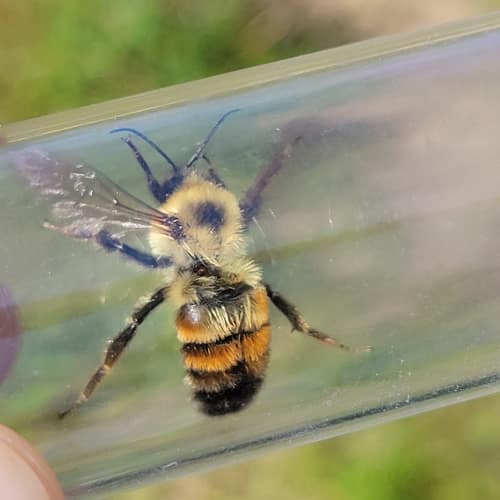
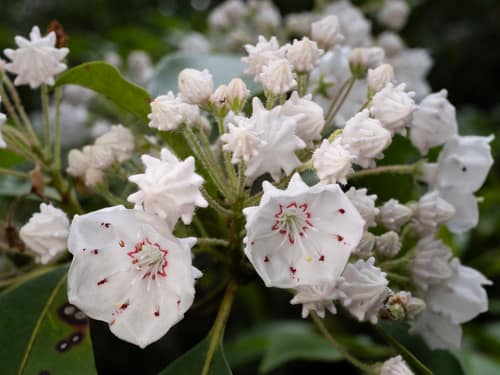
Catawba rhododendrons transform southern Appalachian mountain balds into vast seas of violet each June, thriving on exposed, wind-scoured ridges with acidic soils. Thick, waxy evergreen leaves droop and curl downward during subfreezing winter snaps to conserve moisture and protect sensitive leaf tissue. Large bumblebees serve as essential pollinators, visiting the showy flower clusters to collect nectar and buzz-pollinate deep stamens.
Contains toxic grayanotoxins; do not ingest any plant parts and keep away from pets and livestock.
Why it is dangerous
All tissues contain grayanotoxins, which bind to sodium channels in cell membranes and cause severe vomiting, dangerous drops in blood pressure, and cardiac arrhythmias.
How to recognize a risky encounter
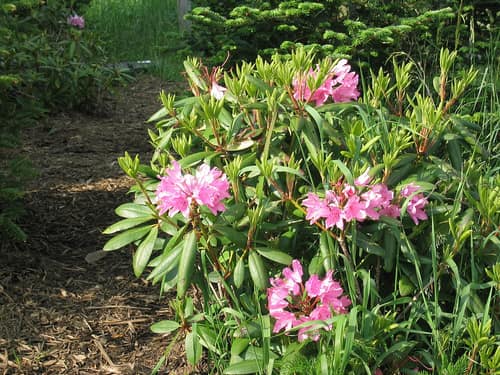
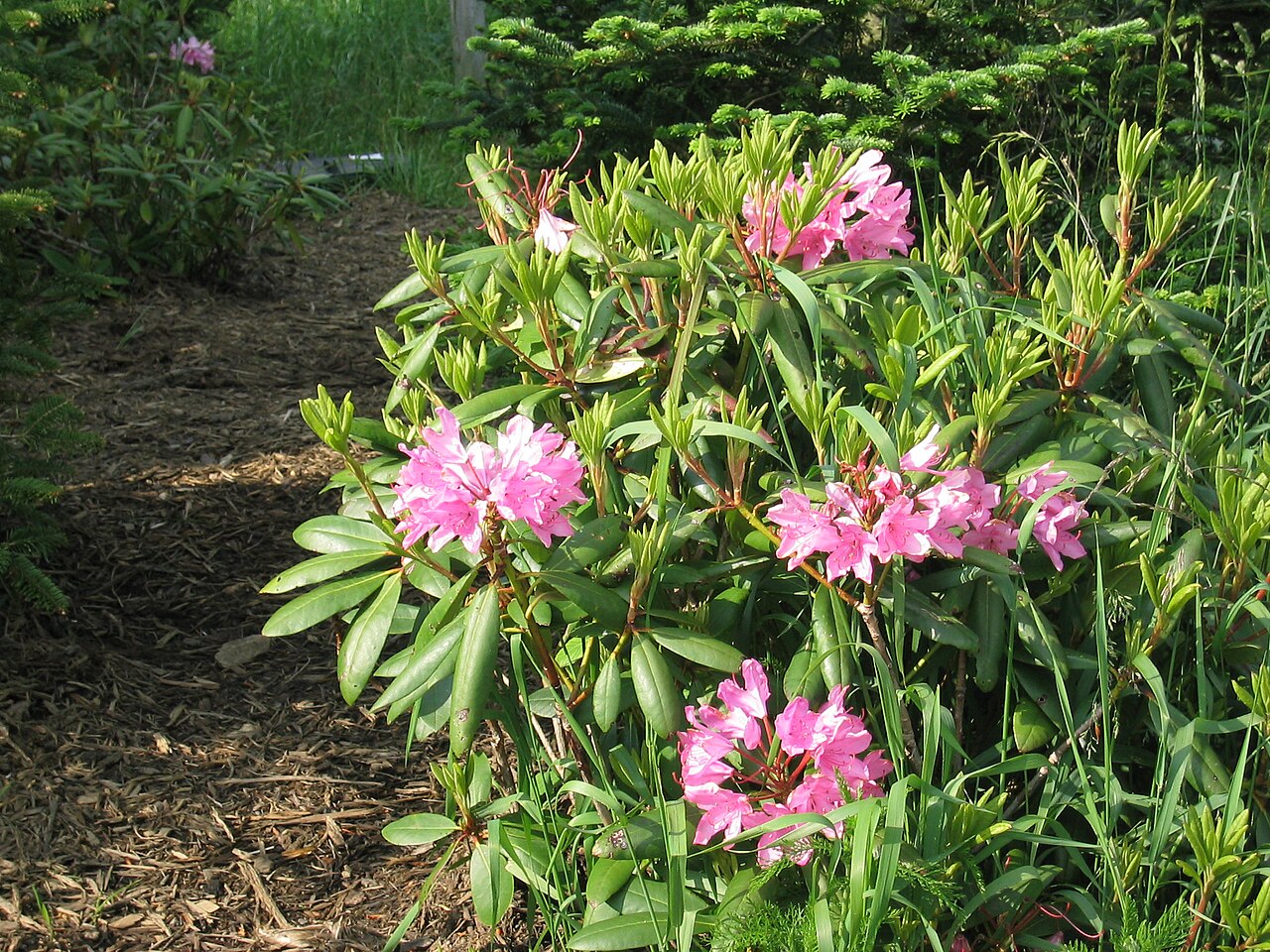
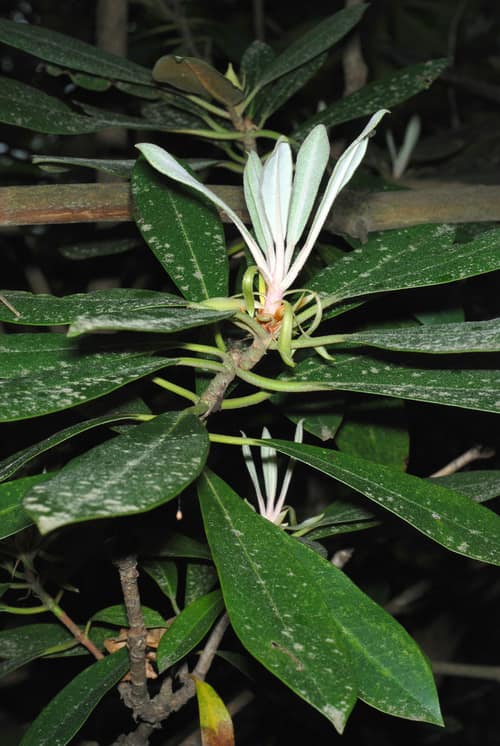
Look for sprawling woody thickets topped with terminal trusses of lilac-purple, bell-shaped flowers and thick, leathery, dark green leaves with rounded bases.
What to do
Enjoy the flowers from the trail without chewing foliage, and supervise pets around landscape plantings.
Responsible observation
Viewing Season: Visit high-elevation Appalachian peaks in mid-June to witness spectacular ridgeline blooms.
Cultivation Care: Plant in moist, well-draining acidic soil sheltered from drying winter winds.
Pet Safety: Keep dogs, cats, and livestock away from all foliage and fallen blooms.