
Plant
Pacific Madrone
Arbutus menziesiiAlso known as Madrona, Madrone, Arbutus, Pacific Madrona
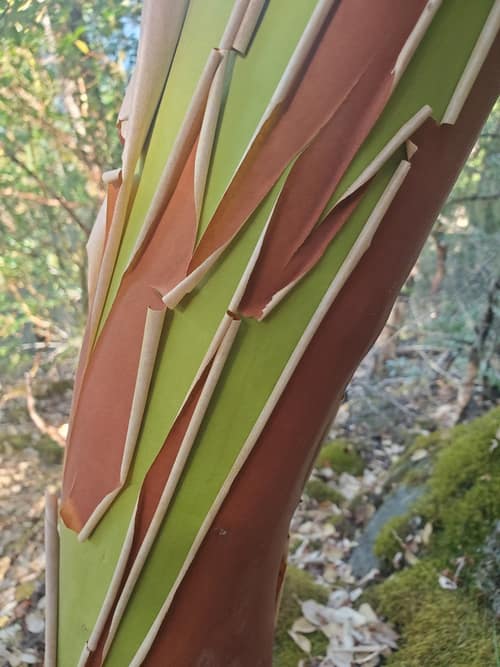
Pacific madrone is a stunning broadleaf evergreen renowned for its smooth, chartreuse inner wood that reveals itself each summer when paper-thin red bark curls and sheds. Its twisted, sculptural limbs twist upward toward canopy openings along coastal bluffs, bearing dense clusters of urn-shaped white blossoms that feed springtime pollinators. By autumn, large clusters of rough-textured orange-red berries provide an essential energy source for overwintering and migrating birds.
EvergreenFloweringPeeling Bark

—observations
—countries
—peak records
Least ConcernConservation statusIUCN Red List categoriesLCNTVUENCREWEXLeast ConcernRed List categories, explained →
Diet & preyAutotrophic
Predators
- Madrone twig borer
- Canker fungus
- Black-tailed deer
ThreatsFungal cankers, root compaction, fire suppression, and habitat development
HabitatsCoastal bluffs, rocky slopes, and dry mixed-conifer forests
Life span200–400 years
Classification
- OrderEricales
- FamilyEricaceae
- GenusArbutus
- SpeciesArbutus menziesii
Range data is not available yet.
Interaction riskLow
- Low
- Moderate
- High
- Very high
- Why interaction risk is low
- Wild berries have toxic look-alikes; never eat based on app identification alone.
Responsible observation
- Bark Etiquette: Avoid pulling shedding bark curls off the trunk, as premature peeling damages delicate cambium.
- Root Care: Stay on marked paths to avoid compacting the shallow, pathogen-sensitive root zone.
- Birding: Scan the upper canopy during late autumn to spot thrushes and waxwings gathering fruit.
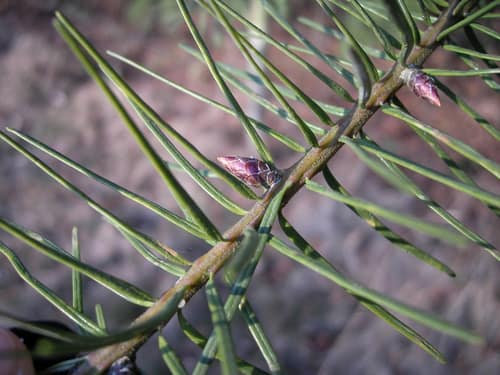
Frequent Companion (c) Danny Steaven, some rights reserved (CC BY-SA) · cc-by-sa
Seed Disperser (c) Esteban Poveda, some rights reserved (CC BY), uploaded by Esteban Poveda · cc-by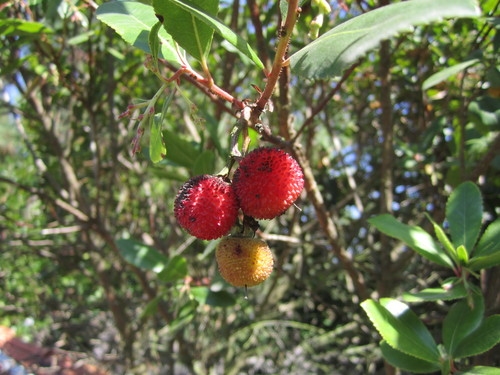
Close Relative (c) Duarte Frade, some rights reserved (CC BY), uploaded by Duarte Frade · cc-by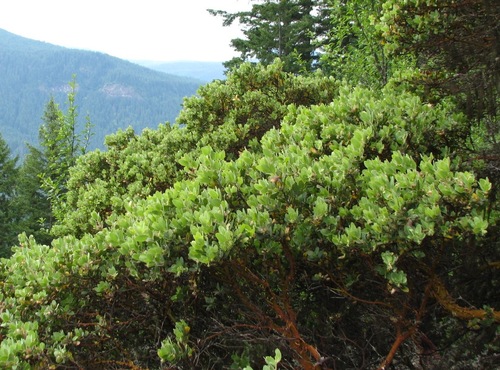
Family Member (c) 66dodge, some rights reserved (CC BY), uploaded by 66dodge · cc-by
Help improve the field guideSomething wrong?
Checking your Fauna account…Report a name, category, or profile issue for review.