
Plant · GBIF taxon 2871709
Amorphophallus gigas
Amorphophallus gigasAlso known as Giant Arum, Sumatran Giant Arum
Rising from the Sumatran rainforest floor, this botanical giant alternates between producing a single tree-like leaf and a massive, foul-smelling flower structure. The towering inflorescence unleashes a potent aroma of decaying flesh to lure carrion beetles and flesh flies across long distances for pollination. Underground, an enormous subterranean corm stores nutrients for years to fuel these brief, spectacular displays.
Giant PlantTropicalCarrion Flower
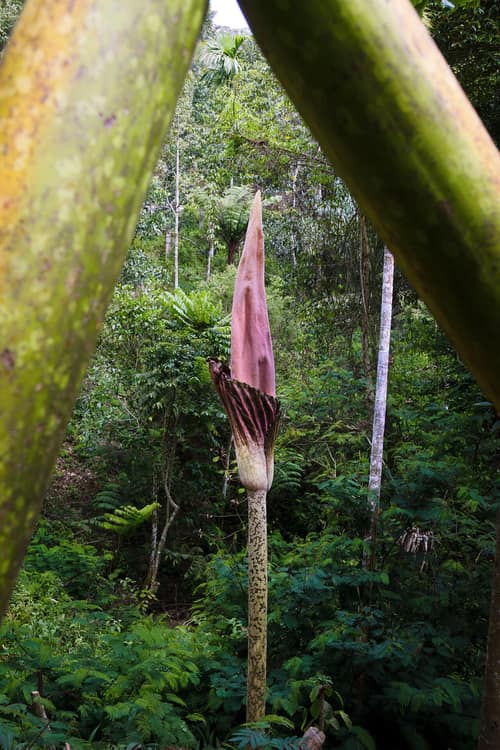
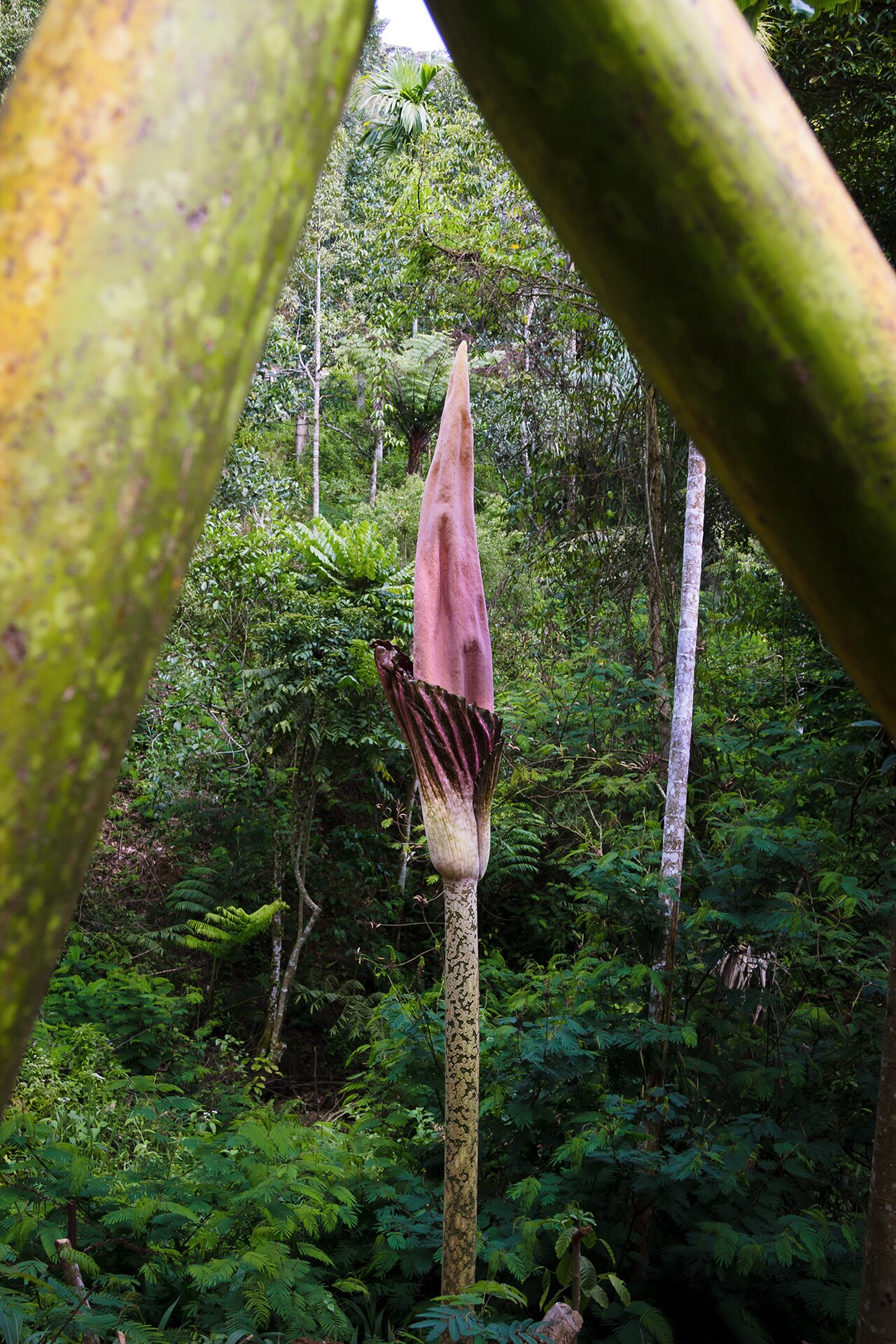
Licensed referenceIchan dgmc / CC BY-SA 4.0 · cc-by-sa
—observations
—countries
—peak records
Not EvaluatedConservation statusIUCN Red List categoriesLCNTVUENCREWEXNot Evaluated — not placed on the risk ladderRed List categories, explained →
Diet & prey
- Autotrophic (Photosynthetic)
Predators
- Wild Boars
- Porcupines
ThreatsDeforestation, habitat destruction, illegal plant collection
HabitatsTropical rainforest understory, lowland primary forests
Life spanPerennial (several decades)
Classification
- FamilyAraceae
- SpeciesAmorphophallus gigas
Range data is not available yet.
Interaction riskHigh
- Low
- Moderate
- High
- Very high
- Why interaction risk is high
- Contains insoluble calcium oxalate crystals; do not ingest and avoid touching plant sap.
- Why it is dangerous
- Contains needle-like insoluble calcium oxalate crystals that cause severe mouth pain, swelling, and irritation if touched or chewed.
- How to recognize a risky encounter
- Recognized by its immense towering flower spike framed by a ruffled spathe emitting a rotten odor.
- What to do
- Observe from a distance, refrain from touching any part of the plant, and wash hands if exposed to sap.
- What to notice
- Stands out due to its immense scale, forming either an enormous single leaf canopy or a colossal flowering spike.
- Support conservation
- Stay on marked trails to avoid compacting soil near delicate underground tubers and never harvest wild specimens.
Responsible observation
- Timing the Bloom: Inflorescences open briefly for two to three days, emitting their strongest scent on the first evening.
- Leaf Phase Identification: Look for a single umbrella-like canopy atop a spotted, trunk-like petiole during vegetative years.
- Smell from Afar: Maintain a comfortable distance to observe pollinators attracted to the pungent bloom.
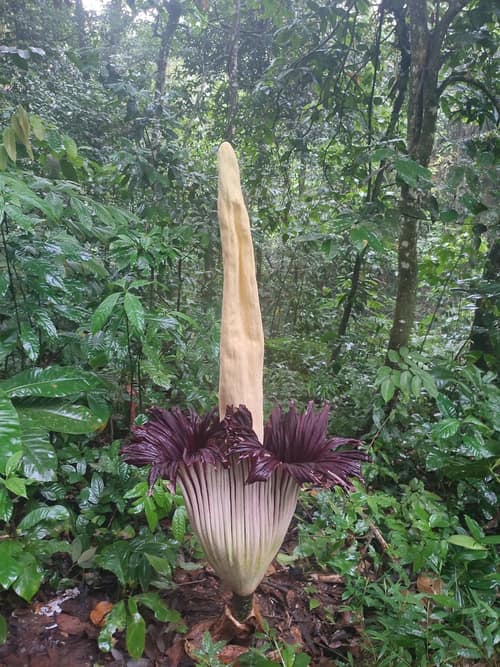
Close Relative (c) Samuel GUIRAUDOU, some rights reserved (CC BY) · cc-by Image unavailable
Close Relative 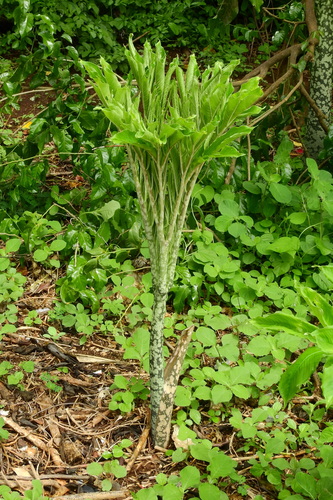
Close Relative (c) ꦥꦤ꧀ꦗꦶꦒꦸꦱ꧀ꦠꦶꦄꦏ꧀ꦧꦂ, some rights reserved (CC BY) · cc-by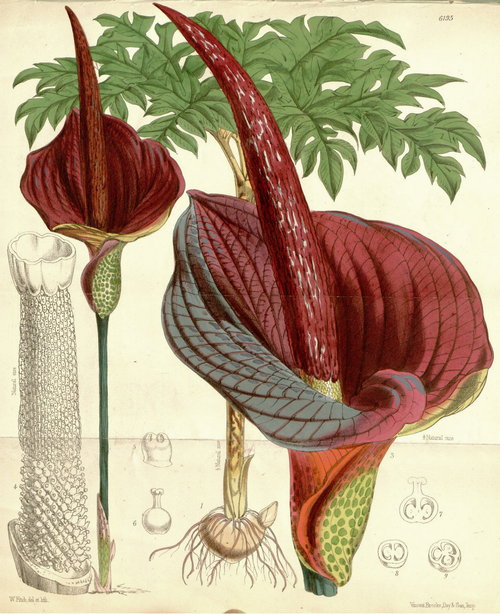
Close Relative Walter Hood Fitch / Public domain · cc0
Help improve the field guideSomething wrong?
Checking your Fauna account…Report a name, category, or profile issue for review.