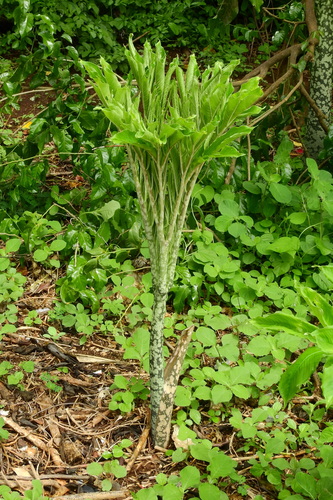
Also known as Devil's Tongue, Voodoo Lily, Snake Palm, Konnyaku Potato
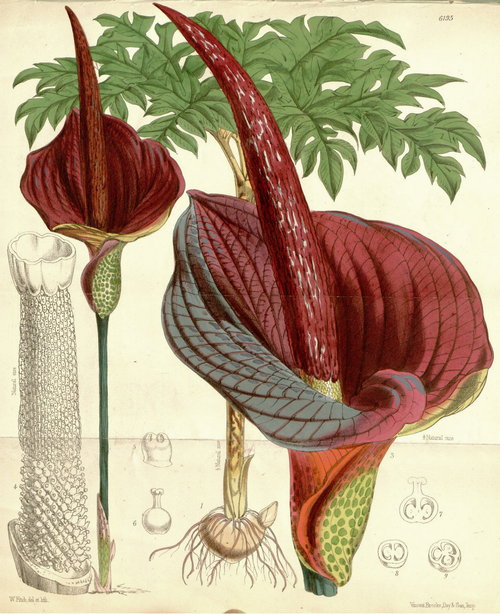
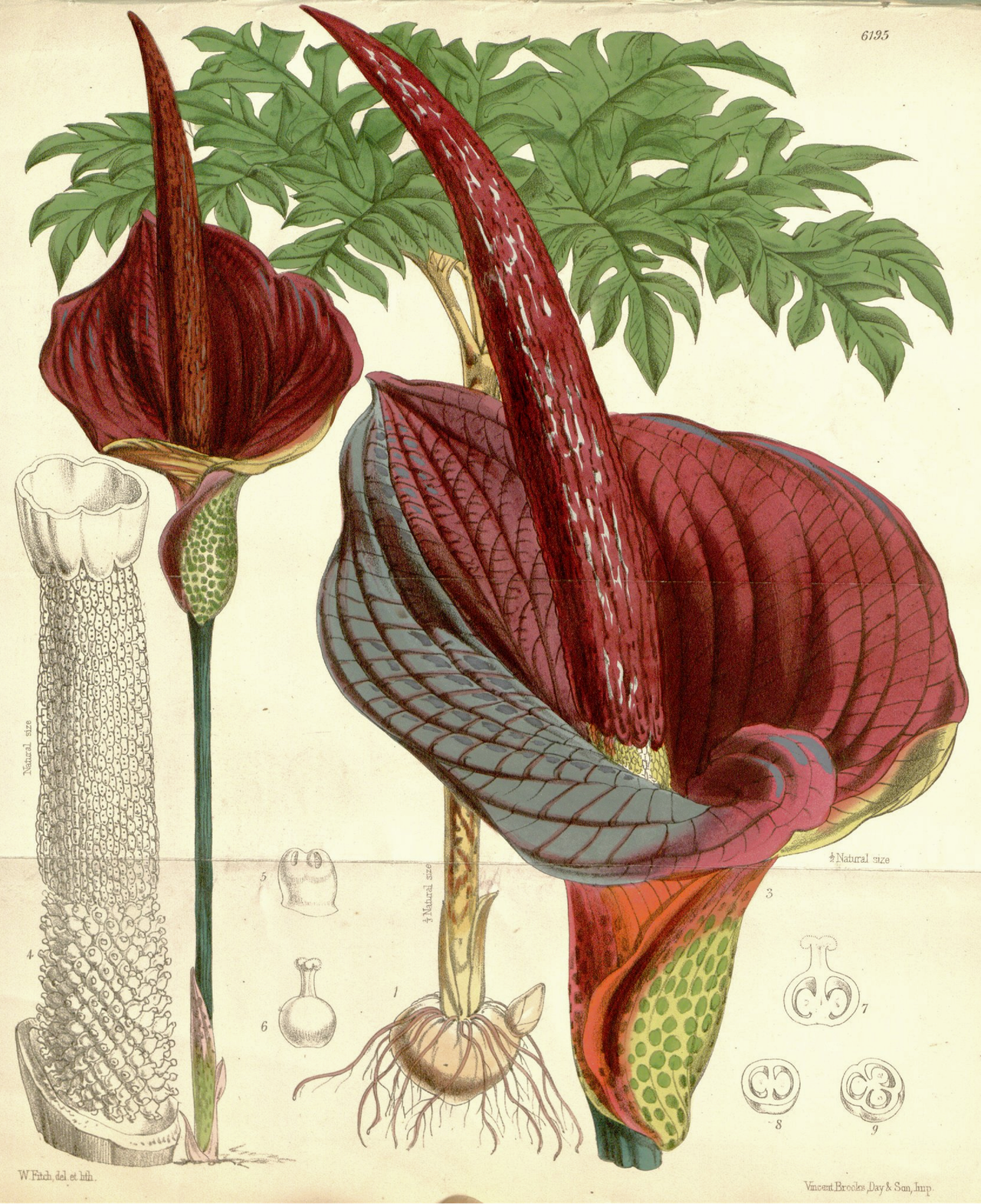
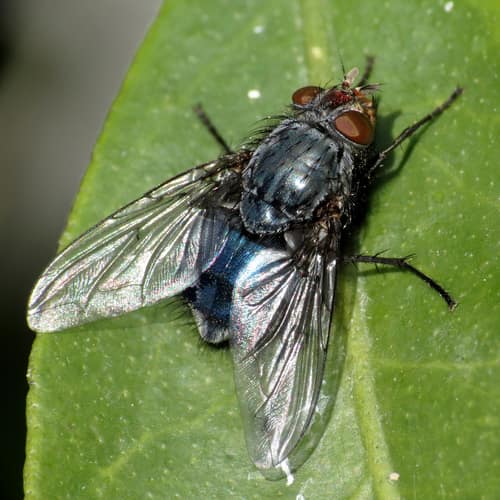
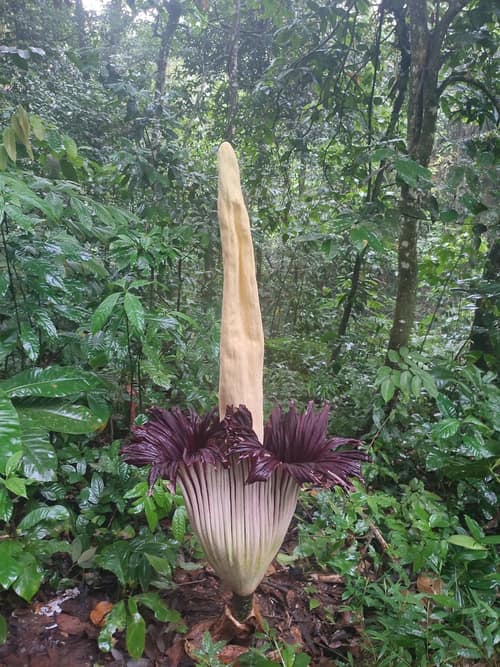
Konjac emerges each spring from an enormous underground corm, either sending up a single umbrella-like leaf on a mottled stalk or producing a dramatic, deep-maroon inflorescence. The bloom produces a powerful odor of rotting meat, warming its spathe to vaporize volatile sulfur compounds that lure carrion-seeking blowflies and beetles for pollination. Widely cultivated across East and Southeast Asia, its dense corm yields glucomannan, a soluble dietary fiber transformed into traditional jellies and noodles through extensive alkaline processing.
Not EvaluatedConservation statusIUCN Red List categoriesLCNTVUENCREWEXNot Evaluated — not placed on the risk ladderRed List categories, explained →
Key facts
Diet & prey
Autotrophic (photosynthetic)
Predators
Wild boars
Rodents
ThreatsOvercollection of wild populations and deforestation
HabitatsSubtropical forest understories, secondary scrub, and agricultural fields
Life spanPerennial (decades via persistent corm)
Classification
OrderAlismatales
FamilyAraceae
GenusAmorphophallus
SpeciesAmorphophallus konjac
Range & activity
Range data is not available yet.
Safe observation
Interaction riskHigh
Low
Moderate
High
Very high
Why interaction risk is high
Raw tissues contain needle-like calcium oxalate crystals; avoid touching broken sap and never ingest raw.
Why it is dangerous
Plant cells contain sharp calcium oxalate raphide crystals that mechanically pierce mucous membranes, causing immediate burning, severe swelling of the mouth and throat, and dermal dermatitis.
How to recognize a risky encounter
Recognized by a solitary umbrella-like divided leaf atop a mottled green-and-white stem, or a dark maroon ruffled spathe enclosing a deep purple spadix.
What to do
Wear protective gloves when dividing corms or pruning damaged stems, and keep all raw plant parts away from children and pets.
Responsible observation
Odor alert: Blooming inflorescences generate an intense rotten meat odor for several days.
Handling precautions: Wear gloves when peeling or planting fresh corms to avoid skin irritation from sap.
Culinary safety: Never taste raw corms or foliage; traditional preparation requires boiling with slaked lime.