
Plant
Monstera xanthospatha
Monstera xanthospathaMonstera xanthospatha is an uncommon hemiepiphytic vine native to the montane cloud forests of Colombia, where it ascends host trees using adventitious roots. Unlike many heavily fenestrated lowland relatives, it bears relatively narrow, lance-shaped foliage and produces an inflorescence framed by a distinctive pale yellow spathe. Its climbing habit allows it to seek pockets of bright, filtered light throughout the mist-shrouded Andean understory.
EpiphyticClimbingTropical
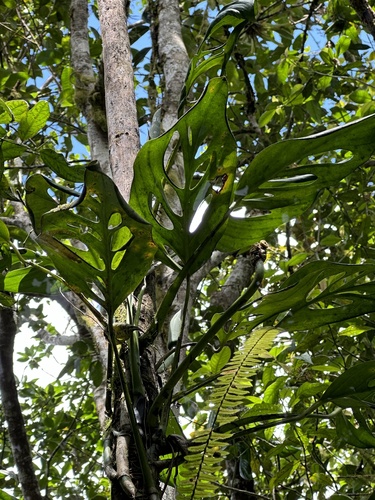
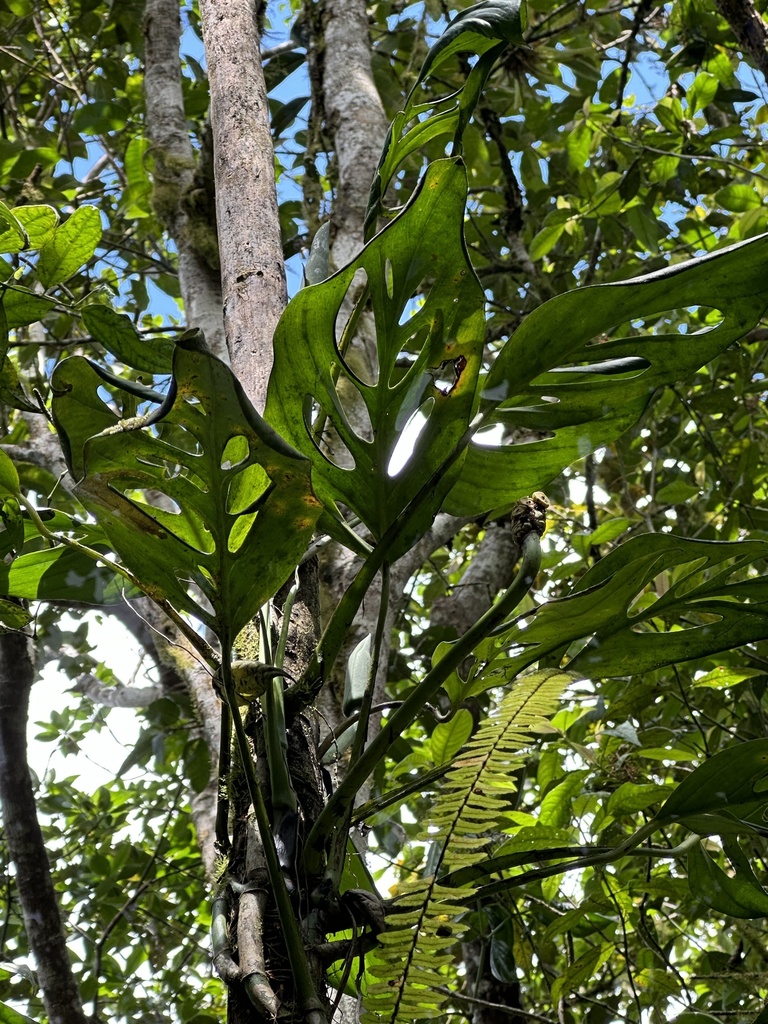
—observations
—countries
—peak records
Not EvaluatedConservation statusIUCN Red List categoriesLCNTVUENCREWEXNot Evaluated — not placed on the risk ladderRed List categories, explained →
Diet & preyPhotoautotrophic
Predators
- Herbivorous insects
- Gastropods
ThreatsHabitat loss from deforestation and agricultural expansion
HabitatsMontane cloud forests and premontane rainforests
Life spanPerennial (decades)
Classification
- FamilyAraceae
- SpeciesMonstera xanthospatha
Range data is not available yet.
Interaction riskHigh
- Low
- Moderate
- High
- Very high
- Why interaction risk is high
- Tissues contain insoluble calcium oxalate crystals; toxic to humans and pets if chewed or ingested.
- Why it is dangerous
- Plant cells contain needle-sharp calcium oxalate raphides that mechanically puncture mucous membranes, causing intense oral burning, swelling, and digestive upset.
- How to recognize a risky encounter
- Look for an Arum-family vine with climbing stems, leathery lanceolate leaves, and a pale yellow spathe during flowering.
- What to do
- Do not chew or ingest any plant parts; keep specimens out of reach of domestic pets.
Responsible observation
- Observation: Look along mid-elevation tree trunks in wet Andean forests to spot its clinging stems.
- Cultivation: Requires high humidity, cool-to-warm temperatures, and moist, well-draining substrate.

Close Relative (c) Jacqui Geux, some rights reserved (CC BY), uploaded by Jacqui Geux · cc-by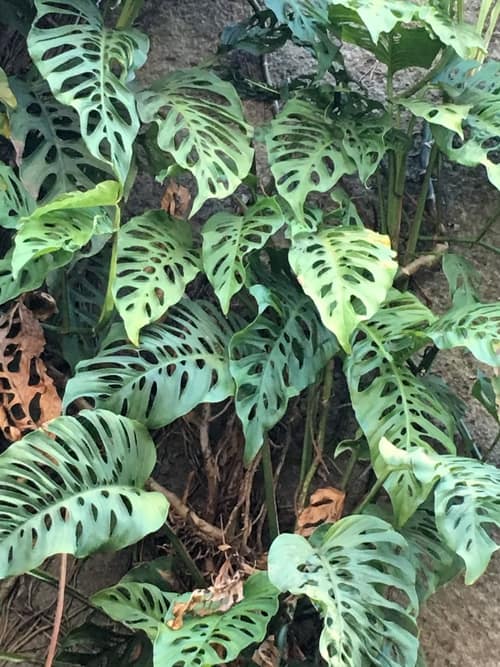
Close Relative (c) Sterling Sheehy, some rights reserved (CC BY), uploaded by Sterling Sheehy · cc-by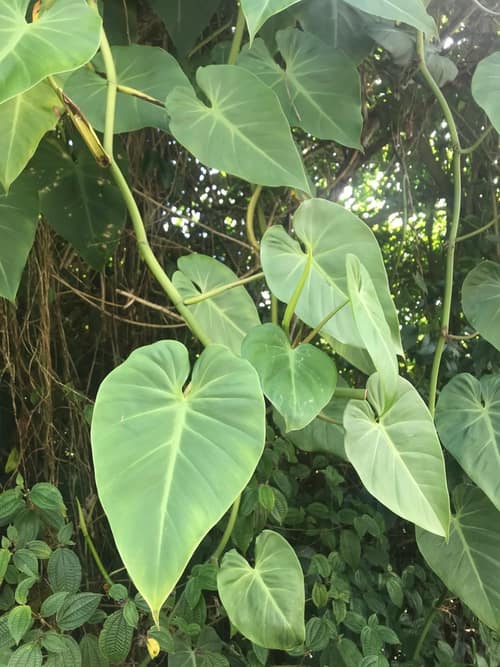
Same Family (c) Brittany Savoie, some rights reserved (CC BY), uploaded by Brittany Savoie · cc-by
Help improve the field guideSomething wrong?
Checking your Fauna account…Report a name, category, or profile issue for review.